
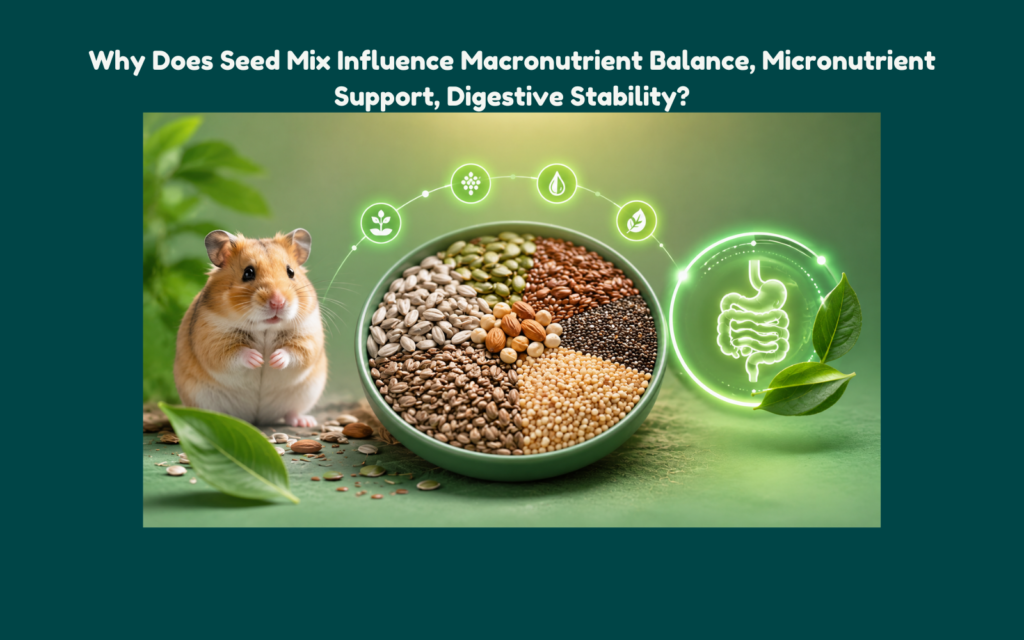
Why Does Seed Mix Influence Macronutrient Balance, Micronutrient Support, Digestive Stability?
Pouring a varied, colorful blend into the bowl doesn’t guarantee your pet will actually eat a balanced diet. We have all experienced the frustrating reality of filling a food bowl with a premium foraging mix, only to find the pet has hoarded every single peanut and left all the healthy grains sitting in the dust.
Many owners assume an empty bowl means balanced eating. It usually just means the hamster is selectively eating sunflower seeds. What looks like a healthy, premium mix on the pet store shelf can become a nutritionally broken diet the second it enters the cage.
We are going to break down how loose blends trick the guaranteed analysis, why they are still incredible for delivering natural vitamins, and how to outsmart a picky eater to ensure they get full, balanced nutrition. Think of it this way. Giving a hamster a seed mix is exactly like taking a young child to a buffet: if you don’t monitor their plate, they will exclusively eat dessert and leave the vegetables behind.
How does the seed mix format impact daily macronutrient balance?
A loose, varied diet allows your pet to pick and choose exactly what they want to eat. This means their actual daily intake might look nothing like the guaranteed analysis printed on the bag. You simply cannot rely on those percentages if the hamster is hiding half the ingredients under their bedding.
Hamsters are biologically wired to survive in harsh environments, which means their hoarding instinct drives them to categorize food by perceived value. They naturally seek out high-fat, high-calorie items first for quick energy. But here is the catch. The bowl might look completely empty by morning, prompting you to refill it. This is a fake empty bowl
signal. In reality, your hamster just moved the food from the dish to their nest. If you lift their hideout, you will likely find a massive hidden food pile consisting entirely of the healthy, protein-dense base grains they refused to eat.
Owners accidentally overfeed their pets constantly because of this stash-versus-bowl dynamic. When you top off the bowl every single day, you are essentially giving them an endless supply of sunflower seeds and peanuts. This actively destabilizes their baseline macros and risks rapid weight gain.
This behavior also changes dramatically depending on the animal. Syrian hamsters can physically pouch larger items and tolerate a slightly higher fat intake from these larger seeds. Dwarf species, however, process sugar and fats very differently. When a dwarf hamster—particularly species prone to diabetes like Campbell’s or Winter Whites—selectively sorts through a sweet, fruit-heavy seed mix, they are putting themselves at severe risk for diabetes from sugary seed mixes and long-term metabolic issues.
How do loose seed blends deliver natural micronutrient support?
Despite the severe risks of picky eating, these diverse blends offer an incredible advantage when it comes to delivering highly bioavailable, natural trace vitamins. Loose seed blends provide these nutrients organically. They deliver varied, natural trace minerals directly through unhulled grains, dried flowers, and safe botanicals.
Compare this directly to the synthesized vitamin coatings used on standardized pelleted blocks. Whole-food sources are almost always absorbed much more efficiently by the body. You get to offer your pet real, recognizable bioavailable trace vitamins rather than synthetic additives. Humans tend to buy pet food with their eyes, opting for mixes with brightly colored artificial puffs because they look like variety.
In reality, the earthy, natural botanicals and unhulled seeds are where the actual micronutrient value lives.
But you have to match the seed size to the specific species to actually get this benefit. Roborovski hamsters naturally prefer and extract far more value from tiny, easily manageable grains like millet and quinoa. If you give a Robo a mix designed for a Syrian, they will struggle to open the larger pumpkin seeds and might just ignore them entirely, missing out on crucial healthy fats.
Seniors also sort their food differently. As their teeth age and naturally wear down, an older hamster will suddenly start leaving the hardest seeds behind, opting only for the softest flakes. This isn’t them being stubborn; it is a physical limitation that changes their micronutrient intake overnight.
How does the physical composition of a foraging seed diet influence digestive stability?
The physical composition of a foraging diet influences their internal health just as much as the vitamins do. The varied roughage found in intact seed hulls and tough dried plants provides the heavy friction necessary to support long-strand fiber digestion while keeping both their teeth and digestive system active.
The physical act of shelling and chewing specific, varied dietary fibers naturally found in high fiber diets for hamsters prevents dangerous gastrointestinal stasis. It takes genuine effort to break down a foraging seed diet. That physical effort matters. The simple act of intense chewing actively stimulates the digestive tract, signaling the gut to keep moving and processing waste. Softer diets, or mixes where the hamster only eats the soft, fatty nuts, actively reduce gut motility.
This leads to sluggish digestion, and you can actually see the results of this in their cage. Pay close attention to their stool consistency. A hamster processing healthy, tough fibrous grains will have firm, dry, consistent droppings. If they are eating a nutritionally broken, high-fat sorted diet, you will start to see softer stools.
Softer stools rapidly lead to subtle dehydration clues—like sunken eyes or lethargy—because their body is losing water it needs for basic organ function. You might also notice signs of uncomfortable bloating, where the hamster sits with a hunched posture. A diet lacking physical friction doesn’t just hurt their teeth; it slows down their entire internal system and allows harmful gut flora to overtake the healthy bacteria.
How do you fix macronutrient imbalances caused by selective eating in a seed mix?
If your pet is exclusively hoarding the fatty pieces and ignoring the healthy, fibrous grains, you have to safely step in and correct their eating habits.
The absolute biggest real-world mistake owners make is topping off bowls daily. Constantly refilling a half-empty bowl teaches the hamster they can just wait you out for the good stuff.
Here is why that matters. If they know fresh peanuts are coming tomorrow morning, they will never touch the plain oats they stashed today. Hoarding is not the same as eating, and you cannot let their stash dictate your feeding schedule.
You must use strict daily hamster food portions. Measure out the exact daily portion, which is usually just one to two tablespoons depending on the species. Then, you wait. You have to actively check the cage stash, not just the bowl. Wait until both the bowl and the stash are completely empty before offering a refill.
This forces the hamster to eat the less palatable, protein-dense grains they were saving for last. You are not starving the animal. You are safely resetting the intended macro profile of your seed mix by ensuring they eat the entire spectrum of ingredients, not just the dessert.
How do you audit a commercial seed mix for complete nutritional stability today?
You can actively protect your pet’s health by physically inspecting their bowl, their stash, and the commercial bag to ensure the blend is actually working.
-
Macronutrients
Label Red Flag: Disproportionate amount of high-fat seeds (sunflower seeds, peanuts, pumpkin seeds) dominating the top of the ingredient list.
Physical Warning Sign: The bowl is completely empty, but the nest stash is overflowing with untouched plain oats, wheat, and healthy pellets.
Action: Stop topping off the bowl daily and implement strict portion control to force a balanced intake from their stash.
-
Micronutrients & Species Fit
Label Red Flag: Large, sugary dried fruit chunks included in a dwarf hamster mix.
Physical Warning Sign: The animal selectively eats the sweet fruit, struggles to open the massive seeds, and ignores the baseline grains.
Action: Transition to a higher-quality, species-appropriate blend utilizing unhulled whole foods and smaller seeds tailored to their specific jaw size.
-
Digestive Stability
Label Red Flag: High volumes of cheap, dark green alfalfa pellets used to bulk up the bag’s weight.
Physical Warning Sign: Soft stool consistency in the cage, or a bowl perpetually filled with untouched alfalfa pieces.
Action: Switch to a diet that utilizes highly palatable, digestible fiber sources (like safe botanicals and whole grains) to keep their gut motility active.
Use this quick bowl and stash audit to evaluate your current feeding routine and ensure your pet is actually getting the nutrition printed on the bag.
Getting their portioning right is a simple, invisible fix that drastically improves their everyday comfort and long-term health.