
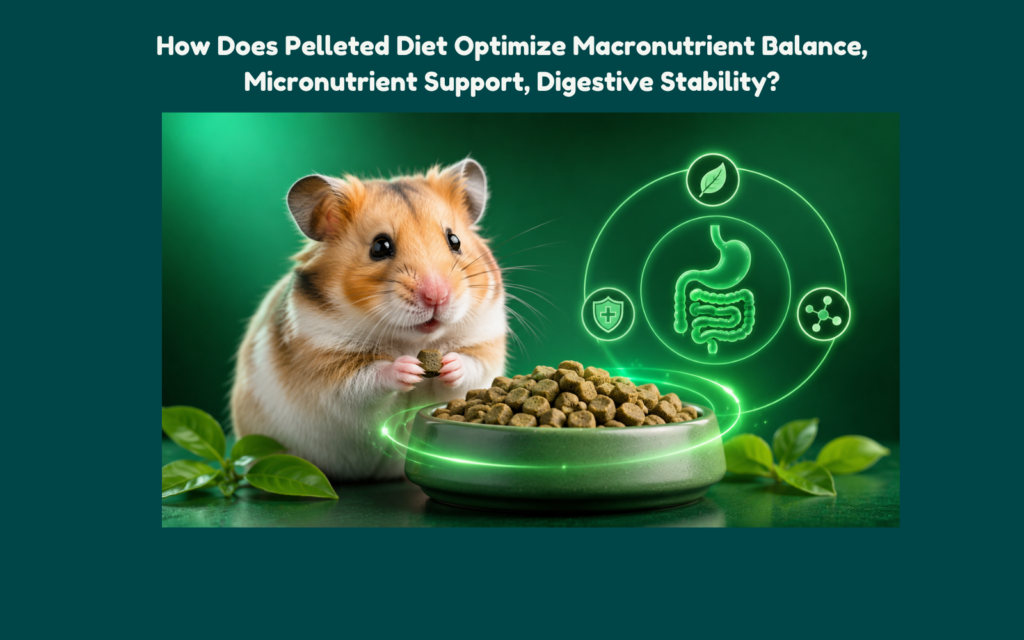
How Does Pelleted Diet Optimize Macronutrient Balance, Micronutrient Support, Digestive Stability?
Choosing a uniform, compressed diet completely removes the guesswork from feeding, guaranteeing your pet receives the exact nutrients they need in every single bite.
Visual explanation: Seed mixes allow hamsters to cherry-pick fatty pieces and leave essential nutrients behind. Uniform pellets guarantee a completely balanced meal in every single bite.
Let’s be honest. When you walk down the pet food aisle, those colorful seed mixes look incredibly appealing to human eyes. They look like a varied, exciting buffet. But here is the problem: those mixes often allow pets to pick out the junk food and leave the healthy bits behind, creating invisible nutritional gaps you might not notice until it is too late.
Think of it like handing a child a bowl containing both chocolate chips and broccoli florets. You know exactly what is disappearing first. A pelleted diet is more like a carefully blended daily smoothie. You don’t get to pick out the spinach and only eat the strawberries. Every single sip delivers the complete, balanced formula.
We are going to break down exactly how uniform blocks lock in protein, deliver hidden vitamins, keep their digestion moving safely, and how to successfully switch over a stubborn eater.
How does a pelleted diet lock in essential daily macronutrient balance?
A uniform laboratory block completely eliminates selective feeding, ensuring the pet consumes the exact required ratio of proteins, fats, and carbohydrates every time they chew.
If we want to build a reliable diet, we have to lock the macronutrients into a single, indivisible format. Why? Because hamsters are biologically wired survivalists. If you give them a choice, their instincts tell them to hoard the high-fat items first—like sunflower seeds or peanuts—and skip the plainer, essential proteins.
When owners rely on loose seed feeding, we frequently see seed mixes without nutritional gaps as a necessary alternative to combat rapid weight fluctuations. The hamster is essentially eating dessert for every meal. But when you switch to a high-quality pelleted diet, you establish a stable, unified baseline. They can’t pick and choose; they just get the nutrition they actually need.
How do extruded dietary blocks ensure reliable micronutrient support?
Beyond just proteins and fats, the manufacturing process of these uniform pieces ensures that essential trace minerals and synthesized vitamins are baked evenly throughout the food.
This is a huge advantage for protecting against age-related deficiencies. In a scattered foraging mix, the added vitamins often come in the form of a powder coating or chalky vitamin supplements that hamsters ignore. Those crucial nutrients usually just end up falling to the dusty bottom of the food bowl, completely wasted.
Extruded dietary blocks solve this entirely. The vitamins are locked inside. Every bite offers a guaranteed, highly bioavailable delivery of the trace minerals they need to stay sharp and active.
What role does uniform fiber content play in pelleted food digestive stability?
The precisely measured roughage integrated directly into commercial blocks supports safe, steady gut motility while simultaneously providing the heavy friction needed for dental wear.
The physical density and fibrous nature of these blocks actually do double duty. First, they provide the constant friction required to safely prevent overgrown hamster teeth. It is built-in dental care.
Visual explanation: The dense, fibrous structure of a pelleted block actively grinds down ever-growing teeth while keeping the digestive tract moving efficiently.
But just as importantly, the mathematically controlled dietary fiber inside that pelleted food keeps waste moving efficiently through the digestive tract. Upgrading to high fiber diets for hamsters ensures the consistency needed to avoid dangerous gastrointestinal stasis and maximize the nutritional value drawn from every meal.
How do you fix eating refusals when transitioning to a pelleted base diet?
If your pet is accustomed to highly palatable, fatty seeds, they might initially reject the uniform blocks—but you can safely pivot their habits without causing a hunger strike.
Switching a hamster cold-turkey from sugary, fatty seeds to plain, less naturally aromatic pellets is a bad idea. They will often just stop eating out of protest. You have to handle this transition like a negotiation.
Visual explanation: The stress-free transition method. Slowly introduce the new pelleted base diet over two weeks to avoid shocking their system or triggering a food strike.
Start by mixing 75% of their old food with 25% of the new uniform pieces. Let them get used to the shape in their bowl. After a few days, shift that to a 50/50 blend. Finally, move to 25% old food and 75% new pellets over a 7-to-14-day period. This slow shift allows the hamster to acclimate to the new texture and smell of their pelleted base diet. Practicing safe hamster diet transitions is crucial for preventing a stress-induced hunger strike.
How do you audit a label to verify pelleted diet optimization today?
You can actively protect your pet’s future health by taking sixty seconds to inspect the bag’s guaranteed analysis to ensure it actually hits the scientific targets.
Don’t just trust the marketing on the front of the bag. Flip it over and run this quick, pre-purchase audit checklist to evaluate the pelleted diet you are considering.
-
Macronutrients
Ideal Indicator: 15–19% protein listed clearly on the guaranteed analysis panel.Warning Sign: Vague ratios or reliance on cheap, unnamed meat meals.Action: Select a block with precise hamster dietary protein ratios.
-
Micronutrients
Ideal Indicator: Natural vitamin E (mixed tocopherols) and listed trace minerals.Warning Sign: Heavy reliance on cheap synthetic dyes instead of actual nutrition.Action: Choose earth-toned blocks fortified with natural vitamins.
-
Digestive Stability
Ideal Indicator: High-quality, whole-grain fiber sources listed in the first three ingredients.Warning Sign: Corn or pure alfalfa listed as the number one ingredient.Action: Upgrade to a block utilizing highly digestible, whole-food fibers.
Getting the foundation right from day one is a simple fix that drastically improves their everyday comfort and long-term health.
Sources & References
- Merck Veterinary Manual — Research and veterinary guidance on rodent nutrition, selective feeding behavior, and balanced dietary formulation.
- VCA Animal Hospitals — Educational veterinary resources covering pelleted diets, hamster nutrition, and micronutrient consistency.
- Royal Veterinary College — Veterinary information related to digestive health, fiber intake, and dental wear in small mammals.
- RSPCA — Animal welfare guidance on gradual dietary transitions and preventing feeding stress in hamsters.