
Can Too Many Vegetables Cause Wet Tail In Hamsters?
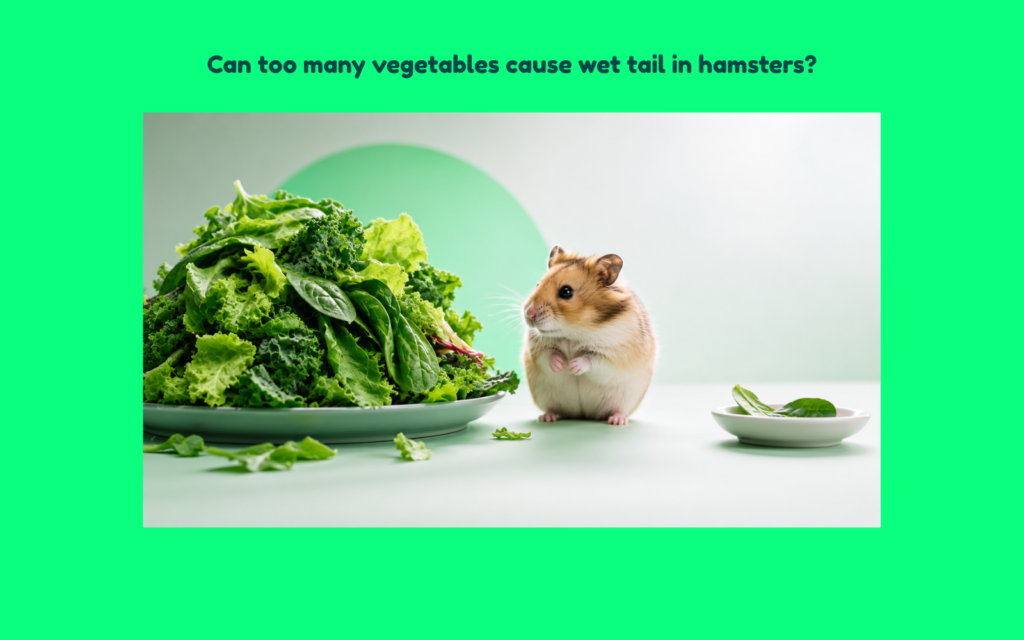
Hamster owners often place vegetables into the enclosure and wonder if the pieces “cause wet tail” in hamsters. While owners use words like “cause” or “wet tail,” the practical reality involves looking strictly at the vegetable pieces in the bowl and the hamster inside the enclosure, and noticing which vegetable pieces remain visibly present and which no longer remain visibly present. Standing beside the enclosure, you look directly through the clear plastic walls. You lean over and look down through the mesh at the top of the enclosure. You look at the hamster resting quietly on the bedding. You look straight into the bowl sitting on the flat presentation surface. Inside the bowl, you see the fresh vegetable pieces. You look closely around the bedding surrounding the bowl. Look closely at the exact placement of the bowl on the top layer of bedding. You see the hamster beside the bowl. You look at the vegetable pieces sitting inside the bowl. You look at the presentation surface holding the pieces. You see the original visible shape of the vegetable pieces. You check the enclosure now, and you plan to check the enclosure again later. When you check the bowl again later, you see exactly what remains visibly present. You are simply observing the visible pieces inside the enclosure.
We are going to break down why owners commonly notice vegetable pieces no longer remain visibly present in the bowl, how to check the visible pieces side-by-side, what a vegetable piece displaying visible surface marks looks like, what to look for when vegetable pieces remain untouched, and how to check your enclosure to see the remaining pieces and the hamster today.
Because vegetables may be offered in different forms, some owners also compare defrosted frozen vegetables before placing those pieces into the bowl and observing what remains visibly present later.
Why do vegetable pieces no longer remain visibly present in the bowl?
Here is what hamster owners commonly notice when they look at the hamster and the vegetable pieces sitting inside the enclosure. When a vegetable piece sits in the bowl alongside the hamster, owners commonly notice that the vegetable piece no longer remains visibly present when they check the bowl later. Treating the missing vegetable piece as an unseen explanation masks the simple reality that the owner is noticing vegetable pieces no longer remain visibly present inside the bowl. Hamster owners simply notice that vegetable pieces no longer remain visibly present. Look closely at the hamster and the vegetable pieces resting in the bowl. Look from above the enclosure. You look down through the mesh and see the flat presentation surface. Look beside the hamster. When you look at the bowl in the morning, you see the vegetable pieces sitting on the presentation surface. When you check the bowl again later, you notice that the vegetable pieces no longer remain visibly present exactly where you saw them earlier.
Look straight into the bowl. You look at the presentation surface and see empty spaces beside the remaining vegetable pieces. Compare what you see when you check the bowl again. You look at the presentation surface and notice the missing vegetable pieces. You see empty space, or you see remaining vegetable pieces sitting untouched in the bowl. Lean closer and look around the bedding immediately surrounding the presentation surface. Look near the corners of the enclosure. Compare the vegetable pieces when you look early in the day, and compare the remaining vegetable pieces when you look later. You look around the presentation surface. You look closely around the bedding. You are simply looking at the pieces and noticing which pieces no longer remain visibly present while other pieces remain visibly present.
The Rule
Look strictly at the vegetable pieces inside the bowl. Look at the presentation surface. Notice which vegetable pieces remain visibly present and which vegetable pieces no longer remain visibly present. Look closely through the clear plastic. Look directly through the mesh. Look at the original visible shape resting on the presentation surface. You look closely at the outer edges of the vegetable pieces. Look at the edges resting on the bowl. Notice the remaining vegetable pieces and compare them to the missing vegetable pieces. You look at the empty spaces inside the bowl. You check the visual differences sitting on the presentation surface.
The Reason
Looking strictly at the vegetable pieces inside the bowl replaces assumptions. You look at the bowl and notice exactly what sits on the presentation surface. You look at the enclosure and see the remaining vegetable pieces and the missing vegetable pieces. You simply notice what appears before you. You check the presentation surface, and you look at the remaining vegetable pieces sitting exactly where you placed them. You see the remaining vegetable pieces, and you see the missing vegetable pieces, and you look no further than the visible surface marks on the pieces.
Observation Example
Look at two distinct vegetable pieces sitting inside the bowl. You see the original visible shape of both pieces on the presentation surface. Look at the hamster sitting beside the bowl. Look at the bowl again later. You notice the missing vegetable pieces. You look at the presentation surface and see only the remaining vegetable pieces. You compare the missing vegetable pieces to the remaining vegetable pieces. You look at the empty spaces inside the bowl. You look closely at the remaining vegetable pieces and notice the visible surface marks on the pieces sitting on the presentation surface. Look at the visibly smaller vegetable piece resting in the bowl. Compare the visibly smaller vegetable piece to the original visible shape you saw earlier. Look at the small vegetable fragments resting on the presentation surface. You check the remaining vegetable pieces and look at the modified edges.
How do you check the visible pieces when providing vegetable pieces in the bowl?
Look at the vegetable piece side-by-side with the other piece. Check the presentation surface inside the bowl. Notice when you look at the bowl later that the vegetable piece no longer remains visibly present.
Mixed Placement
Dropping pieces into the bowl places them where you see vegetable pieces resting beneath loose bedding or piled together on the presentation surface. Look through the clear plastic. You look at the piled pieces and notice the original visible shape becomes difficult to compare. You look inside the bowl and see vegetable pieces resting against each other. Look through the mesh. You see the hamster walking near the bowl. Check the bowl later. You look closely at the piled pieces, but you notice the missing vegetable pieces merge visually with the remaining vegetable pieces. You look around the bedding and see scattered pieces. You look beside the hamster and check the presentation surface, but the piled pieces mask the visibly smaller vegetable piece. You look through the clear plastic and notice the outer edges overlapping. You look at one piece resting over the visible surface marks of another piece. You check the bowl, and you see the remaining vegetable pieces stacked on the presentation surface.
Side-By-Side Placement
Place one distinct vegetable piece side-by-side with another distinct piece on the presentation surface inside the bowl. Look at the two pieces resting inside the bowl. Make sure you see equal spacing between the pieces. You see one vegetable piece directly next to the other vegetable piece. You see the flat presentation surface between them. Look beside the hamster. Check the presentation surface inside the bowl later. Notice when you look at the bowl later that the vegetable piece no longer remains visibly present while the other vegetable piece remains visibly present. A side-by-side placement allows you to see the missing vegetable pieces next to the pieces remaining visibly present. Look closely through the clear plastic. You see the remaining vegetable pieces resting on the bottom of the bowl. Look through the mesh. You see an empty space beside the remaining vegetable pieces. Check again later. Compare what you see on the presentation surface now with what you saw earlier. Look around the presentation surface. Look around the bedding. You see exactly which pieces no longer remain visibly present. You look at the empty spaces, and you look at the remaining vegetable pieces displaying visible surface marks.
What visual signs distinguish a vegetable piece displaying visible surface marks from a piece displaying no visible surface marks?
Look closely at the surface of the vegetable pieces sitting in the bowl. When you look at the piece later, you see immediate visual differences. You check the presentation surface and look at the outer edges. You see the outer edges resting in the bowl. You look closely at the visibly smaller vegetable piece.
Piece With Visible Surface Marks
Look at the surface texture. Check whether localized edge marks cut into the smooth areas. Look closely at the outer edges of the vegetable piece. Check for rough areas where the original visible shape appears altered. Notice the missing chunks along the edges of the visibly smaller vegetable piece. Look at the presentation surface immediately surrounding the visibly smaller vegetable piece. Check for small vegetable fragments resting in the bowl directly next to the visibly smaller vegetable piece. You look at the visible surface marks on the surface texture. You see modified edges along the piece. You look at the rough areas, and you notice the missing chunks. You compare the visibly smaller vegetable piece to the small vegetable fragments sitting beside it on the presentation surface. You check the remaining vegetable pieces and look at the modified edges.
Untouched Piece
Compare an untouched piece with a piece displaying visible surface marks. Look at a vegetable piece displaying no visible surface marks. You see a piece displaying its original visible shape in the bowl. It remains exactly where you saw it earlier. You see perfectly intact, smooth areas with no visible surface marks, clean edges, no missing chunks, and no small vegetable fragments resting nearby. Look at the firm surface. Look at the exact lines of the original visible shape. You look at the remaining vegetable piece and see no visible fragments on the presentation surface. You look at the smooth areas and notice the original visible shape remains untouched.
Place an untouched vegetable piece side-by-side with a vegetable piece displaying visible surface marks. Look at the original visible shape next to the visibly smaller vegetable piece. On the visibly smaller vegetable piece, you see rough areas, modified edges, and missing chunks. Look at the uneven lines along the outer edges. Look at the small vegetable fragments in the bowl. On the untouched piece, you see the exact original visible shape you saw earlier. Comparing the missing chunks and modified edges to the intact smooth areas, you see the pieces displaying visible surface marks.
What should you do if you notice vegetable pieces remain visibly present when you check the bowl later?
Look at the untouched vegetable pieces that remain visibly present in the presentation area when you check the bowl again. Look at the bowl and notice the remaining vegetable pieces sitting on the presentation surface. You look at the remaining vegetable pieces. You compare the remaining vegetable pieces to the empty spaces.
Check the presentation surface inside the bowl. Look at the original visible shapes and the outer edges. You see the vegetable pieces sitting exactly as they appeared when you saw them earlier. Compare the shapes you see in the bowl. Notice the smooth areas on the surface and the lack of visible surface marks across the remaining vegetable pieces. You look inside the bowl and check the remaining vegetable pieces.
Look beside the hamster. Look closely across the top layer of bedding directly next to the presentation surface. Check the bedding. Look around the bedding. Look around the bowl. Notice whether the missing vegetable pieces appear there. Compare the remaining vegetable pieces with the missing vegetable pieces. Look at the original visible shape resting in the bowl, and look at the missing chunks resting on the bedding. You check the presentation surface, and you look at the remaining vegetable pieces. You look beside the hamster and notice the missing vegetable pieces resting on the bedding. You compare the remaining vegetable pieces inside the bowl to the missing vegetable pieces on the bedding. You check the visible shapes.
Look near the corners of the enclosure. Check whether missing vegetable pieces appear just inside the corners. Look straight through the clear plastic walls stretching across the enclosure. Look closely through the clear plastic. Check whether small vegetable fragments or modified edges of the vegetable pieces appear on the flat bottom of the enclosure. Look around the presentation surface. Compare what you see resting in the bowl with what you see resting in the bedding. You are simply looking at the untouched vegetable pieces in the presentation area and checking the surrounding visible surfaces to see where the missing vegetable pieces appear.
How do you check your enclosure today to see the remaining pieces of vegetables?
Walk over to your enclosure right now to perform a visual check. Lean closer to the clear plastic wall of the enclosure. Look closely at your enclosure. Look through the clear plastic on the sides. Look straight through the mesh on the top. Look across the top layer of bedding. Look directly at the vegetable pieces resting inside the bowl or on the bedding. Look closely at the top layer of bedding around the presentation surface. Look around the presentation surface. Look around the hamster. You look at the hamster resting on the bedding, and check whether remaining vegetable pieces appear beside the hamster. You look inside the bowl, and you see the remaining vegetable pieces on the presentation surface. You look beside the hamster, and you notice the missing vegetable pieces.
Look in the corners of the enclosure. Look closely inside the corners of the enclosure. You see piles of soft bedding mixed with pieces. Look inside the corners for remaining vegetable pieces displaying no visible surface marks. Look for the missing vegetable pieces. Notice whether the vegetable pieces no longer remain visibly present anywhere in the corners. Look through the clear plastic and check the bottom of the enclosure. You look in the corners, and you see the remaining vegetable pieces resting on the bedding.
Look for visible surface marks on any remaining vegetable pieces. Look for modified edges or missing chunks on the outer edges. Look for a visibly smaller vegetable piece. Compare the remaining vegetable pieces you see in the corners with the remaining vegetable pieces you see on the presentation surface. Look at the remaining vegetable pieces displaying no visible surface marks in the bowl and the missing vegetable pieces in the corners. You notice the visible surface marks, the modified edges, the missing vegetable pieces, and the remaining vegetable pieces inside the presentation area.
Perform this visual check to see the remaining pieces and the hamster today.
Conclusion
Navigating the vegetable pieces in the presentation area relies entirely on looking at what appears before you. By checking the presentation surface side-by-side, comparing the original visible shape when you look at the bowl again, and noticing when vegetable pieces no longer remain visibly present, you see the remaining vegetable pieces and the missing vegetable pieces. When you look at the enclosure, you notice the visible surface marks, the modified edges, the remaining vegetable pieces, and the missing vegetable pieces. Keep your focus entirely on what is visibly present inside the enclosure, on the vegetable pieces, and across the bedding. Continue looking at the remaining vegetable pieces, the missing vegetable pieces, the visible surface marks, the visibly smaller vegetable piece, and the modified edges when you check the enclosure later.
Sources
Disclaimer
The information provided on HamsterAtlas regarding observation and the physical presence of vegetable pieces within the enclosure is intended for educational and observational purposes only. This observational framework is not a substitute for professional veterinary advice, diagnosis, or medical treatment. If you have concerns about your hamster’s health or specific medical conditions, always consult a qualified veterinarian.