
How Many Tablespoons Of Food Does A Syrian Need?
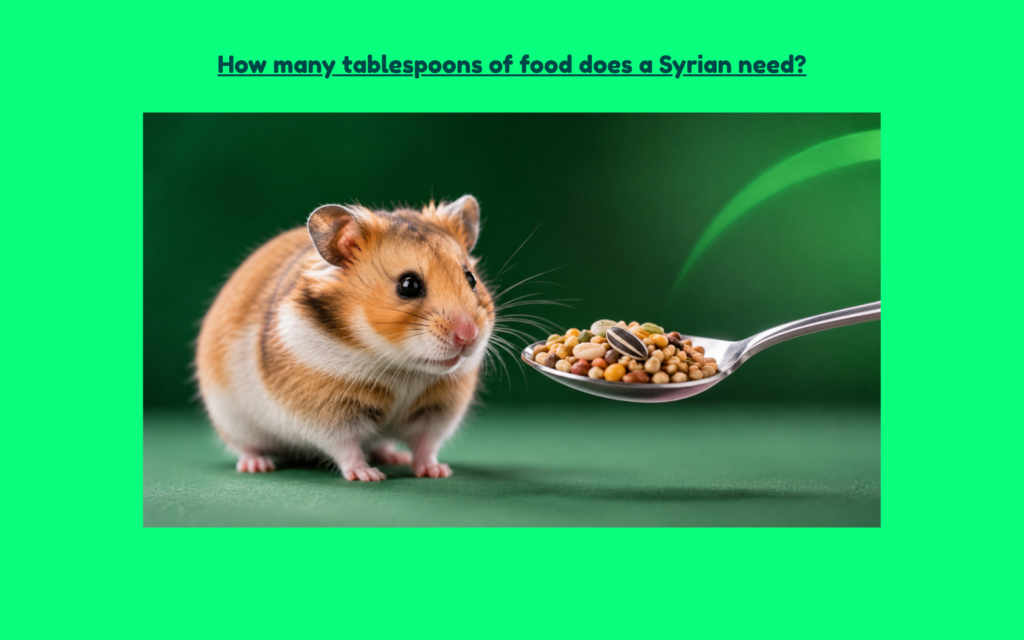
It happens in kitchens everywhere. You open a fresh food bag, grab a standard measuring spoon, and wonder how many scoops your Syrian hamster actually needs. A tablespoon feels incredibly familiar. It sits right there in the drawer. But using it to dish out a chunky seed mix quietly leads to wildly inconsistent meals.
We are going to break down why measuring spoons fail with seed mixes, how to easily switch to a digital kitchen scale, and exactly how to check the consistency of your current daily scoop today.
Think about scooping mixed nuts from a bowl. One scoop might grab three heavy walnuts. The very next scoop might only pick up light sunflower shells. The spoon looks full both times. However, the actual amount of food changes every single time.
Why is a digital scale preferred over a tablespoon measurement to prepare your Syrian hamster’s daily meal?
When you dip a spoon into a bag of hamster food, you rely on chance. The reality of dealing with a chunky seed mix quickly becomes clear in the kitchen. You open a fresh food bag on day one. You take a scoop right from the very top. That first dip often grabs a specific blend of ingredients sitting at the surface.
Then, you return to the same bag days later. The bag is now half empty. The ingredients have settled. The heavy pieces have sunk entirely. Here is what owners commonly notice during this process. The visual surprise is immediate. You pull up a scoop filled mostly with large, heavy pellets. The next day, that same spoon might pick up mostly light seeds and dried herbs.
Look closely at the scoop in your hand. The physical space inside the spoon remains the same. Yet, the actual food sitting inside that space shifts dramatically. Compare one scoop to the next on any given night. You will see completely different ingredient combinations staring back at you.
This shifting mixture produces an unpredictable meal compared to simply placing the bowl on a scale.
The Rule: A standard spoon naturally grabs different ingredients every time you dip it into the bag.
The Reason: Relying on a tablespoon measurement creates daily inconsistencies because heavy pieces sink and light pieces float in the mix.
The Example: You might scoop a heavy meal on Monday, but grab a light, airy meal on Tuesday. Weighing the food provides a reliable everyday meal.
How do you switch from using a measuring spoon to a digital scale routine?
Making the switch happens right on your kitchen counter. It is all about establishing a repeatable daily habit. Start by preparing your feeding bowl. Set the bowl down first on the kitchen counter.
Turn on your digital kitchen scale. Place the empty bowl directly onto the scale. Safely zero the bowl out. This ensures the scale only reads the food you are about to add. Add the food slowly from the bag. Watch the numbers on the screen tick up. Keep adding until you reach the proper amount.
This simple step allows you to step away from visual guessing. You can stop wondering if the spoon is too full or too empty. The goal is to build a reliable evening routine.
Repeat the same routine tomorrow evening. Do it exactly the same way. The consistency of your Syrian hamster’s daily meal will dramatically improve. You remove the changing variables of a simple scoop.
The Failure of Unmeasured Scooping: A simple scoop fails because it changes based on how the ingredients settle in the bag.
The Success of Weighing: Utilizing a digital scale locks in a consistent measured amount for your Syrian hamster’s daily meal, removing the guesswork entirely.
What physical differences exist between a weighed meal and a guessed scoop?
A side-by-side inspection reveals a stark contrast. A weighed meal provides a highly repeatable amount of food every single night. It does not matter if the mix is dusty. It does not matter if the mix is chunky. It does not matter if the mix is full of large seeds.
Look at the bowl after you weigh the food. The appearance is highly predictable. Measuring ensures there are fewer surprises for you and your pet.
Contrast this directly with a guessed scoop. A spoon looks entirely different based on how the ingredients settle at the bottom of the bag versus the top. Notice how different it appears from one night to the next. You get constantly changing ingredient combinations.
Compare tonight’s portion with yesterday’s scooped portion. The drastically different-looking portions leave owners guessing. Taking up physical space in a spoon does not equal a complete meal.
The reliable routine of a weighed meal guarantees the dish gets filled properly. The changing results of a spoon leave the meal to chance.
How do you fix an inconsistent feeding routine caused by relying exclusively on tablespoon measurements?
You can correct this routine in just a few minutes. Grab your feed container and head to the counter. Set the spoon aside entirely. Leaving it in the drawer removes the temptation to guess.
Check the packaging on the back of your food bag. Look for the recommended measured amount for your specific brand. Finding this information sets your daily goal.
The Scale Transition Steps
- Set aside the standard measuring spoon. This stops the guessing habit immediately.
- Check the food packaging for the recommended measured amount. This tells you exactly what to look for on the screen.
- Place the empty feeding bowl on a digital kitchen scale and zero it out. This isolates the weight of the food from the bowl.
- Add the seed mix until the scale reads the correct, consistent weight. Build the new habit gradually over the next week.
A common mistake is falling back to the spoon when you are in a rush. Resist this urge. Trusting the scale makes consistency improve over time. It eliminates the daily guesswork completely. You replace a flawed habit with a reliable, observation-driven routine.
A tablespoon may seem like a convenient way to prepare a hamster’s meal, but long-term feeding success depends on more than a single scoop. Once owners establish a consistent daily amount, the next step is building a structured feeding routine that tracks intake, prevents selective eating, and creates predictable feeding habits over time.
How do you check your current scoop to verify the consistency of your Syrian hamster’s daily meal today?
Turn this into a complete, hands-on kitchen-counter experiment. Turn on your digital scale. Place a small dish on it and zero it out. Scoop your usual tablespoon of food and dump it on the scale. Note that number.
Now, dump the dish back into the bag. Run the test again immediately. Scoop the food and weigh it a second time. Look at what ended up in the scoop this time around. Notice the constantly changing contents. Then, do it a third time.
Compare the results directly against each other. You will visibly see how much the number changes between scoop one, scoop two, and scoop three. Look closely at the ingredient differences between the scoops. You will visually identify the inconsistency. This shows you exactly how easily a spoon creates feeding errors.
Quick-Reference Audit Checklist
- Target issue: Checking the consistency of a standard tablespoon scoop.
- Visual indicator: Weighing the same scoop twice to identify different amounts between scoops.
- Required change: Adopting a more reliable feeding method.
- Action to take: Retiring the measuring spoon and exclusively using the digital scale moving forward.
Measuring spoons seem incredibly simple at first glance. However, they are often highly misleading for chunky foods. Seed mixes shift constantly inside the bag. Everyday consistency is much easier to achieve with a digital scale. Repeated scoop testing quickly reveals these hidden differences. Making small routine changes creates much more predictable meals for your pet.
Perform this physical audit today, weigh your usual scoop, and adopt a scale-based measuring routine if the audit reveals shifting food amounts.
References & Source Materials
-
National Center for Biotechnology Information. “Portion Size: What We Know and What We Need to Know.”
https://pmc.ncbi.nlm.nih.gov/articles/PMC4337741/ -
Feeding Raven Doodles. “How to Accurately Measure Your Pet’s Food.”
https://www.feedingravendoodles.com/articles/how-to-accurately-measure-your-pets-food -
National Center for Biotechnology Information. “Volume based feeding versus rate based feeding in the critically ill.”
https://pmc.ncbi.nlm.nih.gov/articles/PMC6820220/
Important Disclaimer: The information provided in this guide is for educational and observational purposes only. It is not intended as a substitute for professional veterinary advice, diagnosis, or treatment. Always seek the advice of a qualified exotic veterinarian with any questions you may have regarding your Syrian hamster’s specific medical condition, dietary requirements, or overall health. Never disregard professional medical advice or delay in seeking it because of something you have read on HamsterAtlas. The methodologies discussed focus entirely on establishing consistent home husbandry routines and do not replace professional nutritional or medical guidance.