
Why Does My Hamster Hate Their Pellets But Love The Seeds?
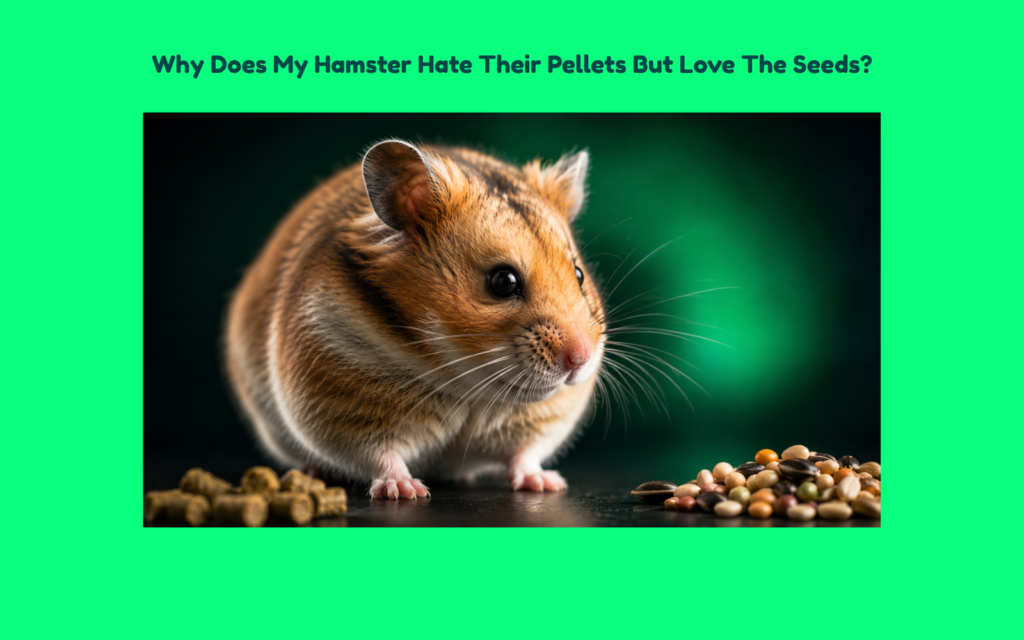
It is incredibly frustrating to buy a high-quality food mix, pour it into the bowl, and watch your hamster devour the seeds while seemingly ignoring the plain pieces. The immediate assumption is that your hamster hates the brown pieces and loves the seeds. The reality of what is happening in the enclosure is much more practical.
We are going to break down why hamsters naturally sort their food, how to track exactly what they are eating, and how to safely adjust your daily scoop if pellets keep piling up. Think of it like a child eating a plate of food. If they eat the dessert first and leave the broccoli sitting on the plate for an hour, it doesn’t always mean they hate broccoli; it just means they ate the high-value item first.
Why do hamsters commonly prioritize high-value seeds over lower-preference pellets?
Here is what owners actually observe on a daily basis. When you fill a fresh bowl with a perfectly balanced mixed scoop and return later the same day, the visual change is striking. Look at what disappears first: the rich sunflower seeds, the pumpkin seeds, and the larger bits vanish almost immediately from the surface. Compare that with what remains: the plain, compressed brown pellets sitting undisturbed at the bottom of the dish.
What owners interpret as emotional preference is actually just a highly predictable pattern of ingredient selection. This is a purely physical routine based on availability. They simply fill up on the richest items available in the bowl first. If the dish is overflowing with seeds every single day, the plain pieces will never disappear because the animal never needs to reach for them.
The Sorting Reality
- The Rule: High-value items are hoarded or consumed instantly, while lower-preference items are left for later.
- The Reason: Treating leftover pellets immediately as a sign of permanent dislike often masks the physical reality that the hamster is simply filling up on high-value items first.
- The Example: If you provide a massive scoop, the sorting becomes highly exaggerated in the bowl.
You must observe the exact same pattern repeat across multiple days to confirm it is a physical routine. If a surplus is consistently provided, they will naturally prioritize high-value seeds over lower-preference pellets. It is an observable mechanism of eating the best things first.
Once you begin tracking what disappears first from the bowl, a broader pattern starts to emerge. The hamster is not simply choosing between pellets and seeds. It is actively sorting individual ingredients, consistently consuming certain pieces while leaving others untouched. Over time, these repeated choices reveal which components are treated as high-value foods and which are routinely bypassed.
How do you track the daily consumption of pellets compared to high-value seeds?
Visual bowl estimation is notoriously unreliable. It makes selective sorting look much worse than it is because the empty space left by consumed seeds makes the remaining pellets look like a massive, untouched pile. To fix this, you need a strict, weight-based tracking routine.
Grab a digital kitchen scale and measure the total weight of the mixed food scoop before placing the bowl into the enclosure. Leave it undisturbed overnight. Check the bowl the next morning. You are no longer guessing if they ate anything; you are tracking the physical weight of their measured leftovers. Carefully remove the dish and place it back on the scale.
Compare yesterday’s scoop with today’s leftovers to get an accurate visual read on selective sorting. Look closely at what remains. By subtracting the weight of the leftover pellets from the initial scoop, you have definitive proof of what was consumed. This transforms visual anxiety into a physical tracking routine. Relying on this daily measurement ensures you are responding to hard data rather than the frustration of seeing plain brown pieces repeatedly left behind. The consumption of pellets compared to high-value seeds becomes a clear, manageable metric.
What visual signs distinguish a temporarily ignored pellet from a consistently rejected ingredient?
Understanding the difference requires careful visual comparison over several days. First, let us look at a temporarily unconsumed pellet. Look inside the bowl on day one, and you will see the plain pieces left behind. However, check back on day two or three. The pellet often disappears later in the week as the initial seed stash is depleted.
Check the hiding spots across the enclosure. Often, these pieces are physically moved from the main bowl to a recognized hoarding corner. In this scenario, there is no massive accumulation in the bowl, and the measured leftovers visibly reduce over time.
Now, contrast this directly with a consistently rejected ingredient. Notice what keeps appearing at the bottom of the bowl day after day. You will physically see an untouched, growing layer of the exact same pellets. The measured leftovers do not shrink over the week. Furthermore, you might find these specific pieces actively discarded—deliberately kicked out of the bowl and buried into the soiled bedding, completely ignored. This growing volume of leftovers is the visual sign of true avoidance.
What should you do if your hamster consistently leaves lower-preference pellets behind?
If you have verified a genuine, growing pile of leftovers, it is time to act. Visually isolate the unconsumed pellets in the bowl to confirm exactly which pieces are being ignored.
Next, review the daily seed allowance to ensure it is not creating a massive surplus. Pause before adding more food. Do not immediately pour a fresh scoop of mixed seeds over the old pellets, as this just restarts the sorting cycle and guarantees the plain pieces will never be eaten.
Observe the bowl over the next few days to see if a slightly smaller daily scoop encourages pellet consumption. Give the leftovers time to be reconsidered once the high-value items are gone. Finally, adjust the daily feeding amount based on what is actually disappearing. Make practical adjustments to the daily portion size to prevent massive overfeeding of seeds, ensuring a more balanced intake based on measured leftovers.
How do you audit your enclosure’s feeding zones to verify selective sorting today?
To fully understand what is happening, you need to conduct a physical inspection. Walk over to the enclosure right now and physically check the primary bowl. Are there large piles of untouched pellets? Next, gently sift through the nearby bedding for kicked-out pieces. Look in the corners for secondary stashes. Finally, gently inspect the main hoard locations if they are accessible.
Compare what you find. Finding empty seed shells physically proves that the high-value ingredients were enthusiastically eaten, while intact pieces scattered in the bedding confirm they were intentionally bypassed. Repeated observations of this exact physical scenario across multiple enclosure cleanings will finally confirm their daily consumption habits. Look closely to verify selective sorting today.
Quick-Reference Audit Checklist
- Target issue: Checking the daily consumption habits.
- Visual indicator: Locating large piles of untouched pellets either in the bowl or discarded in the bedding.
- Required change: Confirming if the pellets appear consistently uneaten across repeated observations.
- Action to take: Reassessing the daily feeding routine to prevent overfeeding seeds if a persistent pellet surplus is visually confirmed.
Remember that plain pellets remaining in the bowl for a day or two does not automatically mean permanent rejection. Repeated observation matters much more than a single day’s leftovers. The hiding spots across the enclosure tell an important story about what is actually being stored versus what is genuinely being ignored. Watching these measured leftovers carefully reveals clear eating patterns over time. Routine physical audits prevent unnecessary food waste and keep your feeding schedule perfectly aligned with your hamster’s actual consumption.
Perform this physical audit today, look closely at your enclosure’s feeding zones, and adjust your daily scoop if you find a massive pile of untouched pellets.
Scientific & Dietary References
Important Disclaimer
The information provided in this guide is for educational and observational purposes only and does not constitute professional veterinary advice. HamsterAtlas is not a substitute for a qualified exotic veterinarian. Never attempt to force a hamster to eat by withholding all food (forced starvation), as this can lead to severe health consequences. If you notice sudden weight loss, lethargy, or a complete refusal to eat, consult an exotic veterinarian immediately.