
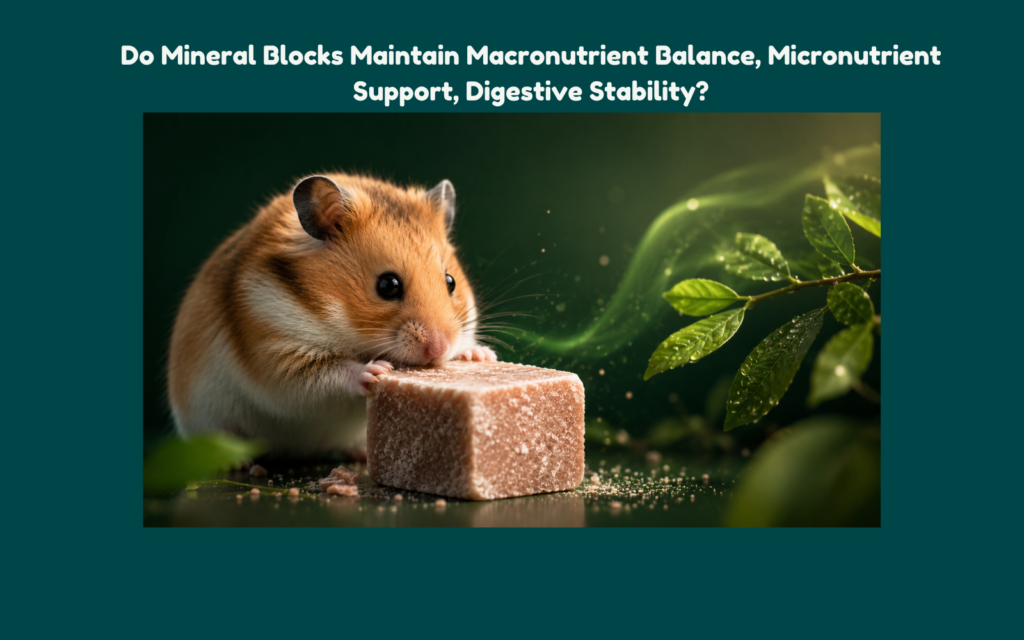
Do Mineral Blocks Maintain Macronutrient Balance, Micronutrient Support, Digestive Stability?
Pet stores constantly push hard salt wheels and calcium stones as essential health items, but placing one of these blocks in your pet’s cage actually threatens to derail their entire internal chemistry.
It is incredibly easy to fall for the packaging. The marketing is highly deceptive. It feels like a very responsible choice to provide a supplement stone to your pet, especially if a store clerk insisted it would file down their teeth. Your intentions are in the right place. But here is the reality we need to look at: these blocks are outdated, dangerous tools.
We are going to break down why these stones offer absolutely zero real food value, how they silently overload tiny kidneys, and exactly how to fix the damage today.
Think of it like a human trying to hydrate by drinking a gallon of ocean water. It seems like it contains the natural trace elements you need to survive. But the massive, unnatural concentration of salt actually destroys your organs rather than nourishing them.
Why does the mineral block format inherently fail to support daily macronutrient balance?
Because this purely inorganic, zero-calorie dietary format contains absolutely no proteins, fats, or carbohydrates, it cannot contribute a single thing to your pet’s core daily energy requirements.
Chart Explanation: Comparing the zero-calorie deficit of an inorganic mineral block to the essential macronutrients required for a hamster’s daily energy needs.
When an animal sits in the corner chewing on a stone, they are not eating. They are simply ingesting a non-nutritive rock. It provides zero metabolic fuel for their little bodies. The strict rule here is simple. Never treat this specific format as a substitute for real food, treats, or active foraging. Proper, balanced diets eliminate the need for artificial mineral support.
Hamsters have a strict biological need for healthy proteins and fats. They rely on those macronutrients to maintain their muscle mass and generate body heat. Because a mineral stone provides zero calories, it actively takes up time and space in their daily routine without offering a single ounce of actual survival value.
Picture a hamster chewing on a healthy, fibrous hay strand. That hay provides vital functional gut roughage. Now contrast that with a hamster desperately licking the mineral block format. The block leaves them entirely devoid of the essential macros they need to live and thrive.
How do commercial supplement blocks risk overloading essential micronutrient support?
Modern pelleted base diets are already fully fortified, meaning adding a dense salt or calcium block creates a toxic overlap that severely strains their tiny kidneys.
When you feed a standard, high-quality commercial diet, you are already providing safe, biologically appropriate trace mineral delivery. The food bag already has the exact, scientifically measured amount of calcium and sodium your hamster needs for the day. It is perfectly balanced, proving that fortified nutrition already replaces outdated supplement stones.
Chart Explanation: Visualizing how combining a fully fortified base diet with a concentrated mineral block creates a dangerous micronutrient overload.
But here is the catch. Free-feeding commercial supplement blocks introduces dangerous, concentrated spikes of those same minerals. Often, hamsters will sit and gnaw on these blocks out of pure cage boredom. They have nothing else to do. Without realizing it, they are actively poisoning themselves simply by trying to pass the time.
What impact does the hard calcium stone category have on digestive and metabolic stability?
Excessive salt and mineral consumption forces the hamster to drink unnatural amounts of water, which completely disrupts the delicate osmotic balance required for safe digestion and normal gut motility.
Chart Explanation: The step-by-step biological sequence showing how toxic salt loads trigger frantic water intake, leading directly to gut flushing and severe renal strain.
It creates a dangerous biological cascade. When a hamster ingests the hard calcium stone category, their little body panics. It desperately tries to dilute the massive, toxic sodium and calcium load hitting their bloodstream. To survive, they are forced to drink frantically, as concentrated salt exposure destabilizes internal hydration rapidly.
This creates a severe biological tipping point. All that unnatural water intake flushes straight through their hindgut. It completely washes away their healthy, necessary gut bacteria and triggers violent diet-induced diarrhea. At the exact same time, it places lethal renal strain directly on their liver and kidneys.
How do you fix systemic imbalances caused by the mineral block format?
If you notice early signs of mineral toxicity—such as excessive urination, frantic water bottle drinking, or diet-induced lethargy—you must immediately eliminate this concentrated supplement from the cage.
The Dietary Repair Template
The Problem: Owners look in the cage, see their hamster drinking constantly, and assume the animal is just happily hydrating. They completely miss the reality that the pet is desperately trying to flush a toxin from its system.
The Solution: You need a strict elimination protocol right now. Open the cage and permanently remove the mineral block format from the habitat. Force the pet to rely strictly on its scientifically balanced, fortified core diet and fresh, plain water. This is the only way to safely reset its internal hydration and re-stabilize its mineral levels, because toxic mineral overload strains delicate kidney function.
How do you audit your habitat to evaluate mineral block integration today?
You can instantly protect your pet from kidney strain and dehydration by cross-referencing your cage accessories with your food bag’s guaranteed analysis today.
Removing these outdated, inorganic supplements from their environment is a simple fix that actively protects their kidney function and ensures long-term metabolic stability.
Veterinary Sources & Citations
- Hamsters – Exotic and Laboratory Animals — MSD Veterinary Manual
- Providing a Home for a Hamster — MSD Veterinary Manual
- Routine Health Care of Hamsters — Merck Veterinary Manual
- Hamster Care — Veterinary Partner (VIN)