
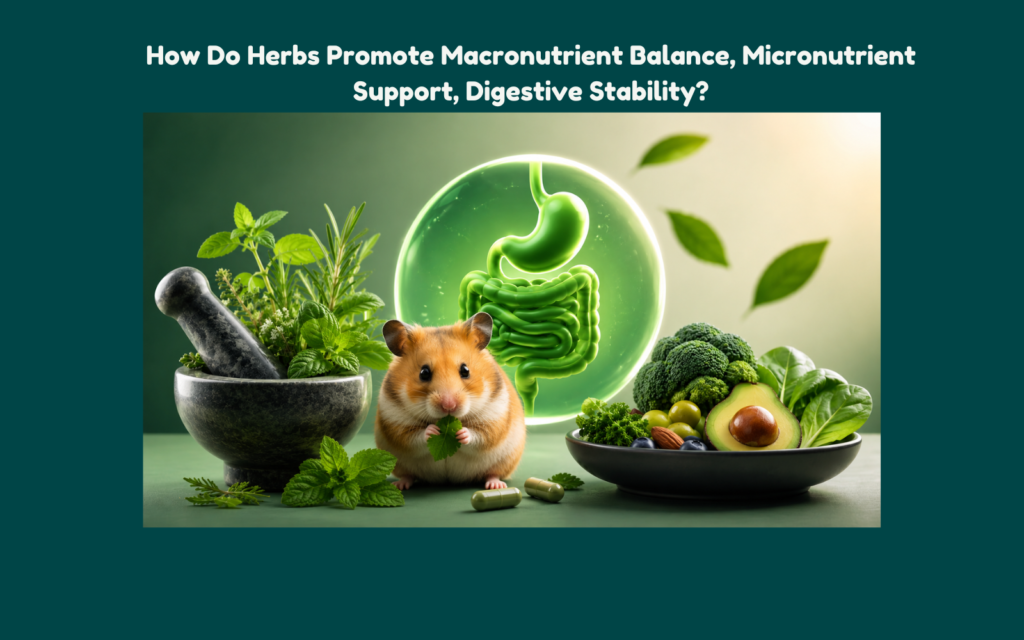
How Do Herbs Promote Macronutrient Balance, Micronutrient Support, Digestive Stability?
Scattering aromatic leaves and flowers into your pet’s enclosure provides the ultimate natural enrichment without adding a single ounce of fat to their waistline.
You want to spoil your pet to cure their boredom, but you worry about causing obesity. It is a common struggle. Hamsters are natural scavengers. When they smell earthy, natural vegetation, their brains light up. We are going to break down why these zero-calorie leaves are the perfect guilt-free foraging tool, how they gently soothe the gut, and exactly how to use them to break bad eating habits.
Think of it this way. Offering a dried forage mix is like a human drinking a zero-calorie herbal tea. It provides warmth, comfort, and trace antioxidants. It completely satisfies a craving without disrupting your daily diet.
How does the herbal format support daily macronutrient balance without adding excess calories?
Because this extremely low-calorie, zero-fat dietary category provides bulk without heavy energy, it allows hamsters to engage in constant foraging without skewing their essential daily macro ratios.
Chart 1: While fatty seeds quickly consume a hamster’s daily energy limits, herbal forage provides unlimited enrichment with zero caloric impact.
You can safely use this lightweight herbal format to satisfy their natural behavioral needs without limits. A hamster is biologically driven to scavenge and sort constantly. If you try to satisfy that urge with seeds, they will become obese.
Contrast the rapid weight gain of treating a hamster with fatty nuts against the safety of scattering calendula or dandelion leaves. The latter satisfies their brain’s need to forage without physically displacing the protein-dense core diet required for daily energy. They get all the joy of sniffing out a hidden petal without any of the dietary fallout.
How do dried botanical blends deliver supplementary micronutrient support?
Beyond acting as a safe boredom breaker, this natural plant category provides a unique, highly bioavailable source of soil-derived trace vitamins and essential oils.
Let us look at the cellular level. Dried botanical blends offer an efficient, holistic cellular absorption of organic trace minerals and antioxidants. Compare this directly to the slower breakdown of synthesized vitamin coatings found on dry commercial pellets. While the volume of vegetation ingested is small, the cellular quality of the nutrients is exceptionally high. It perfectly complements a standard commercial mix with a subtle, organic vitamin boost, completely free of synthetic fillers.
What role does the specific fiber profile of the herb category play in digestive stability?
The delicate, leafy roughage found in this food type provides safe, gentle gut stimulation while delivering natural plant compounds that actively soothe the gastrointestinal tract.
Chart 2: Leafy roughage gently sweeps through the gastrointestinal tract, stimulating motility while natural plant compounds actively soothe internal tissues.
Integrating this specific functional fiber keeps the hindgut moving efficiently. It does this without causing the harsh abrasions associated with processed wood pulp or cheap grain dust often hidden in lower-quality foods.
But here’s the catch. It is not just about keeping things moving. Botanical roughage supports gentle digestion, and specific natural plant compounds, like those found in the herb category—think dandelion or chamomile—naturally soothe the digestive tract. This actively reduces internal inflammation, ensuring your pet processes their core diet comfortably.
How do you fix dietary boredom and selective eating by introducing the herb format?
If your pet is sleeping all day or refusing their healthy pellets while holding out for fatty treats, you can actively reset their natural scavenging behaviors by scattering this aromatic category into their bedding.
Chart 3: The behavior reset cycle: Scattering aromatic herbs triggers intense olfactory stimulation, forcing the hamster to actively dig and work for their food.
Hamsters become lazy and picky when they know their owner will just hand them high-fat treats on demand. You need a dietary repair strategy. Calming botanicals reduce behavioral stress, making them the perfect tool to transition your pet away from demanding high-fat treats.
Completely stop feeding high-fat treats for enrichment. Instead, scatter and lightly bury the herb format directly into the clean bedding. Because this aromatic forage stimulates natural scavenging, heavily stimulating their olfactory senses forces the pet to actively dig and forage. This breaks the cycle of boredom and physically resets their natural drive to work for their food.
How do you audit your feeding routine to ensure safe herb integration today?
You can actively protect your pet’s delicate respiratory system by physically inspecting your current botanical bags for dangerous dust, synthetic dyes, or unsafe additives today.
-
Botanical Type & Quality
Ideal Physical Indicator: Intact, vibrant petals and crisp leaves (like dried calendula, rose petals, or plantain leaves).Warning Sign: Crumbled, unrecognizable gray dust at the bottom of the bag.Action: Discard the powdery dust entirely; never expose a hamster’s sensitive lungs to pulverized plant matter or respiratory dust. -
Purity & Additives
Ideal Physical Indicator: The mix smells purely like earthy tea or dried grass.Warning Sign: Unrecognizable, heavily fragranced wood shavings or brightly dyed pieces mixed in.Action: Throw the bag away. Artificial fragrances and synthetic dyes are highly toxic to their respiratory and digestive systems. -
Sourcing Safety
Ideal Physical Indicator: Edible-grade, organic packaging explicitly stating it is safe for small animals.Warning Sign: Foraging weeds from a local park or a chemically treated lawn.Action: Never feed wild-picked plants unless you are an expert in pesticide runoff. Source only vetted, edible-grade scatter mixes.
Use this quick visual audit to check your current supplies, ensuring your pet gets all the mental stimulation of foraging without the hidden respiratory risks.
Leveraging their natural sense of smell to keep them active is a simple fix that actively protects their mental health and digestive stability.