
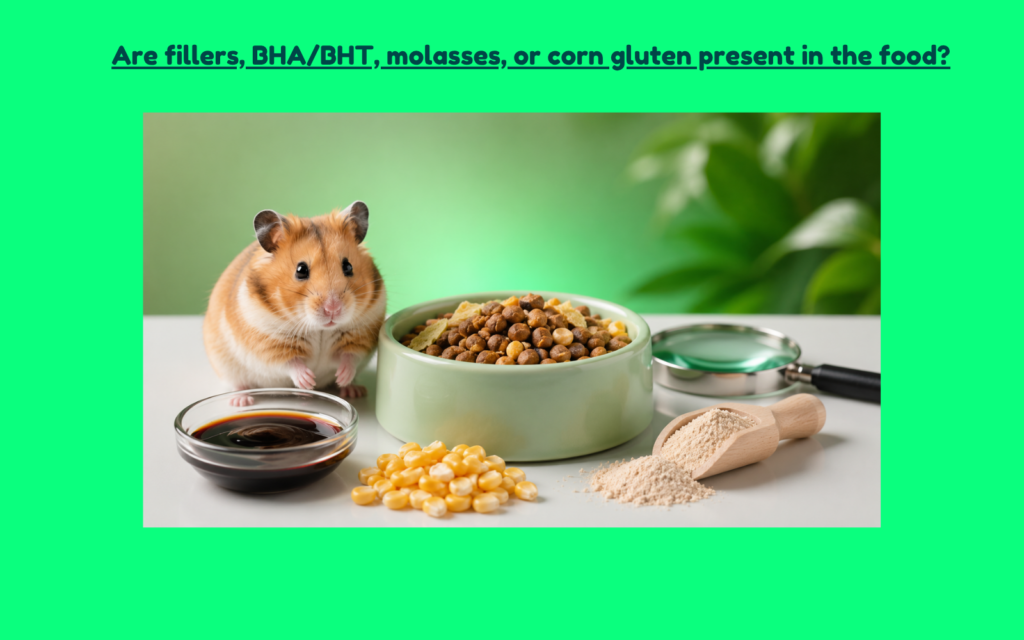
Are Fillers, BHA/BHT, Molasses, or Corn Gluten Present in the Food?
Trusting the beautiful pictures on the front of the packaging is the fastest way to accidentally feed your pet a cocktail of synthetic chemicals and cheap manufacturing dust.
We all do it. You see a bag featuring a gorgeous, sunlit farm and giant letters screaming “100% Natural.” It feels completely safe. But here’s the catch. The front of the bag is just a billboard. The tiny, barely readable block of text on the back is the actual binding legal document.
We are going to break down how manufacturers hide cheap shortcuts, what exact scientific words you need to look out for, and how to definitively verify what is actually inside your pet’s food today. Think of it like reading a junk food wrapper. Just because a gummy candy is shaped like a healthy piece of fruit does not mean it is not held together by pure sugar and lab-made preservatives.
Why is actively verifying whether fillers, BHA/BHT, molasses, or corn gluten are present in the food strictly necessary?
Because commercial brands frequently rely on cheap binders, synthetic preservatives, and sugary flavorings, strict label scrutiny is the only mechanical way to confirm true ingredient purity.
You must physically turn the bag around and read the exact ingredient list before making any assumptions about the food’s safety. Manufacturers have a massive financial incentive to use cheap, artificial stabilizers rather than high-quality whole foods. Those synthetic chemicals extend shelf life for years. Whole foods simply do not last that long on a warehouse shelf.
If you assume a bag is pure without explicitly auditing the fine print, you are inviting a major data tracking failure. You end up feeding them exactly what you were trying to avoid. You must ensure whether fillers, BHA/BHT, molasses, or corn gluten are present in the food because ignoring that step leads straight to the undetected introduction of synthetic chemicals and cheap fillers into the product without your knowledge.
How is the presence of synthetic preservatives and cheap binders disguised on commercial ingredient panels?
Manufacturers routinely obscure cheap ingredients under vague umbrella terms or bury chemical acronyms at the absolute end of impossibly long ingredient lists.
It is a visual trick. Spotting whole-food names like “whole oats” or “sunflower seeds” is easy. They stand right out. But companies mask the manufacturing shortcuts using catch-all phrasing and legal loopholes. You might see a phrase like “grain products.” That tells you absolutely nothing about the actual seed or grass used. It is a legal umbrella term.
You might spot “animal fat preserved with BHA” hidden inside a set of parentheses near the bottom. That is exactly how the presence of synthetic preservatives and cheap binders sneaks past a quick glance. The wording intentionally confuses the buyer. They want your eyes to glaze over before you reach the end of the paragraph.
What exact vocabulary indicates the presence of fillers, chemical antioxidants, and sugary binders on a label?
To spot these manufacturing shortcuts, you have to scan the fine print for exact scientific and legal terms rather than relying on common catchphrases.
It is not enough to look for “added sugars” or “artificial preservatives.” The label will almost never make it that easy. You need to map those colloquial warnings directly to the actual legal names printed on the standard guaranteed analysis panel.
Since corn is one of the most frequently debated ingredients when assessing filler content, you specifically scan for “corn gluten meal” when you are looking for cheap manufacturing waste used to artificially inflate protein numbers. When you want to catch chemical antioxidants designed to keep fat from going rancid, you scan for “butylated hydroxytoluene” or its acronym, BHT. And when you are hunting for the sticky, sugary binder holding everything together, you look for “cane molasses.” Knowing this exact vocabulary confirms the presence of fillers, chemical antioxidants, and sugary binders instantly.
How do you fix identification errors when attempting to confirm the presence of these additives?
If the label terminology is ambiguous or legally obscured, you must implement a strict verification process to definitively confirm the presence of these hidden ingredients.
The problem usually happens right at the store shelf. You quickly glance at the first three ingredients, see “seeds and grains,” and stop reading. You miss the chemical acronyms buried at the very bottom of the massive text block. Here is how you fix that error.
First, explicitly locate the actual ingredient panel on the back or side of the bag. Second, locate the specific preservative and fat section, which is usually sitting near the absolute end of the list. Third, identify exact legal additive synonyms. Check if “BHA” is hiding inside a set of parentheses attached to a fat source. Fourth, definitively verify whether the additive is present, as the presence of fillers can only be confirmed through product-specific ingredient analysis. Finally, update your audit record to reflect the exact true composition of the product. That process resets your understanding of the food.
How do you audit your current bag to detect the presence of these specific additives today?
You can actively protect your pet from poor manufacturing practices by physically inspecting your current food bag and scanning the fine print today.
Grab the bag you are currently using. Lay it flat on the counter and run through this list.
-
Target Additive: BHA/BHT
Common Label Location: Listed in parentheses immediately following the fat sources or buried at the absolute end of the panel.Physical Text Indicator: The exact acronyms “BHA,” “BHT,” or “Ethoxyquin” printed on the panel.Action: If identified, reconsider the product entirely, as these are controversial chemical antioxidants.
-
Target Additive: Sugary Binders
Common Label Location: Typically found in the middle of the ingredient list, holding pelleted blocks together.Physical Text Indicator: The words “cane molasses,” “corn syrup,” or “sucrose.”Action: Note that the food relies on sugar to make cheap ingredients palatable.
-
Target Additive: Cheap Fillers
Common Label Location: Often listed high up in the primary ingredient slots to artificially boost protein numbers.Physical Text Indicator: The phrase “corn gluten meal” or “soybean hulls.”Action: Recognize that the food is using manufacturing waste dust rather than whole, digestible proteins.
You must take the time to detect the presence of these specific additives today.
Perform this comprehensive label audit to verify exactly what is inside the bag before opening or purchasing any new commercial mix.
Locking down your exact label verification process is a simple, mechanical step that actively protects their baseline health and ensures true ingredient purity.