
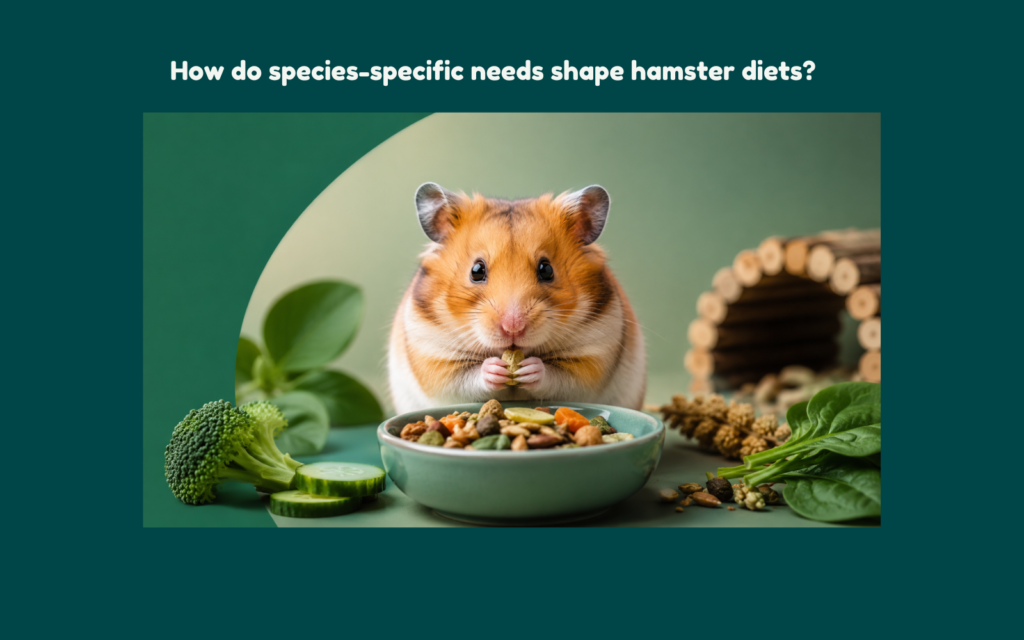
How Do Species-Specific Needs Shape Hamster Diets?
Discover why treating every hamster identically is a nutritional mistake, and learn how to feed your pet exactly what its biology demands.
Why are species-specific needs the foundation of hamster diets?
To feed a hamster correctly, we must first understand that not all hamsters are biologically identical. A Syrian, a Roborovski, and a dwarf hamster are distinct species, each possessing significantly different metabolic rates and daily nutritional requirements.
Treating them as interchangeable leads to improper feeding. Recognizing species-specific needs in hamster diets is the critical foundation for ensuring long-term health and vitality.
Rule
Every hamster species requires a diet tailored to its specific biological and metabolic profile.
Reason
Generic “one-size-fits-all” rodent foods fail to provide the precise balance of nutrients, energy, and physical foraging stimulation required by distinct species, leading to malnutrition, obesity, or dental issues.
Example
A Syrian hamster fed a generic diet might not receive adequate protein for its size, while a dwarf hamster on the same generic mix might consume dangerous levels of sugar, risking diabetes. Tailored nutrition supports wellness far more effectively than generic options.
How do protein requirements differ across species-appropriate hamster diets?
Baseline Protein Comparison
Macronutrient demands, particularly for protein, highlight the differences between larger hamster breeds and smaller species. Meeting these distinct demands is a core component of species-appropriate hamster diets.
- Growing Syrian Hamsters: Due to their larger size and greater muscle mass, Syrian hamsters typically require higher protein levels (often around 17-19%) and energy intakes, especially during growth or pregnancy, to support their larger bodies.
- Dwarf Species: Smaller dwarf hamsters (like Winter Whites or Campbells) generally have slightly lower baseline protein needs (around 15-17%) compared to large Syrians, and their overall caloric intake is smaller due to their tiny stature.
Why do the specific dietary needs of different hamster species influence sugar tolerance?
A crucial differentiator in hamster nutrition is how their bodies process carbohydrates. The specific dietary needs of different hamster species directly dictate their sugar tolerance, primarily due to differing metabolic sensitivities.
Strict Sugar Limitation
Rule: Natural and artificial sugars must be strictly limited, particularly for certain dwarf species.
Reason: Dwarf hamsters, especially Campbells and Winter Whites (and their hybrids), have highly sensitive metabolisms that make them exceptionally prone to developing diabetes if their diet is too high in sugar.
Example: While a Syrian hamster might safely enjoy a small piece of apple occasionally, giving sweet fruits or sugary commercial yogurt drops to a Campbell’s dwarf significantly increases their risk of diet-related illnesses. Limiting these items is essential for sensitive dwarf species.
How do physical size differences shape species-specific hamster food requirements?
Beyond nutrients, the physical characteristics of the food itself must match the hamster. Physical size differences and natural habits directly shape species-specific hamster food requirements.
Ingredient size and texture must be appropriate for the animal’s physical capacity to handle and process the food. This encourages natural foraging behaviors and supports necessary dental wear.
Roborovski Hamsters
As the smallest species, they require tiny ingredients. Small seeds, fine millet, and easily manageable textures are essential for them to forage and eat comfortably.
Syrian Hamsters
Being larger, Syrians need larger ingredients. Tougher blocks, larger seeds (like pumpkin or sunflower), and complex foraging mixes are necessary to encourage proper chewing and provide adequate dental wear for their larger teeth.
How do you fix a diet that ignores species-specific needs in hamster diets?
If you discover your pet is eating generic food, you must transition them to a better option. Fixing a diet that ignores species-specific needs in hamster diets requires a gradual shift to prevent dangerous digestive upset.
The Dietary Repair Template
Use this step-by-step ratio guide to safely phase out the old, inappropriate food while introducing the correct species-tailored mix over 10-14 days.
75% Old Generic / 25% New Mix. Monitor stool and behavior.
50% Old Generic / 50% New Mix.
25% Old Generic / 75% New Mix.
100% New Species-Tailored Mix.
How do you audit your current mix to meet species-specific needs in hamster diets today?
Take action now to ensure your hamster is receiving the correct nutrition. Review your current food label against your specific pet’s biological profile to meet species-specific needs in hamster diets today.
Quick-Reference Audit Checklist
Species: Syrian Hamster
Higher protein (17-19%), larger pieces for chewing.
Low protein (under 15%), extremely fine seed mix.
Switch to a high-quality Syrian-specific mix or supplement with safe protein sources.
Species: Dwarf Hamster (Campbells/Winter White/Hybrid)
Strict glycemic control. Target 15-17% protein, 7-9% fat, and high crude fiber (10%+) to slow glucose absorption. Prioritize pseudo-grains over high-starch bases.
Hidden high-glycemic ingredients (maltodextrin, dextrose, carob), sweet dried fruits, extruded corn fillers, or crude fiber under 6%.
Transition to a low-glycemic, botanical-heavy forage mix formulated explicitly for diabetes-prone Phodopus species.
Species: Roborovski Hamster
High-diversity micro-seed profile (50+ varieties like teff, amaranth, fine millets) mimicking arid-steppe foraging. Protein 15%, fat 7-9%.
Extruded monodiets (pellets) exceeding 3mm in diameter, heavy reliance on bulky wheat/oats, and poor botanical diversity.
Source a granular, multi-component micro-seed mix that forces prolonged natural foraging and suits their miniature jaw structure.
Species: Roborovski Hamster
High variety of very small seeds, moderate protein.
Large, hard pellets they cannot break apart, lack of tiny seeds.
Switch to a small-seed heavy foraging mix designed for Roborovskis.
Review your food bag today.
If it doesn’t align with your hamster’s species, it’s time to upgrade. Choose a vetted, species-appropriate diet to give your pet the best chance at a long, healthy life.
Veterinary Medical Disclaimer
The information provided in this comprehensive guide is for educational and informational purposes only. It is not intended to be a substitute for professional veterinary advice, diagnosis, or treatment. Always seek the advice of an exotic animal veterinarian or other qualified animal health provider with any questions you may have regarding a medical condition or before implementing significant dietary changes for your pet. Never disregard professional veterinary advice or delay in seeking it because of something you have read in this article.
Selected References & Citations
- Quesenberry, K. E., & Carpenter, J. W. (2011). Ferrets, Rabbits, and Rodents: Clinical Medicine and Surgery (3rd ed.). Elsevier Saunders. (Reference: Species-specific metabolic rates and diabetes susceptibility in Phodopus).
- National Research Council (NRC). (1995). Nutrient Requirements of Laboratory Animals (4th Revised ed.). National Academies Press. (Reference: Mesocricetus and Phodopus basal macronutrient requirements).
- Wolf, P., & Kamphues, J. (2003). “Basic data on food intake, nutrient digestibility and energy requirements of golden hamsters.” Journal of Animal Physiology and Animal Nutrition.
- Lowe, J. A. (2010). “Pet Animal Nutrition.” Encyclopedia of Animal Science.
One Response