
Why Does My Hamster Hoard Its Seed Mix In One Corner?
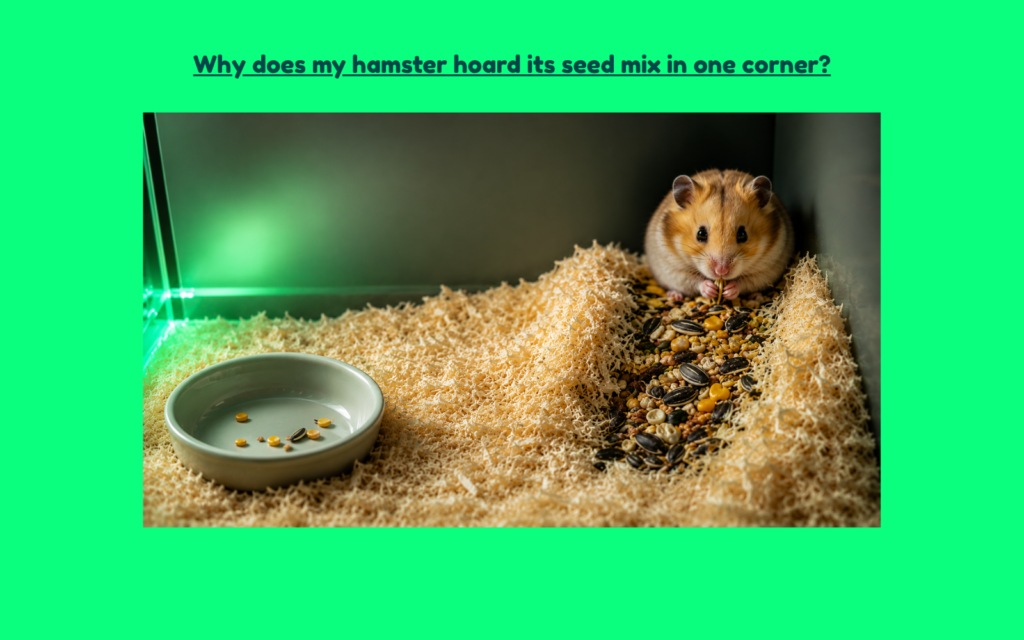
You wake up, check the enclosure, and the food bowl is completely empty. Panic immediately sets in. You assume your pet is starving and immediately reach for the bag to refill it. But before you pour another scoop, take a close look under the bedding. You will likely find a massive mountain of seeds neatly buried right against the glass.
We are going to break down why an empty bowl often means the food was simply moved, how to measure your daily scoops to avoid overfeeding, and exactly how to check your hamster’s corner stash for hidden dampness today.
Think of the food bowl as a grocery bag. Your hamster is simply carrying the groceries from the bowl, which is the store, directly to their corner stash, which is their pantry, to eat later.
Why is hoarding a seed mix in one corner a normal routine rather than a sign of hunger?
Here is what owners commonly notice when they wake up: the feeding bowl is completely empty, without a single seed left behind. You might look around the enclosure in confusion, assuming your pet ate everything overnight. But check the corner before reaching for the food bag to give them more. If you dig down into the bedding, you will usually discover a massive, hidden pile of food. Often, you can even see this pile directly through the bottom of a glass tank, with hundreds of seeds pressed flat against the glass.
Look beyond the empty bowl and realize the food was not eaten; it was simply moved. When owners notice the bowl empties rapidly overnight, the automatic reaction is to pour more food in. Relocating the everyday mix into a centralized pile is a perfectly normal routine. You are watching a visual shift of food from point A, the bowl, to point B, the corner. This physical relocation happens completely independently of how much food they actually consume.
Rule:
Do not treat an empty feeding bowl as an indicator of starvation.
Reason:
Emptying the bowl is just the physical act of transporting the food, not consuming it. Refilling an empty bowl blindly leads to severe overfeeding.
Example:
If you refill the bowl every time it looks empty, you are actually building an ever-growing, hidden mountain of food under the bedding, ignoring the fact that hoarding a seed mix in one corner is the actual, primary food reserve.
How do you properly measure daily food when your hamster actively hoards its seed mix?
To properly dispense food, you must establish a hands-on, daily feeding routine. Start by using a fixed daily measurement, like a standard kitchen tablespoon or a digital kitchen scale. It is crucial to measure this exact portion out before you even open the enclosure door. Measuring beforehand actively prevents the temptation of just guessing and pouring food until the bowl looks full. This structured daily scoop actively prevents the massive buildup of extra food that occurs when owners continuously replace the stash.
When you rely solely on a visual bowl-level check, overfeeding is almost guaranteed, and you will start seeing the consequences quickly. By constantly topping off an empty bowl, you watch the corner stash build into an enormous, unmanageable pile over time. The hamster simply carries the new food over, picks out only the sweetest pieces, and leaves the rest buried. An empty bowl should never be used as a reason to automatically add more food. Once owners understand that hoarding and eating are two separate behaviors, the next step is following the correct daily portions and feeding frequency needed to prevent unnecessary overfeeding.
Visual Bowl Check (The Trap)
Simply topping off an empty bowl guarantees overfeeding. It allows your pet to pick out only the sweet, high-calorie pieces and ignore the rest, leaving a massive pile of untouched food buried in the cage.
Measured Daily Dispensing (The Solution)
Providing a strict, measured daily scoop ensures your pet actually eats from its existing hoard. When your hamster hoards its seed mix, this measured approach encourages them to consume their hidden reserves rather than just skimming the new treats off the top.
What visual signs distinguish a dry seed mix hoard from a spoiled food stash?
A stable seed mix hoard has a very specific appearance that you can easily identify through touch and sight. When you look at a dry, secure stash, you will see completely loose seeds mixed evenly with clean, dry bedding. The ingredients are clearly separated, and the entire pile has a dry, almost dusty texture. You want to contrast this directly against a spoiled stash to know when action is required.
A spoiled stash looks and feels entirely different. You will spot dark, wet bedding clumped tightly around the food. Often, you will find damp corners specifically pressed against the glass, sometimes with visible condensation. The ingredients themselves will be physically stuck together in solid masses. If you put fresh vegetables in the cage, you might find those pieces rotting and actively sticking to the dry seeds. Finally, trust your nose. A compromised stash carries the unmistakable, unpleasant smell of soiled bedding and trapped moisture. Rely purely on what you see, touch, and smell to make your assessment.
The Dry, Secure Cache
- Loose, separated seeds
- Completely dry bedding
- No noticeable odor
- Distinct, un-clumped ingredients
The Spoiled Stash
- Damp or discolored bedding
- Seeds glued together by moisture
- A sour or musty smell
- Rotting fresh food mixed into the dry reserve
What should you do after discovering dampness in your hamster’s hoarded seed mix?
When you find wet bedding mixed with the seeds, you must physically clean it out immediately. Removing a spoiled hoard requires a complete physical reset of that specific corner. Common mistakes happen when owners try a partial cleanup, like just scooping off the top layer of wet bedding. This fails because moisture actively spreads downwards, compromising the food hidden underneath. You must physically remove all the wet clumps, wipe the bare floor of the corner completely dry, and add fresh bedding.
Crucially, maintaining the enclosure’s routine is just as important as the cleaning. If you throw away a large handful of stored, hoarded seed mix due to dampness, you must place a handful of fresh, dry mix right back into that exact corner. Replacing the removed inventory ensures the available food reserve remains consistent. This simple swap prevents any disruption to your daily feeding routine while entirely removing the dampness from the enclosure.
The Spoiled Stash Cleaning Steps:
- Isolate the damp corner of the enclosure.
- Physically discard the wet bedding and spoiled food.
- Wipe down the base of the enclosure and dry it completely.
- Place fresh bedding and a replacement scoop of strictly dry seed mix back into the corner to maintain the daily routine.
How do you check your corner stash to verify the integrity of the hoarded seed mix today?
A physical enclosure audit is the only way to know the true state of the food. You must conduct a tactile inspection routine to verify the integrity of the hoarded seed mix today. Start by going to your pet’s favorite corner. Use your hands to part the bedding very slowly so you can get a clear view of the stash without scattering it. Pay special attention to areas near the water bottle, where leaks most commonly occur.
Do not just look at the top layer; check the deepest parts of the stash by actually feeling the bedding between your fingers. This is the best way to detect hidden moisture that has sunk to the bottom. Look closely for damp clumps, and try to inspect the seeds under bright room light to verify they aren’t sticking together. If the area feels completely dry and the seeds are loose, your audit is complete. If your fingers come away damp or the seeds feel glued together, you need to clean the corner.
Quick-Reference Audit Checklist
Ultimately, relying on an empty bowl is a highly misleading way to gauge your pet’s food supply. The corner stash is often the real, primary food reserve in the enclosure. By consistently measuring the daily food portion, you actively prevent unnecessary overfeeding and stop perfectly good ingredients from going to waste. Regular stash inspections are the easiest way to catch hidden dampness early before it spreads. Taking just a few minutes to do a quick enclosure check keeps the space hygienic and prevents much larger cleaning problems from developing later on.
Perform this physical audit today, gently part the bedding in the corner to check for dampness, and clean out the stash if any moisture is found before dispensing tomorrow’s meal.
References & Further Reading
Disclaimer: The information provided on HamsterAtlas is for educational and observational purposes only. It is not intended as a substitute for professional veterinary advice, diagnosis, or treatment. Always consult a qualified veterinarian with any questions regarding your pet’s health, diet, or medical condition.