
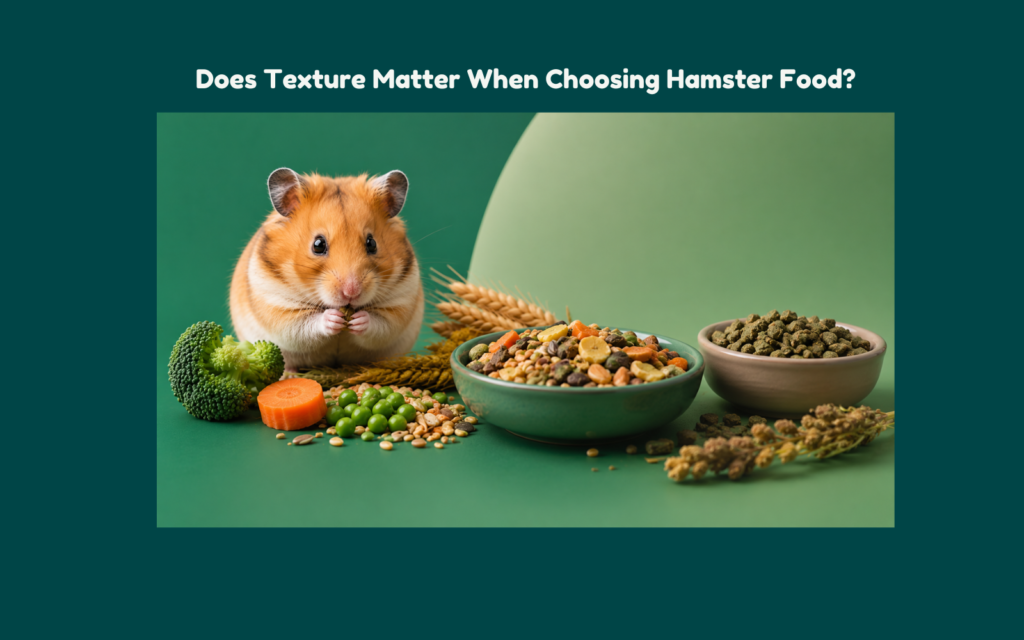
Does Texture Matter When Choosing Hamster Food?
The physical structure and crunch of your pet’s daily meals are just as critical to their long-term health as the vitamins inside the ingredients.
Many dedicated owners focus entirely on the ingredient list on the back of the bag, completely overlooking whether the food itself is physically appropriate for a small rodent’s unique anatomy. This comprehensive guide explores the intersection of diet and dental health, covering why mechanical wear is mandatory, how different feed styles compare, and how to safely adjust textures for aging pets.
Feeding exclusively soft foods to a rodent is analogous to asking a human to file their nails with a sponge—it fundamentally ignores their anatomical needs.
Why is texture important when choosing hamster food?
Because a hamster’s teeth grow continuously throughout their life, they require daily mechanical wear to prevent severe health complications. When evaluating the texture when choosing hamster food, establishing a biological baseline is mandatory for any responsible feeding routine.
Continuous Incisor Eruption
Required Mechanical Friction
Rule: A daily diet must inherently include appropriately hard, dense ingredients.
Reason: Constant chewing on fibrous textures provides the necessary friction to safely grind down the continuously erupting incisors.
Example: Contrast a diet of overly processed, crumbly flakes that do nothing for dental maintenance with a high-quality mix featuring hard blocks that actively maintain dental health and help reduce the risk of painful tooth overgrowth.
Clinical findings documented in the BSAVA Manual of Exotic Pet and Wildlife Nursing reinforce the necessity of physical dietary composition in maintaining proper rodent dental attrition.
How do uniform and loose texture options compare when selecting hamster food?
Understanding the physical differences between commercial diets is essential for providing the correct balance of wear and enrichment. Analyzing these texture options when selecting hamster food allows owners to offer meals that fulfill both functional health requirements and behavioral needs.
| Uniform Laboratory Blocks | Loose Seed Mixes |
|---|---|
| These formats offer reliable, consistent density, which ensures steady dental wear with every single bite. The animal cannot selectively avoid the tough components required for tooth attrition. | These diets provide varied crunch and encourage natural shelling activity through unhulled seeds, which actively engages the jaw muscles and closely mimics wild eating mechanics. |
How does textural variety in hamster food support natural foraging behaviors?
Beyond basic dental maintenance, providing a diverse physical landscape in the food bowl stimulates a hamster’s mind and encourages natural hoarding behaviors. Incorporating textural variety in hamster food prevents feeding from becoming a purely passive activity.
Diverse physical shapes and hardness levels keep the pet mentally engaged, mimic wild foraging efforts, and prevent mealtime boredom. Rather than consuming a homogenous block in seconds, the animal must assess, handle, shell, and systematically process different structural elements. This required effort channels their instinctual energy safely.
Established ethological studies from the Journal of Applied Animal Welfare Science demonstrate how varied, naturalistic dietary presentations stimulate psychological engagement and foraging in captive rodents.
How do you fix eating difficulties caused by improper hamster food texture?
If your pet is ignoring the toughest pieces in their bowl, you must safely adjust their feeding routine to ensure they still receive balanced nutrition without compromising their health. Identifying improper hamster food texture or an inability to process it requires immediate, structured intervention.
The Problem
Adult hamsters may selectively eat only soft, fatty seeds and ignore fibrous pellets, while aging seniors may physically struggle to crack hard shells due to natural dental deterioration.
The Solution for Adults
Implement strict portion control to ensure healthy adults consume the tougher, fibrous pieces before receiving a refill.
The Solution for Seniors
You can outline safe methods to slightly moisten high-quality hard blocks with warm water for senior pets to make them manageable. While some senior hamsters may benefit from adjusted protein levels depending on their renal health, this is not a universal truth; texture modification is often the primary intervention needed to maintain their weight.
Mayer’s ‘Clinical Medicine of Small Mammals’ provides specific guidance regarding geriatric rodent care and dental attrition management.
How do you audit your mix to ensure the right texture when choosing hamster food today?
You can actively protect your pet’s dental and digestive health by physically inspecting their daily bowl to ensure it contains the correct balance of hardness and variety. Consistently monitoring the texture when choosing hamster food guarantees small issues are caught early.
| Texture Type | Recommended Purpose | Warning Sign | Action to Take |
|---|---|---|---|
| Dense Pellets/Blocks | Primary, consistent dental wear | Entirely untouched hard pellets left in bowl | Implement portion control; check teeth for overgrown incisors |
| Unhulled Seeds | Jaw engagement and enrichment | Pet struggles to shell standard seeds | For seniors, gently crack shells prior to feeding or soak blocks |
| Soft/Flaked Additives | Energy and flavor variety | Bowl contains mostly soft flakes and no hard elements | Phase out the mix and transition to a structurally dense, species-appropriate diet |
References & Citations
- BSAVA. Clinical findings regarding the necessity of physical dietary composition in maintaining proper rodent dental attrition. BSAVA Manual of Exotic Pet and Wildlife Nursing.
- Ethological Research. Studies demonstrating how varied, naturalistic dietary presentations stimulate psychological engagement and foraging in captive rodents. Journal of Applied Animal Welfare Science.
- Mayer, J. Specific guidance regarding geriatric rodent care and dental attrition management. Clinical Medicine of Small Mammals.