
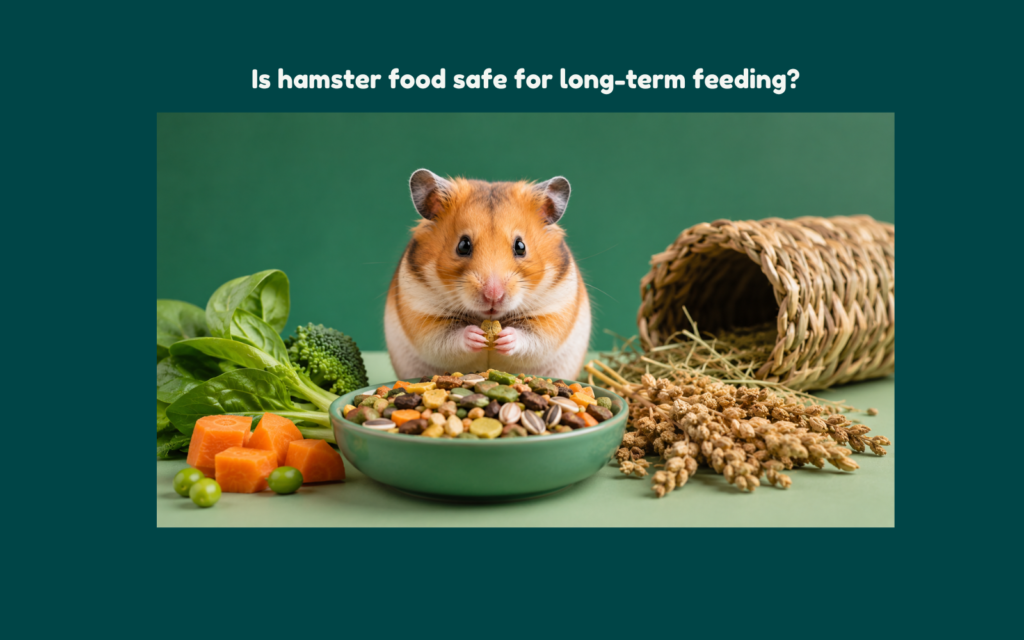
Is hamster food safe for long-term feeding?
Ensuring your pet’s daily diet remains healthy and viable over their entire lifespan requires evaluating how commercial foods are formulated and preserved.
While buying in bulk is convenient, many owners understandably worry about whether a bag sitting in their pantry for months is truly still healthy and safe for their pet to consume. Leaving a bag of pet food open in a humid room is much like leaving a fresh loaf of bread out on the counter; it might look fine at first glance, but invisible degradation is already underway.
This comprehensive guide breaks down the science of food preservation, covering how to evaluate synthetic versus natural preservatives, implement strict storage protocols, and audit your pantry for long-term safety.
Why is balanced nutrition essential for safe long-term hamster feeding?
A diet can only support a pet across their entire lifespan if it is built upon an appropriate, stable ratio of essential nutrients.
A daily diet must provide consistent, unwavering baseline nutrition rather than extreme fluctuations in caloric density. Continuous feeding of an imbalanced diet slowly depletes essential trace minerals and strains organ function over a matter of months or years. Contrast a sensible baseline nutrition plan that promotes consistent daily energy and reduces the risk of age-related nutrient deficiencies with a high-fat, unbalanced mix that quietly causes cumulative metabolic stress.
According to the National Research Council (NRC) Nutrient Requirements of Laboratory Animals, maintaining long-term macronutrient stability is a critical necessity to prevent insidious health complications over time.
Macronutrient Stability Over Time
How do synthetic preservatives impact the long-term safety of hamster food?
The methods a manufacturer uses to keep their food shelf-stable directly influence the long-term health and safety of the diet.
There is a significant difference in biological safety between diets stabilized with natural preservatives—such as mixed tocopherols (Vitamin E) or rosemary extract—and those relying on synthetic alternatives. High-quality natural preservation methods provide excellent shelf stability without introducing potentially harmful compounds into your pet’s system. In contrast, the prolonged ingestion of synthetic preservatives like BHA and BHT poses cumulative dietary risks over several years.
FDA toxicological data regarding laboratory rodents indicates that long-term exposure to these synthetic antioxidants can produce notable hepatic effects, making naturally preserved options the definitively safer choice for lifelong feeding.
What role does proper storage play in maintaining safe hamster diets for long-term use?
Even the highest-quality diet will rapidly degrade if it is not protected from the environmental elements inside your home.
Transferring commercial mixes into airtight, light-blocking acrylic or glass containers protects the integrity of the ingredients from oxidation, moisture absorption, and opportunistic pests. When food is left in its original packaging, ambient humidity and heat degrade delicate nutrients and encourage mold or seed mites over time.
Standard veterinary and food-science guidelines note that lipid oxidation and UV exposure swiftly degrade essential fatty acids and vitamins in stored animal feed, making proper storage absolutely essential.
Optimal Storage Configuration
How do you address freshness and storage issues affecting long-term hamster food safety?
If you suspect your current supply has been compromised by improper storage, you must take immediate steps to safely correct the issue.
Feeding degraded or pest-infested food poses a severe health risk, but abrupt dietary changes can also cause gastrointestinal distress. To correct this, first safely and immediately dispose of the compromised batch—do not attempt to save moldy food. Second, deep-freeze the new replacement bags for 48 hours upon arrival to eliminate any natural pests. Finally, transition the pet to the fresh supply using a measured phase-in, such as mixing a small, safe portion of an alternative healthy base or plain oats if the original food is entirely unusable, to minimize digestive upset.
Specific entomological data regarding the thermal lethality thresholds of common grain mites explains how a 48-hour deep freeze fully protects pantry investments.
How do you audit your mix to ensure you have hamster food safe for long-term feeding today?
You can confidently secure your pet’s nutritional future by conducting a rapid audit of your current pantry setup today.
| Safety Factor | Recommended Standard | Warning Sign | Action to Take |
|---|---|---|---|
| Expiration Dating | Consumed within 3-4 months of opening | Passing the printed best-by date | Discard and purchase a fresh, appropriately sized bag |
| Preservatives | Preserved with mixed tocopherols (Vitamin E) | Listed BHA, BHT, or Ethoxyquin | Phase out in favor of naturally preserved diets |
| Storage Environment | Airtight, opaque container in a cool room | Food left in an open bag or humid area | Transfer immediate usable supply to sealed acrylic storage |
Use this safety audit to evaluate your pantry and choose a vetted, naturally preserved, species-appropriate diet.
Evaluating your pet’s food carefully is a practical, proactive way to support their lifelong health and daily well-being.
References & Evidence
- National Research Council (NRC): Nutrient Requirements of Laboratory Animals. Referenced for baseline macronutrient stability and continuous dietary life-stage requirements.
- U.S. Food and Drug Administration (FDA): Toxicological data regarding the long-term hepatic effects of prolonged exposure to synthetic antioxidants (BHA, BHT, and Ethoxyquin) in laboratory rodents.
- Veterinary & Food-Science Guidelines: Established principles regarding lipid oxidation, moisture absorption, and ultraviolet (UV) degradation of essential fatty acids and vitamins in stored commercial animal feeds.
- Entomological Data: Scientific studies detailing the thermal lethality thresholds of common agricultural and grain mites, supporting the efficacy of the 48-hour deep-freeze eradication protocol.