
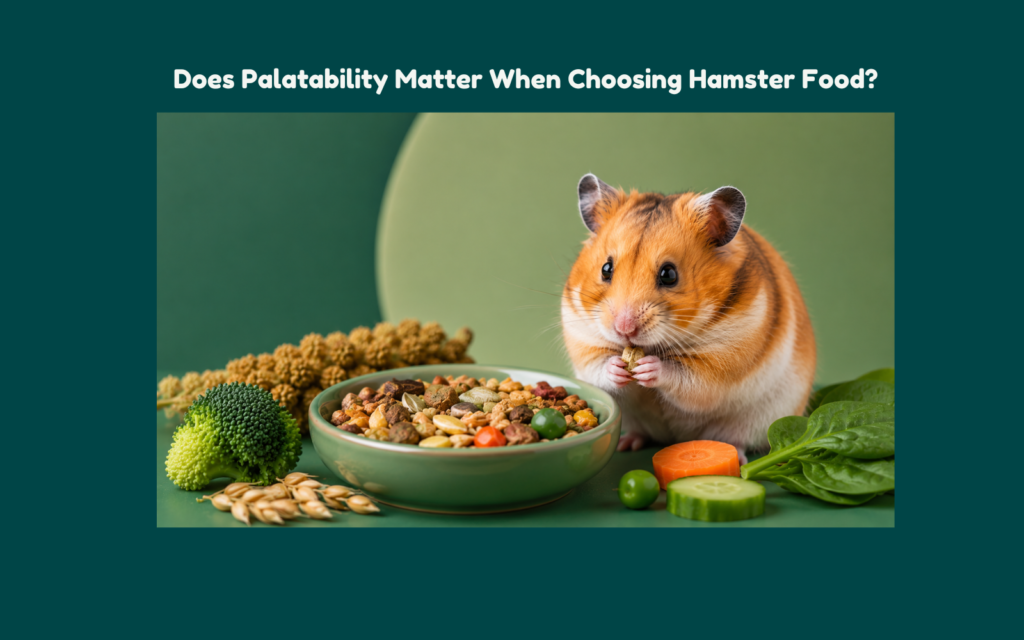
Does Palatability Matter When Choosing Hamster Food?
The willingness of your hamster to actively engage with and eat their meals dictates the true effectiveness of any chosen diet.
Finding a food that meets every nutritional requirement on paper is only half the battle. The real frustration for owners begins when they pour a highly nutritious, expensive mix into the bowl, only for their pet to completely ignore it. This comprehensive guide explores the intersection of health and taste, covering why natural flavors matter, how scent drives appetite, and how to safely correct picky eating habits.
Think of it this way: serving a hamster a perfectly balanced but unappetizing food is like serving a child a plate of flavorless vitamin paste. No matter how much “good stuff” is inside, it serves no purpose if it is never consumed.
Why is palatability when choosing hamster food critical for baseline nutrition?
A diet can only support your pet’s physical health if they are actually willing to consume it. While owners often focus exclusively on the guaranteed analysis on the back of a bag, palatability when choosing hamster food is the gatekeeper of all biological benefits.
An effective diet must successfully bridge the gap between nutritional completeness and biological appeal.
Without sufficient caloric and nutritional intake, hamsters will quickly experience energy deficits, regardless of how optimal the food label appears.
A scientifically formulated laboratory block may contain the ideal ratio of protein, fiber, and fat, but it provides zero baseline benefit if it is left entirely untouched in the bowl until it goes stale.
According to the National Research Council (NRC) Nutrient Requirements of Laboratory Animals, consistent and adequate daily intake is the fundamental requirement for maintaining baseline metabolic function. If the food is rejected due to poor taste or texture, the scientifically engineered nutritional profile becomes entirely irrelevant.
Figure 1: The Dietary Efficacy Model
A successful diet exists only at the intersection of perfect nutritional formulation and high biological appeal. Food that is highly nutritious but left uneaten provides zero health benefits to the animal.
How does natural flavor variety improve the palatability of hamster food?
Incorporating diverse, unrefined ingredients naturally increases a diet’s appeal without relying on unhealthy additives. Achieving a high palatability of hamster food does not require the use of sugars; rather, it requires an understanding of what a hamster is biologically wired to enjoy.
When evaluating diets, consider the vast difference between natural enhancers and processed lures. Using whole-food ingredients like dried dandelion, calendula, or various plain seeds provides long-term stability and genuine health benefits. These natural ingredients offer the complex textures and tastes necessary to keep a hamster engaged with their bowl.
In stark contrast, many commercial mixes rely on “honey-baked” clusters or artificial flavor coatings to entice pets. While these pieces may be eaten quickly, Royal Veterinary College (RVC) VetCompass data highlights a concerning correlation between such refined commercial sugars and health issues like rapid weight gain and obesity in pet rodents. Choosing a diet that utilizes botanical variety rather than sticky syrups ensures the animal stays interested without compromising their baseline health or causing dangerous blood sugar spikes.
Ingredient Comparison: Natural vs. Processed
| Feature | Natural Enhancers | Processed Lures |
|---|---|---|
| Common Examples | Dried dandelion, calendula, plain seeds | “Honey-baked” clusters, artificial syrups |
| Health Impact | Long-term stability, biological benefits | Rapid weight gain, blood sugar spikes |
| Attraction Method | Complex botanical textures and tastes | Unnatural sweeteners and flavor coatings |
What role does scent play in flavor acceptance during hamster meals?
Because rodents possess relatively weak eyesight, they rely almost entirely on their highly developed sense of smell to evaluate their meals. This olfactory-first approach is the primary biological driver of flavor acceptance during hamster meals, acting as the immediate “green light” for the hamster to begin eating.
Figure 2: The Olfactory Feeding Trigger
Foraging cues (scent) are the biological prerequisite for appetite stimulation, which directly initiates active feeding behaviors in visually impaired rodents.
This dynamic operates on a clear cause-and-effect relationship. In the wild, hamsters use complex olfactory foraging cues to identify safe, high-energy foods buried in the soil or hidden in tall grass. The resulting effect in a captive environment is that fresh, properly stored ingredients emit natural cues that successfully stimulate the appetite and encourage active, healthy eating behaviors.
Conversely, foods that have been sitting in open bins or are heavily processed lose these vital aromatic compounds. When the scent profile is flat, the biological drive to eat is significantly dampened, leading to the food being ignored entirely. Established ethological studies from the Journal of Applied Animal Welfare Science confirm that olfactory stimulation is a foundational component of active foraging behavior, making scent a pillar of daily nutritional success.
How do you fix selective eating driven by high palatability in hamster diets?
When a mix contains a few exceptionally tasty pieces alongside plain pellets, you must safely correct selective feeding behaviors. This specific issue arises when high palatability in hamster diets is unbalanced, allowing the pet to treat their food bowl like a selective buffet.
The Problem
Hamsters are opportunistic hoarders. If constantly overfed a mixed diet, they will instinctually pick out the high-fat rewards and stash them, ignoring the baseline vitamins found in the less flavorful pellets, which directly leads to malnutrition.
The Solution: The Dietary Repair Template
Outline a strict portion control strategy. Measure exact daily portions (1-2 tablespoons) and strictly wait until the bowl is mostly empty—or the cage stash is consumed—before refilling. This ensures a balanced nutrient intake without starving the pet.
Guidelines from Clinical Nutrition of Small Mammals (E.J. Dierenfeld et al.) explicitly explain these hoarding behaviors, reinforcing the necessity of strict portion control to prevent the severe dietary imbalances caused by selective feeding.
How do you track and audit palatability when choosing hamster food today?
You can ensure a successful dietary transition by closely tracking your pet’s daily acceptance of their new food. Use the following structured audit to monitor how your hamster reacts to a dietary change.
The Palatability Audit Checklist
Educational Disclaimer
The information provided in this editorial is strictly for educational and practical tracking purposes and is not a substitute for professional veterinary diagnostics. Always consult a qualified exotic veterinarian if your pet exhibits sudden weight loss, lethargy, or a prolonged refusal to eat.
Use this tracking guide to monitor your pet’s eating habits and choose a vetted, species-appropriate diet that balances health with taste.
Evaluating your pet’s food carefully is a practical, proactive way to support their lifelong health and daily well-being.
References & Citations
- National Research Council. (1995). Nutrient Requirements of Laboratory Animals (4th ed.). National Academies Press.
- Royal Veterinary College (RVC) VetCompass. Data regarding diet-related health issues and obesity in companion animals.
- Journal of Applied Animal Welfare Science. Studies on ethological foraging behaviors and olfactory stimulation in captive rodents.
- Dierenfeld, E. J., et al. Clinical Nutrition of Small Mammals. Guidelines on hoarding behaviors and portion control for optimal nutrition.