
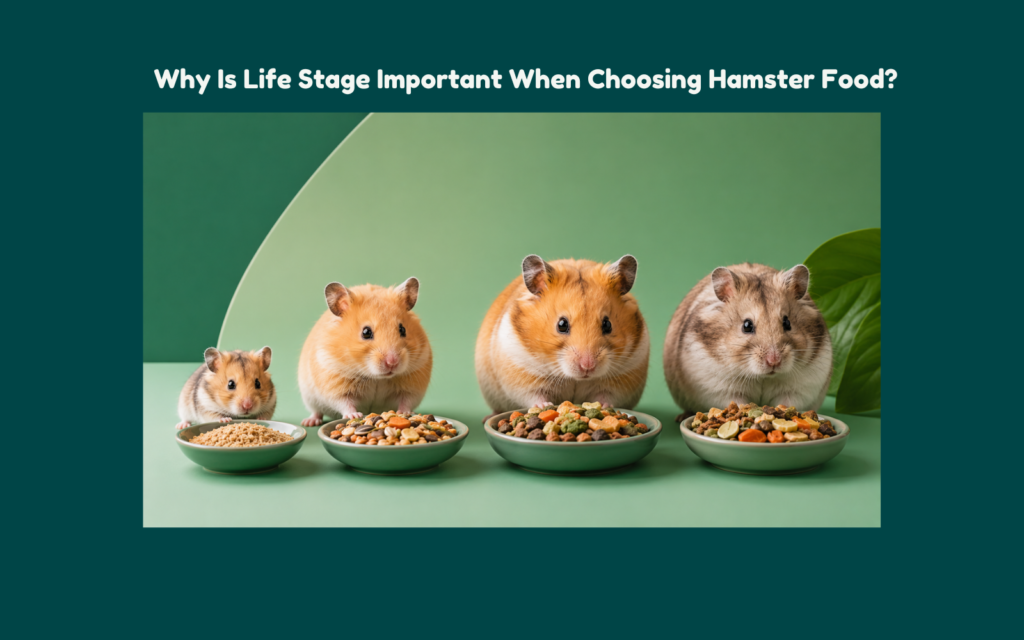
Why Is Life Stage Important When Choosing Hamster Food?
Matching your pet’s daily nutrition to their exact age bracket ensures they receive the appropriate energy and support throughout their entire lifespan. Many commercial bags market themselves as convenient, “one size fits all” solutions. However, feeding a rapidly growing juvenile the exact same dietary ratio as a less active senior often leads to unintended nutritional gaps or severe weight issues. Expecting a single formula to support a hamster from birth to old age is like wearing the exact same winter coat in every season—eventually, it will fail to provide the right balance for the environment.
This comprehensive guide breaks down the metabolic shifts your pet experiences over time, covering how to prioritize protein for growth, balance adult maintenance phases, and safely modify diets for aging seniors. By understanding these biological changes, you can confidently build an age-appropriate diet that promotes long-term vitality.
Figure 1: A hamster’s metabolic demand peaks during rapid growth before stabilizing in adulthood and requiring adaptation in senior years.Why is your pet’s life stage the first baseline to establish when choosing hamster food?
A hamster’s metabolism, energy output, and tissue maintenance shift significantly from weaning to old age, making their current phase of life the fundamental starting point for any dietary decision. To provide excellent care, a high-quality nutritional plan must adapt to the pet’s biological calendar rather than remaining static.
Caloric and macronutrient requirements fluctuate drastically depending on whether the body is actively building new bone and muscle or simply sustaining organ function. For example, feeding an energy-dense juvenile formula to a completely sedentary adult often results in rapid, dangerous weight gain. Conversely, a dynamic feeding strategy adjusts to promote consistent energy and everyday wellness. According to the National Research Council (NRC) Nutrient Requirements of Laboratory Animals, grounding your strategy in the physiological shifts of baseline nutrition across different periods is critical. Establishing the correct life stage when choosing hamster food ensures you meet these evolving demands perfectly.
What specific nutritional ratios should you prioritize when selecting hamster food for early life stages?
Figure 2: Elevated protein levels (17-19%) are essential during the first six months to fuel structural development.To safely support bone, muscle, and organ development, you must prioritize higher protein and energy density during a pet’s first few months. When selecting hamster food for early life stages, look closely at the guaranteed analysis on your mix. Elevated protein percentages and slightly higher overall caloric intake are absolutely essential to fuel this rapid growth phase effectively.
Offering these specific ratios ensures proper skeletal development without causing excessive or unhealthy fat deposits early in life. Guidelines outlined in Clinical Nutrition of Small Mammals (E.J. Dierenfeld et al.) explain the heightened protein synthesis demands in young, developing rodents. By securing a rich, nutrient-dense profile in the beginning, you build a sturdy physical foundation that carries them strongly into adulthood.
How do dietary needs transition during the adult life stage in hamster food plans?
Figure 3: Adult maintenance requires a precise balance between caloric intake and daily energy expenditure to prevent obesity.Once physical growth stabilizes, dietary needs shift toward a careful maintenance phase where caloric intake must perfectly balance daily energy expenditure. Accounting for the adult life stage in hamster food plans requires moving away from the high-growth, energy-dense juvenile diets toward a stable, well-proportioned adult mix.
The high metabolic demands of early development cool down significantly as your hamster matures. During this mature phase, strict portion control and highly balanced fiber become the primary focus to prevent unwanted weight gain. Royal Veterinary College (RVC) VetCompass demographic data highlights the increased prevalence of obesity in adult small mammals when early-life dietary energy levels are not properly reduced. Adjusting your pet’s daily rations to match their stabilized activity level is the key to preserving their agility and cardiovascular health.
How do you adjust hamster food to address eating difficulties in senior life stages?
When older pets face natural dental wear, weight loss, or decreased appetite, owners must safely modify the diet to accommodate their changing physical capabilities. Examining hamster food for senior life stages involves a precise troubleshooting strategy to keep them comfortable and well-fed.
The Problem Aging hamsters often experience weaker teeth or gastrointestinal sensitivity, leading to a refusal of hard pelleted blocks and subsequent, dangerous weight loss. Furthermore, many well-meaning owners mistakenly assume all seniors require drastically reduced protein, which can lead to muscle wasting.
The Solution You must implement a careful, safe modification strategy. While some senior hamsters may benefit from adjusted protein to reduce the workload on aging kidneys, this is entirely health-dependent and not a universal requirement. Mayer’s Clinical Medicine of Small Mammals notes that geriatric rodent care relies heavily on how individual dental attrition and renal health present. Introduce slightly softer textures by soaking high-quality pellets in a small amount of warm water. Focus on offering easily digestible proteins to support their remaining muscle mass without disrupting a sensitive, aging digestive tract.
How do you audit your mix to verify the correct life stage when choosing hamster food today?
You can confidently secure your pet’s current nutritional needs by conducting a rapid audit of your pantry against their exact age bracket. Checking your primary seed mix or pellet block against the realities of metabolic shifts ensures your care routine is accurate. Use the table below to evaluate the life stage when choosing hamster food or auditing your current supply.
Figure 4: A chronological breakdown of hamster life stages to guide your dietary audit.| Life Stage | Recommended Nutrient Range | Behavioral/Physical Warning Sign | Action to Take |
|---|---|---|---|
| Juvenile (Under 6 months) | Higher protein (17-19%) and energy | Stunted growth or lethargy | Transition to a high-quality young growth formula |
| Adult (6 to 18 months) | Stable maintenance protein (15-17%) | Rapid, unwanted weight gain | Implement strict portion control and scatter feeding |
| Senior (Over 18 months) | Health-dependent protein, high digestibility | Refusal of hard foods, weight loss | Soften current diet slightly and consult an exotic vet regarding specific organ health |
References & Clinical Guidelines
- National Research Council (NRC) – Nutrient Requirements of Laboratory Animals. Physiological shifts and baseline macronutrient requirements across life stages.
- Dierenfeld, E.J., et al. – Clinical Nutrition of Small Mammals. Heightened protein synthesis demands in young, developing rodents.
- Royal Veterinary College (RVC) VetCompass – Demographic data highlighting the prevalence of obesity in adult small mammals linked to improper early-life dietary energy transition.
- Mayer, J. – Clinical Medicine of Small Mammals. Geriatric rodent care, dental attrition, and individual renal health dictates for senior dietary adjustments.
Use this life stage audit to review your current feeding routine and choose a vetted, age-appropriate diet.
Evaluating your pet’s food carefully is a practical, proactive way to support their lifelong health and daily well-being.