
Are Red Bell Peppers Tastier Than Green Ones For Hamsters?
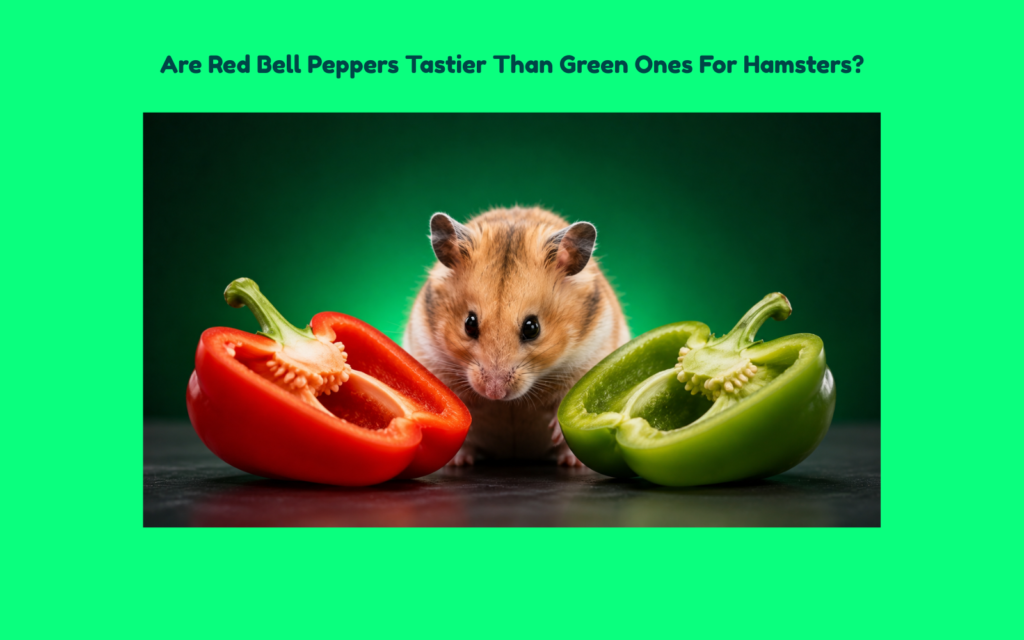
Hamster owners often place red and green bell pepper pieces into the enclosure and wonder if the hamster finds the red ones “tastier” or the green ones “bitter.” When you stand beside the enclosure in your living room, you look down and see a small ceramic bowl resting directly on top of the soft bedding. Look closely inside the ceramic bowl. You see red bell pepper pieces resting directly next to green bell pepper pieces. You notice the bright red colors and the dark green colors. You see the distinct, square-cut shapes of the fresh pieces sitting on the presentation surface. While owners use words like “taste” or “sweeter,” the practical reality in the living room involves looking strictly at which colored pieces remain visibly present and which no longer remain visibly present. When you look at the bowl before checking again later, you see both colors resting on the ceramic surface. Navigating this comes down to checking the red and green bell pepper pieces in the bowl. We are going to break down why red bell pepper pieces no longer remain visibly present while green bell pepper pieces remain visibly present, how to check the visible pieces side-by-side, what a bell pepper piece displaying visible surface marks looks like, what to look for when green bell pepper pieces remain untouched, and how to check your hamster enclosure for remaining bell pepper pieces today.
Why do red bell pepper pieces no longer remain visibly present while green bell pepper pieces remain visibly present?
Here is what hamster owners commonly notice when they look at the red and green bell pepper pieces sitting inside the ceramic bowl. When red bell pepper pieces sit together in the bowl alongside green bell pepper pieces, owners commonly notice that the red pieces no longer remain visibly present while the green pieces remain visibly present. Look closely at the red and green bell pepper pieces resting in the bowl. You see the flat, square shape of the red bell pepper piece. Right next to it, you see the exact same flat, square shape of the green bell pepper piece.
When you look at the bowl in the morning, you see both colored pieces sitting on the ceramic surface. When you check the bowl later in the afternoon, you notice that the red bell pepper pieces no longer remain visibly present, while the green bell pepper pieces remain visibly present exactly where you saw them earlier. Treating the remaining green bell pepper pieces as an unobservable sensory experience replaces observation with assumption. Instead, hamster owners simply notice that red bell pepper pieces no longer remain visibly present while green bell pepper pieces remain visibly present.
Look at the visible positions of the red and green bell pepper pieces in the bowl. You might see three green bell pepper pieces clustered on the left side of the ceramic dish. Look directly at the empty spaces where the red pieces previously rested. You see empty space on the right side of the bowl. Compare what you see when you check the bowl again. You look at the bowl and notice the missing pieces. You see empty space where the red pieces previously rested, and you see the green pieces sitting untouched on the ceramic surface. Compare the red pieces with the green pieces when you look early in the day, and compare the remaining pieces when you look later. You are simply looking at the pieces and noticing which colored pieces no longer remain visibly present while other colored pieces remain visibly present. Bell peppers represent only one example of the fresh vegetables owners commonly compare side-by-side, and observing individual broccoli pieces using the same visual approach provides another practical way to compare vegetable components inside the enclosure.
How do you check the visible pieces when providing red and green bell peppers side-by-side?
Look at the red bell pepper piece side-by-side with the green bell pepper piece. After dropping unmeasured handfuls, you see red and green bell pepper pieces resting on top of one another, hiding the pieces beneath the bedding and making individual pieces more difficult to compare visually. Instead, with a side-by-side presentation in a clear area, you clearly see the missing red pieces next to the remaining green pieces.
Place one distinct red bell pepper piece side-by-side with one green bell pepper piece in the presentation area. Look at the two colored pieces resting on the surface. You see the bright red skin directly next to the dark green skin. Check the presentation area later. Notice when you look at the bowl later that the red bell pepper piece no longer remains visibly present while the green bell pepper piece remains visibly present.
Look closely at the presentation area from another angle. Lean over the enclosure and look directly inside the ceramic bowl. You see the green bell pepper piece resting on the bottom. Look near the bowl edges. You see the missing red bell pepper piece left an empty space. Check again later in the evening. Compare what you see in the presentation area now with what you saw earlier.
Expand your visual check. Look directly on the bedding surrounding the bowl. You see the soft bedding material, but you notice the red bell pepper piece no longer remains visibly present. Look beside the bowl. You see the ceramic rim and the flat surface. Look near the hide entrance. You see the dark opening. Look inside shallow caches near the presentation area. You see bedding and perhaps other pieces, but notice whether the red bell pepper piece appears or remains visibly present. Look inside the tunnels. You see the smooth plastic walls. You are strictly looking at the presentation area and the surrounding spaces to see exactly which bell pepper pieces no longer remain visibly present and which remain visibly present.
What visual signs distinguish a bell pepper piece displaying visible surface marks from a bell pepper piece displaying no visible surface marks?
Look closely at the surface of the bell pepper pieces sitting in the bowl. When you look at the piece later, you see immediate visual differences. A bell pepper piece with visible surface marks displays clear modified edges. Notice the visible surface marks on the exterior. You might look at the smooth surface texture of the skin and see localized edge marks cutting into the flesh.
Look closely at the corners of the bell pepper piece. You might see rough areas or broken corners where the uniform shape appears altered. Notice the missing chunks along the sides. You might see a visibly smaller bell pepper piece resting in the bowl compared to the square shape you saw earlier. Look at the presentation surface immediately surrounding the modified piece. You might see small crumbs resting on the ceramic bottom directly next to the bell pepper.
Compare an untouched piece with a bell pepper piece displaying visible surface marks. Look at a green bell pepper piece displaying no visible surface marks. You see a piece displaying its original visible shape on the presentation surface. It remains exactly where you saw it earlier. The visible shape remains completely unchanged. Look at the outer edges of the untouched piece. You see perfectly intact, smooth areas with no visible surface marks, no missing chunks, and no crumbs resting nearby. Look at the firm flesh and the glossy skin.
Place an untouched green bell pepper piece side-by-side with the modified red bell pepper piece. Look at the square shape next to the visibly smaller piece. On the modified piece, you see rough areas, modified edges, and broken corners in the flesh. On the untouched piece, you see the exact solid square you saw earlier. Comparing the missing chunks and modified edges to the intact surfaces, you clearly see the bell pepper pieces displaying visible surface marks.
What should you do if you notice green bell pepper pieces remain visibly present while red bell pepper pieces no longer remain visibly present when you look at the bowl later?
Look at the untouched green bell pepper pieces that remain visibly present in the presentation area when you check the bowl again. If you look at the bowl and notice that the exact same green pieces remain visibly present while the red bell pepper pieces no longer remain visibly present, you can look closer at the remaining green bell pepper pieces. Look again at the green pieces sitting in the bowl.
Check another green bell pepper piece resting nearby. Look closely at the presentation surface and compare the untouched green bell pepper pieces. Look at the square shapes. You see the dense, square pieces sitting exactly as they appeared when you saw them earlier. Compare the shapes you see in the bowl. Notice the smooth areas on the flesh and the lack of visible surface marks across the remaining green pieces.
Look beside the bowl. You might look at the ceramic dish and see the remaining green bell pepper pieces, but you must also look at the surrounding area. Look closely at the bedding directly next to the presentation surface. Notice if the missing red bell pepper pieces appear there. Look near the hide entrances. You see the opening of the wooden house, and you might notice missing red bell pepper pieces resting just inside the entrance.
Look inside the tunnels. You see the clear plastic tubes stretching across the bedding. Look closely through the clear plastic. You might see small crumbs or modified edges of the red bell pepper pieces resting on the flat bottom of the tunnel. Look inside the caches. You see piles of bedding. Compare what you see resting in the bowl with what you see resting in the bedding. You are simply looking at the untouched green bell pepper pieces in the presentation area and checking the surrounding visible surfaces to see where the red bell pepper pieces appear.
How do you check your hamster enclosure today to see the remaining pieces of previously provided red and green bell peppers?
Walk over to your hamster enclosure right now to perform a visual check. Lean closer to the habitat and look directly through the clear enclosure walls. Look across the top layer of the bedding surface. Check the presentation area where you saw the bell pepper pieces earlier. Look directly at the red and green bell pepper pieces resting inside the bowl or on the bedding.
Check for remaining pieces of the red and green bell peppers. Look closely at the top layer of bedding around the bowl. Look inside the hides. You see the dark opening, and you might notice remaining green bell pepper pieces resting inside. Look inside the clear tunnels. You see the smooth plastic walls and notice whether the missing red bell pepper pieces appear inside. Look around the presentation surface. You see the ceramic edges.
Look closely inside the caches in the corners of the enclosure. You see piles of bedding mixed with previously provided pieces. Look for remaining green bell pepper pieces displaying no visible surface marks. Look for the missing red bell pepper pieces. Notice if the red bell pepper pieces no longer remain visibly present anywhere in the cache.
Look directly at the pieces you find. Look for visible surface marks on any remaining bell pepper pieces. Look for modified edges or missing chunks on the square shapes. Look for a visibly smaller piece. Compare the green bell pepper pieces you see in the caches with the green bell pepper pieces you see remaining in the bowl. As fresh vegetable pieces continue remaining inside the enclosure, owners commonly monitor how their visible condition changes over time before deciding whether those vegetables should be removed and replaced. If you see remaining green bell pepper pieces displaying no visible surface marks in the bowl and missing red bell pepper pieces in the caches, you are simply noticing the visible surface marks, the modified edges, the missing chunks, the green bell pepper pieces remaining visibly present, and the red bell pepper pieces no longer remain visibly present inside the enclosure. Perform this visual check on your hamster enclosure today.
Conclusion
Navigating the bell pepper pieces in the presentation area relies entirely on looking at what appears before you. By checking the presentation surface side-by-side, comparing the visible shapes when you look at the bowl again, and noticing when red bell pepper pieces no longer remain visibly present, you clearly see the remaining pieces and the missing pieces. When you look at the bowl, checking for visible surface marks and modified edges on the bell pepper pieces shows you exactly what remains visibly present. Finally, checking your hamster enclosure allows you to see the exact remaining pieces of the red and green bell peppers. Keep your focus entirely on what is visibly present inside the bowl, on the bell pepper pieces, and across the bedding. Continue looking at the remaining green bell pepper pieces, the missing red bell pepper pieces, the visible surface marks, the visibly smaller pieces, and the modified edges when you check the bowl later.
References
Disclaimer: The content provided on HamsterAtlas is for informational and educational purposes strictly relying on visual observation. It does not constitute professional veterinary advice, dietary diagnosis, or treatment. Always consult a qualified veterinarian with any questions you may have regarding your hamster’s health, nutritional requirements, or specific care needs.