
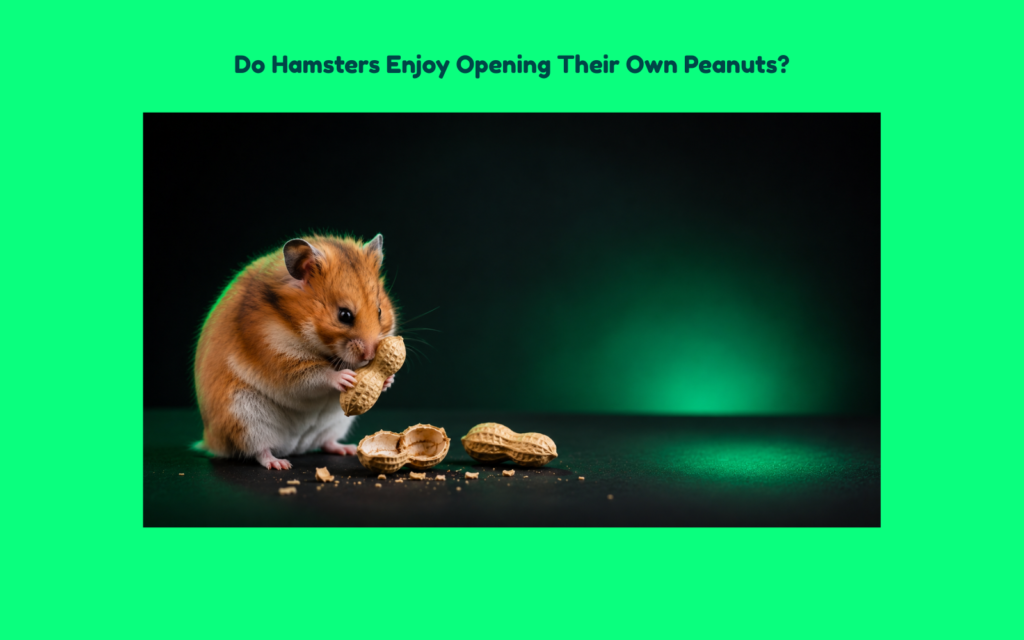
Do Hamsters Enjoy Opening Their Own Peanuts?
It is an incredibly common experience for hamster owners. Owners frequently hand their hamster a whole, in-shell peanut. Watching the hamster grab the large, textured shell, attempt to stuff the oversized object into their cheek pouches, and scurry away into the substrate often prompts the specific question in our title. You hand over the whole peanut and watch it disappear into the bedding. But once the hamster vanishes under the surface, you cannot see what happens next.
The peanut is completely hidden under layers of paper or wood shavings. Because the item disappears so quickly, answering the question in the title by guessing what the hamster feels is impossible. You cannot see the process in the dark, so you cannot make assumptions about their internal state. Instead of guessing, owners simply need to focus purely on what they can see with their own eyes. You must watch how the shell is physically opened over time and track exactly where the broken pieces end up inside the enclosure. A peanut shell is simply a hard outer shell wrapped tightly around a piece of food.
We are going to break down exactly why owners give in-shell peanuts, how to track them once they disappear into the cage, how to tell if a shell is actually empty, and how to check your hamster’s stash today.
Why do owners commonly give their hamsters in-shell peanuts?
Here is what owners commonly observe when they look at the options available in the store. A bag of loose, pre-shelled peanuts looks very different from a bag of whole peanuts still completely encased in their outer husks. When you hold an intact, in-shell peanut in your hand, you immediately notice the rough, ridged exterior. It is a large, solid, lightweight object that physically occupies a lot of space. Providing an in-shell peanut introduces a thick, highly visible shell around the food.
Compare a loose nut sitting in a bowl with a nut locked inside a hard shell. If you drop a loose, pre-shelled peanut into a ceramic dish, the hamster simply walks over, picks it up, and carries it away. There is absolutely nothing standing in the way of the food. It is smooth, small, and immediately accessible. However, if you hand over a whole peanut, the food is completely trapped. The thick outer husk entirely surrounds the edible portion, sealing it off from the outside world. Look closely at the peanut shell. You cannot see the nut inside. You cannot touch the nut inside. The shell completely hides the food from view.
Instead of collecting a loose nut from a smooth bowl, the hamster must chew through the thick, fibrous exterior to get to the food. Owners commonly give in-shell peanuts precisely because they observe this hard outer shell in action. The shell requires the hamster to actively gnaw through the hard exterior before the food can be reached. Looking at the peanut often masks the simple reality that it is just a piece of food wrapped in a thick, hard shell that must be chewed open. By looking at the shell strictly as a hard outer layer, owners can observe exactly how the food is accessed without making assumptions about what the hamster feels when opening it.
Chart Explanation: A visual comparison between a smooth, loose nut in a feeding dish and a whole peanut entirely encased in a textured, fibrous shell.
How do you track the peanut after you put it in the cage?
When you place a loose seed in a bowl, tracking it is incredibly easy because it remains in plain sight. When you hand over a whole, in-shell peanut, the item usually disappears within seconds. To know what actually happens to the peanut, you must establish a clear, repeatable tracking routine over several days. You cannot simply hand it over and forget about it.
Note the day you give the peanut. On Day 1, you hand the peanut over and watch where it is hidden. Often, the hamster carries the large shell directly to a back corner, a tunnel entrance, or the main sleeping hide. Once it goes underground, it becomes completely hidden from view. You will only see the flat surface of the bedding. There is no visible trace of the peanut left in the open.
On Day 2, check the bedding surface around the exact area where the peanut disappeared. You are not looking for the whole peanut at this stage; you are looking for empty shell pieces. Check the main corners of the enclosure. Check the substrate near the buried tunnels. Often, nothing has changed yet, and the bedding remains completely undisturbed.
On Day 3, expand your visual search. Gently push the top layer of bedding aside near the primary hides. Compare a highly visible whole peanut resting on the surface with a peanut buried deep in a dark corner. A buried peanut leaves absolutely no visual trace until the shell is opened and the broken pieces are pushed back up to the surface.
Watch the bedding over the following days. If you handed out a whole peanut on Monday, you should actively look for empty shell fragments scattered in the bedding by Wednesday or Thursday. By tracking where the empty shell eventually appears on the surface, you can see exactly when the shell was chewed open and where the hamster finally reached the food inside. Following this routine ensures you always know where the peanut is, even after it vanishes from your hand.
Chart Explanation: A three-day observational timeline tracking a whole peanut from the moment it is handed over to the eventual discovery of empty shell fragments on the bedding surface.
What visual signs distinguish an empty shell from an untouched peanut?
To accurately track what happens to the food, you must conduct a clear visual comparison between an intact shell and the pieces left behind. Look closely at the shell when you find it resting in the bedding. Pick the items up and inspect them. What you see tells you exactly what has happened to the peanut.
An untouched peanut looks exactly like it did when you handed it over. The exterior is completely solid. There are no marks, no cracks, and no missing sections. It feels light, but the structure is completely unbroken. Sometimes, you will find a partially opened shell. Notice the gnaw marks on these partially opened shells. You might see small, localized puncture holes on one end of the husk. You might notice heavy chew marks where the fibrous exterior is severely frayed, but the shell itself remains mostly closed. In these cases, the hard outer shell is still largely intact, and the food is still trapped inside the shell.
Compare an intact peanut with a completely empty shell. The visual signs of an empty shell are incredibly distinct and easy to spot. You will find completely split husks. Often, the shell is broken into two separate halves resting in the substrate. Look at the edges of the split shell halves. They are jagged, uneven, and heavily chewed.
Alongside the large shell halves, you will see thin, papery debris scattered in the bedding. This red, papery skin originally covered the nut inside the shell. Seeing split halves, jagged edges, and papery fragments discarded in the bedding is the exact visual sign that the shell is completely empty and the nut is gone. When you see these split pieces, you have visual confirmation that the shell was opened.
Chart Explanation: The physical distinction between a fully intact, unchewed shell and a completely split, empty husk accompanied by discarded papery fragments.
What should you do if you observe a persistent pile of untouched peanuts in the cage?
If you look closely at the enclosure and see whole, unopened peanuts piling up inside the hamster’s stash, you need to review your current routine. Finding one untouched peanut buried in a corner is completely normal. However, if you see a growing mound of large, intact peanuts overflowing from a hide or clustered at the bottom of a tunnel, the food is piling up far too fast.
Compare an isolated peanut with a persistent accumulation that grows larger every single week. Check the corners of the enclosure. Check the dark areas inside the tunnels. Look inside the main stash areas hidden under the bedding. If these spots are filled with whole, unchewed peanuts, you are looking at a clear visual pattern of accumulation.
Review how often you give peanuts. If you see persistent piles of whole peanuts, you are handing out new ones much faster than the old ones are being opened. Adjust your routine by pausing. Stop handing over new shells. Wait until the existing shells show localized gnaw marks or are completely split open before you hand over another whole peanut. Keep your focus entirely on what you see in the pile, ensuring the older shells are opened before adding to the stash.
Chart Explanation: A visual representation of a persistent accumulation, demonstrating how unchewed whole peanuts cluster together in a hidden stash when handed out faster than they are opened.
How do you check your enclosure today to see what happened to the peanuts?
You do not have to wait until cleaning day to see what happened to the peanuts you handed out earlier this week. You can perform a visual check on your active enclosure right now. Walk over to the enclosure, lean in close, and kneel down so you are at eye level with the surface of the bedding.
Look closely at the bedding surface first. Are there any split halves or papery fragments resting on top of the substrate? Check the primary corners of the cage where the bedding meets the glass or plastic. Check the tunnel entrances. Next, check the sleeping areas and the food hoards. Gently move the top layer of bedding aside with your fingers to look directly at the stash. Compare the number of empty shell fragments you find with the number of whole peanuts you handed out over the past week.
Physical signs found around a stash can only provide part of the picture, and distinguishing between food that has actually been consumed and food that has simply been relocated often requires a broader cache-auditing process.
Use this quick-reference audit checklist to verify what you see:
- Target inspection zone: Checking the top layer of bedding and the primary caches.
- Visual indicator: Locating completely split, empty shells or finding dense clusters of untouched whole peanuts in the hoard.
- Observable requirement: Confirming whether whole, unopened peanuts are actively accumulating across repeated observations.
- Action to take: Documenting the pile and waiting to offer any new in-shell peanuts until the current ones are completely opened.
Perform this visual audit on your enclosure today. Look closely at the corners and the hoards, and wait to give another peanut if you consistently spot growing piles of unopened shells in the stash.
Conclusion
A peanut shell is a highly visible, hard outer shell wrapped tightly around a piece of food. By observing the shells as they go from untouched, intact husks to partially chewed exteriors, and finally to completely split halves, you can follow exactly what happens after the peanut vanishes into the bedding. Keep your focus purely on what you see in the cage. Watch the corners, check the bedding for papery fragments, and monitor the stash over time. Repeated observations over several days ensure you can track the whole peanuts and avoid building a growing pile of untouched shells in the enclosure. Tracking what you see allows you to follow where the shells and peanuts end up without ever needing to guess what happens under the surface.
Sources & Further Reading
Disclaimer: The information provided in this article is for educational and observational purposes only. It is not intended to replace professional veterinary advice. Always consult a qualified veterinarian for any questions regarding your hamster’s health, diet, or specific medical needs.