
How Much Food Should I Scatter Per Day?
We all know the evening routine. You grab a handful of seed mix and toss it into the bedding to watch your hamster forage.
While scatter feeding is great, treating it like an unmeasured game instead of a consistent routine quietly leads to massive overfeeding. It is a bit like pouring cereal without looking—it might be fun in the moment, but you will eventually end up with a huge mess of leftovers.
We are going to break down why you must measure your scatter feeding, how to visually tell if you are spreading the food correctly, and exactly how to check your bedding for leftovers today.
Why must the daily scattered food portion consistently follow a measured amount rather than visual guessing?
Here is what owners commonly notice when they just guess the amount. You grab a handful of seed mix at night, toss it into the enclosure, and head to bed. The next morning, you look at the top layer of the enclosure. The surface is completely clean. Because the seeds are gone, you automatically assume the food was entirely eaten, so you repeat the very same process that evening.
Look beneath the bedding, however, and the reality is completely different. When you do a deep clean days or weeks later, you might be shocked to discover massive piles of hidden plain everyday pellets buried in multiple locations. Check the usual hiding spots, and you will likely find that your hamster has been exclusively hunting for the high-fat seeds and leaving the boring pieces behind.
Treating scatter feeding as an unmeasured enrichment activity commonly results in selective eating. Providing an unmeasured surplus allows the hamster to pick their favorites and ignore the rest. Weighing the food encourages the pet to eat their everyday meal completely, preventing a messy enclosure and stopping the build-up of ignored ingredients.
How do you properly measure the daily scattered portion to match your hamster’s needs?
The secret to an effective feeding routine happens entirely outside the enclosure. You want to prepare the food before opening the enclosure doors so you are not making rushed decisions in the moment. Instead of grabbing a random handful—which changes size depending on who is feeding the hamster—guide your routine by using a digital kitchen scale or the exact same dedicated measuring scoop every single day.
Measuring the food before scattering it eliminates the guesswork, but consistency also depends on using an amount that matches your hamster’s actual needs. Once a measured routine has been established, owners should follow the correct daily portions and feeding frequency to avoid hidden food build-up and repeated overfeeding. Utilizing a digital scale to lock in the measured amount before spreading the mix actively prevents the massive overfeeding that occurs when relying on visual guessing alone.
What visual signs distinguish a properly distributed scattered portion from a dumped pile?
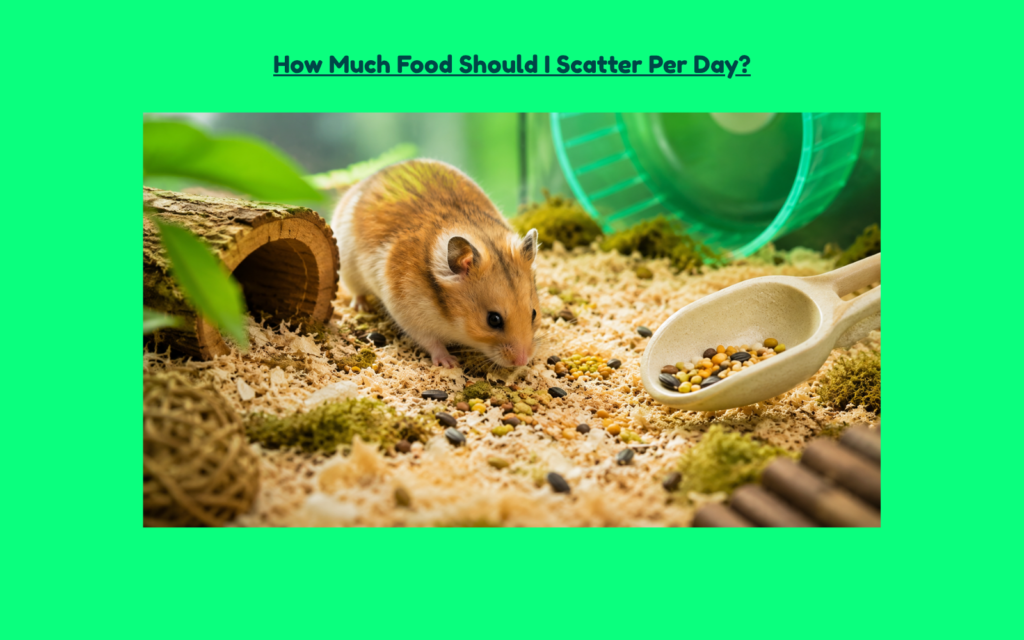
Knowing you have the right amount is only half the process; you also need to look at how it lands in the enclosure. A properly distributed scattered portion is spread across multiple different zones. The food should be tucked near hides, lightly hidden among the top layer of bedding, and require visible searching activity from the hamster to locate.
Contrast this directly with a dumped pile. A dumped pile is a concentrated mound of food sitting in one single place, usually right where your hand stopped moving. It provides easy, immediate access that completely defeats the purpose of natural foraging. When food is dumped, the hamster simply sits in one spot and stuffs their pouches without having to work or explore. Making sure the food is widely dispersed ensures the hamster actively forages across the surface area.
What should you do if you have scattered too much food in the enclosure?
If you notice massive piles of hidden food, you need to execute a scatter overfeeding reset. First, visually identify the excess leftover food in the bedding. Next, temporarily withhold the next daily scatter feed. Do not feel guilty that the cage “looks empty”—adding more food too early simply creates a continuous cycle of ignored pellets.
Wait until the remaining scattered food has been substantially depleted. This waiting period is crucial because it encourages the hamster to finally clean up their leftover stash instead of holding out for more seeds. Finally, resume the daily feeding routine using a newly reduced, measured portion.
The Scatter Overfeeding Reset:
- Visually identify the excess leftover food in the bedding.
- Temporarily withhold the next daily scatter feed.
- Wait until the remaining scattered food has been substantially depleted.
- Resume the daily feeding routine using a newly reduced, measured portion.
How do you check your enclosure’s bedding to verify the consumption of yesterday’s scattered portion today?
To know if your current daily measurement is correctly set, you need to perform a complete, hands-on enclosure inspection routine. Start by physically looking at the surface bedding first, scanning for any obvious seeds left out in the open.
Then, gently move the bedding aside with your fingers to check beneath the surface. Check the corners and peek inside visible tunnels. Look specifically for leftover plain pellets and ignored, uneaten seeds. Finding these untouched pieces directly indicates the hamster was given more than they needed yesterday.
Target issue: Checking the bedding for leftover food from yesterday.
Visual indicator: Locating excessive uneaten plain pellets or isolated grains resting on the bedding surface.
Required change: Adjusting the feeding routine to prevent food build-up.
Action to take: Changing tomorrow’s portion to match what the hamster actually eats.
Scatter feeding works best when it is consistently measured. Hidden leftovers are incredibly easy to miss without physically checking the enclosure. Regular bedding inspections prevent accidental overfeeding, and hands-on observation is always more reliable than visual guessing. Building consistent feeding routines naturally creates cleaner enclosures and healthier habits for your hamster.
Perform this physical audit today, look at the surface of the bedding, and reduce tomorrow’s measured amount if leftover food is visually confirmed.
References
Disclaimer
The information provided on HamsterAtlas is for educational and informational purposes only and does not constitute professional veterinary advice. Every hamster is unique, and dietary needs may vary based on species, age, and health status. Always consult with a qualified, exotic-savvy veterinarian before making significant changes to your pet’s diet or husbandry routine. HamsterAtlas is not liable for any issues arising from the use or misuse of this guide.