
Can Grain Weevils Harm My Hamster?
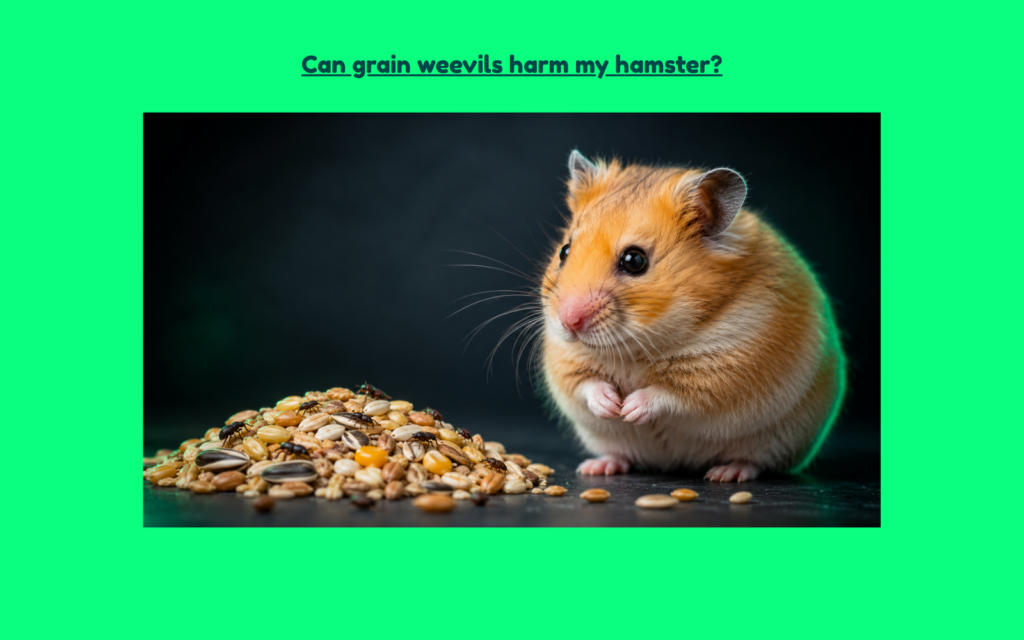
Imagine sitting on the couch. You just opened the food bag. You pour the standard daily mix into the ceramic bowl. Suddenly, a tiny dark shape shifts. You freeze. You look closer and see a small brown bug crawling over a sunflower seed. Panic sets in immediately. You wonder if the meal you just served is going to poison your pet.
Take a deep breath. While finding bugs in the daily meal is incredibly frustrating, these tiny intruders are not toxic. They will not bite your pet. However, they absolutely destroy the nutritional value of the meal. We are going to break down why grain weevils ruin your pet’s meals, how to visually spot the damage in your container, and the exact steps to clean your pantry and prevent them from coming back.
Think of this exactly like finding pantry moths in a bag of human flour. The moth itself is not venomous, but it completely ruins the staple ingredient. Once you see them, that entire bag belongs in the trash.
Why do grain weevils ruin the food rather than directly harm your hamster?
Most owners never start by identifying the insect itself. What they usually notice first is unexpected movement inside the food container or small dark insects crawling across the seed mix during a routine bowl inspection. Before deciding whether the food is still safe to use, it helps to understand why tiny black bugs appear in stored hamster food and what their presence reveals about the condition of the mix. When you look closely at the bottom of the container, you will likely see a strange, powdery residue collecting in the corners. This is the exact moment owners realize something is very wrong with the food bag.
The everyday base pellets and seeds might look perfectly normal from a distance. But when you pick up a handful of seeds and inspect them closely under a light, the damage becomes clear. The seeds look hollowed out. They feel lighter than they should. This brings us to the core question: can grain weevils harm my hamster? The answer lies in the food degradation, not in venom or poison. These bugs are not directly toxic. They cannot bite or sting. Instead, they cause harm by completely ruining the food supply.
- Rule: Any food showing signs of insect activity must be considered spoiled immediately.
- Reason: The bugs hollow out the seeds, eat the most nutritious parts of the mix, and leave behind waste. This waste introduces excess moisture into the container, which quickly leads to hidden mold.
- Example: If you leave an infested bag in the pantry, the nutritional integrity drops to zero, and the resulting mold creates a genuinely unsafe meal for your pet. A clean, fresh daily meal is non-negotiable.
How do you properly store your food bag to prevent a grain weevil infestation?
Let us walk into your kitchen and talk about exactly how to handle a brand new bag of food. Bringing a new bag home requires a deliberate routine to prevent a grain weevil infestation from ever starting. First, open the pantry and make a firm decision about where the food will live. Before you even put the bag away, you need to visibly inspect the contents. Pour a little out and check for any immediate signs of movement or strange dust.
Once the visual check is clear, the new bag should go directly into the freezer for at least forty-eight hours. Freezing is a simple, physical step that stops any hidden problems from growing. After the freezing process, you must transfer the food into a proper storage container. An airtight container is not just a plastic box with a loose lid. You are looking for a heavy-duty container with a thick rubber sealing gasket around the rim. It needs a tight locking clasp that snaps down firmly, sealing out all outside air and moisture.
Diagram: The standard storage cycle requires professional inspection, a freezing neutralization step, and final airtight containment.
Let us compare the two approaches. Leaving the food rolled up in its original, unsealed commercial bag is a recipe for disaster.
What visual signs distinguish a grain weevil problem from normal food dust?
Distinguishing a genuine grain weevil problem from normal, everyday food dust requires a careful visual inspection. When you look at a perfectly safe, normal food bag, you will often find a layer of dust sitting at the bottom. This is completely harmless. Normal food dust is strictly dry, loose, and powder-like. It happens simply because the plain pellets and hard seeds rub against each other during shipping and handling. It feels like dry sand.
Diagram: This visual contrast highlights the difference between uniform natural friction dust and the irregular, webbed residues of active insect infestation.
Bug damage looks and feels entirely different. If you have an active issue, the residue at the bottom of the container will not be dry.
What should you do after discovering grain weevils in your hamster’s food?
The moment you spot active movement, you need to take immediate action. Discovering grain weevils in your hamster’s food requires a total reset of your storage setup. Many owners try to take shortcuts here, and those shortcuts always fail. A very common mistake is attempting to save the “good part” of the mix by scooping out the top layer, or trying to pick the bugs out one by one.
Another mistake is simply dumping the old food in the trash and immediately pouring a new bag into the same unwashed container. These partial cleaning methods leave invisible waste and moisture behind, guaranteeing the new food will spoil just as quickly. A total clean-out is the only physical solution.
The Container Cleaning Steps
Diagram: The sanitization flow mandates immediate disposal of contaminated material, physical deep-scrubbing of the container, complete moisture extraction, and fresh restocking.
- Isolate and completely discard the spoiled food mix outside the home. Do not leave it in your kitchen trash can.
- Physically wash the empty storage container with hot, soapy water, scrubbing the corners and the rubber gasket.
- Dry the container completely to ensure absolute zero moisture remains inside.
- Restock the container with a newly frozen, fresh everyday mix.
How do you check your current food container for grain weevils today?
You do not need to wait until you see a bug crawling in the daily feeding bowl to take action. You can perform a physical pantry audit right now. Walk to your storage area and grab your current food container. Look closely at the lid, specifically checking the rubber seals and the hinges for any trapped dust.
Then, tilt the container and look at the bottom corners. Do not just look at the top layer. Scoop a handful of food from the very bottom of the jar. Bring that handful under a bright kitchen light. Compare the top-layer food with this bottom-layer food to spot any hidden damage, hollow shells, or sticky residue. This quick visual inspection ensures the seed mix remains fully intact and fresh.
Quick-Reference Audit Checklist
Target issue: Checking for grain weevils or food spoilage.
Visual indicator: Locating live bugs, powdery sticky dust, web-like clumps, or hollowed-out seeds at the bottom of the container.
Required change: Stopping the use of the infested food immediately.
Action to take: Discarding the mix, washing the container, and starting fresh.
Editorial Standards: Behind Our Visual Philosophy
To maintain our position as a premium masterclass guide, HamsterAtlas adheres to strict aesthetic guidelines. Standard pet-health websites often rely on clinical, low-cost visual shortcuts. We deliberately evaluate our visual narrative against the following aesthetic quality checklists:
1. Rejecting Infographic Formats
The Critique: Circular magnifying-glass closeups feel overly structural and infographic-like.
Our Standard: We rely strictly on a high-end editorial frame instead of textbook explanatory graphics to preserve premium magazine styling.
2. Avoiding Literal Shock Imagery
The Critique: High-magnification images of insects side-by-side with pet hamsters feel too literal.
Our Standard: Elite publications present dietary risks and household challenges with artistic subtlety rather than relying on direct shock imagery.
3. Minimizing Background Distractions
The Critique: Background components (such as bright green exercise wheels) create visual noise.
Our Standard: Every detail inside the layout must focus exclusively on the primary subject, removing colored visual distractions entirely.
4. Elevating Stock Composition
The Critique: Standard visual layouts present a generic stock-blog aesthetic that reduces brand authority.
Our Standard: We demand bespoke, artfully structured frames that reflect premium lifestyle pieces rather than typical pet-care stock layouts.
Medical Disclaimer
Important: The content provided in this article is for informational and educational purposes only. It is not a substitute for professional veterinary advice, diagnosis, or treatment. Always seek the advice of your veterinarian with any questions you may have regarding the health, nutrition, or behavior of your hamster. Never disregard professional veterinary advice or delay in seeking it because of something you have read on this website. If you suspect your pet is ill or has ingested something harmful, contact your veterinarian immediately.
Reference Materials
It is important to remember that bugs actively ruin the food long before owners actually notice them crawling around in the bowl. The hidden damage happens at the bottom of the bag, slowly degrading the nutritional value of every meal. This is exactly why regular container inspections matter just as much as buying good food in the first place.
Proper storage habits prevent future problems from taking root. Checking the food is simply part of everyday hamster care, just like checking the water bottle or cleaning the wheel. Consistent observation catches these physical problems early, protecting your pet’s daily meals and ensuring they only eat fresh, crunchy seeds.