
Can Hamsters Get Diabetes From Sugary Seed Mixes?
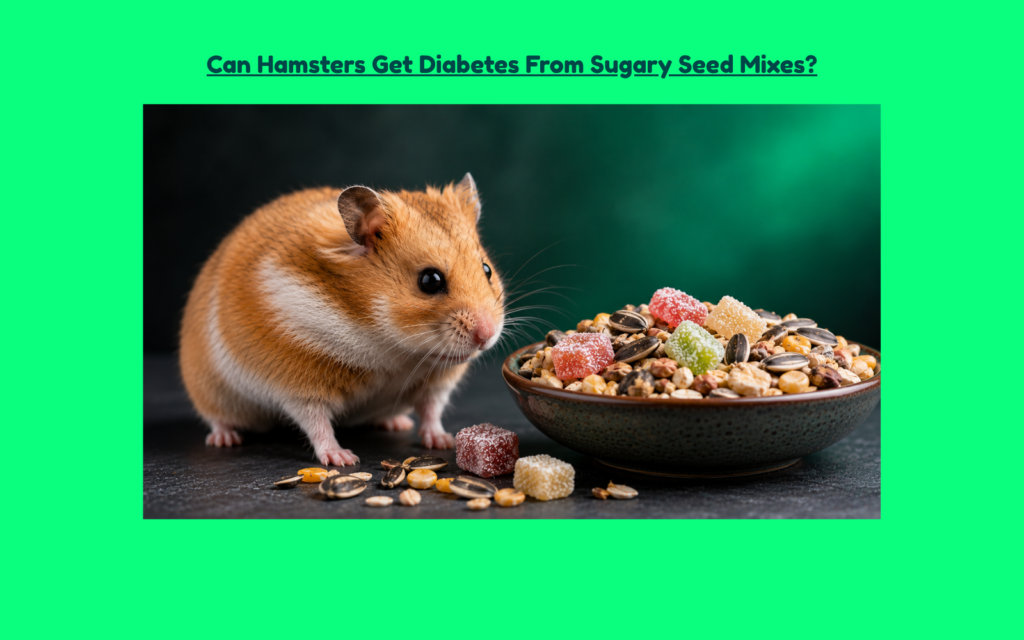
When you first open a sweetened mix, you immediately see a visual pop of colorful yogurt drops and shiny, dried fruit chunks. These bright ingredients easily attract human attention because they look like premium human snacks, but they create a deceptive picture of health. However, there is a distinct physical difference between the foundational foods and the treats. The plain everyday base pellets and grains that form the true foundation of a healthy daily meal are usually dull and earthy. In stark contrast, those bright, sweet additions act much more like candy. Allowing your pet to fill up on the “candy” portion of the bag leaves the plain everyday ingredients behind. Seed mixes that rely heavily on molasses binders, dried fruits, or artificial syrups create a bowl completely full of unnecessary sweets. When you feed a sweetened everyday mix, it commonly produces a highly unbalanced meal relative to a plain, natural diet.
The Golden Rule
Keep the daily meal balanced and focused on natural seeds and plain everyday base pellets.
The Reason
Allowing a pet to constantly consume a sweetened everyday mix commonly produces an unbalanced meal and is commonly associated with long-term health concerns. A less-sweet daily routine is vital for their well-being.
The Example
A bowl full of sticky clusters and dried papaya pieces provides far too much sugar compared to a plain everyday mix of loose seeds and grains.
It is important to note that while high-sugar diets are universally unhealthy, the exact diabetes risk varies by hamster type. Dwarf species, for instance, are often more sensitive to dietary sugars than Syrians. Sugary seed mixes are commonly associated with diabetes concerns in hamsters, largely because these diets sustain an unbalanced meal over long periods.
How do you physically reduce the amount of sweets in a sugary seed mix?
You might look at a bowl full of dried fruit and yogurt drops and wonder what to do next. The answer is simple. You have to remove them by hand.
This is where the tray sorting process becomes a highly practical kitchen task. Take your current food bag and pour a portion out onto a flat baking tray or a clear counter space. Spread the food out evenly. Now, visually scan the pile and use your hands to physically separate out the obvious offenders. Pick out the pastel-colored yogurt drops, grab the sticky dried fruit pieces, and pull out any seed clusters that are visibly clumped together by syrup.
Once you have separated the piles, return the newly cleaned, remaining mix back into your main storage container. You do not have to throw the sweet pieces away; instead, save them in a separate, small jar to be used only as rare, occasional treats rather than everyday food.
The Tray Sorting Process
Chart Explanation: The Physical Extraction Flow
- Visual Scanning: The mixed food is poured evenly onto a flat tray, allowing you to clearly see the vibrant, sweet pieces against the earthy pellets.
- Extracting Sweets: High-sugar items (like brightly colored drops and sticky fruit chunks) are physically isolated and moved to a completely separate treat jar.
- The Final Bowl: Once the sweet inclusions are removed, only the plain, loose everyday base is kept for the daily feeding routine.
Unchecked Feeding (Fails)
When you just pour a sweetened everyday mix straight from the bag, you allow unchecked feeding. This sustains a high sugar intake day after day. Owners often notice the sweet pieces disappear first, leaving the plain grains behind.
Physical Extraction (Succeeds)
Before the food ever hits the bowl, pick through the mix. Pull out the dried fruits, the colored drops, and the sticky clusters. By physically extracting these high-sugar inclusions, you actively lower the daily sugar intake.
Once the sweets are removed, add more plain everyday base pellets to the bowl. This instantly lowers the overall sweetness of the meal and creates a less-sweet daily routine.
Physically extracting dried fruit, yogurt drops, and syrup-bound clusters is only the first step. Once the obvious sugar sources have been removed, owners should focus on building a more structured feeding system that combines ingredient quality, enrichment, and long-term dietary balance through a nutritional foraging protocol.
What visual characteristics distinguish a sugar-heavy mix from a plain everyday profile?
Here is what to look for when you open a bag of food. You can identify a sugar-heavy mix strictly by looking at what is inside.
A sugar-heavy mix is usually vibrant and sticky. You will clearly see brightly colored yogurt drops, copious amounts of dried raisins, bananas, or papayas, and seed clusters that look glazed or stuck together. The ingredients list will likely mention molasses or cane sugar right near the top.
To make a vivid visual comparison, a sugar-heavy mix often looks remarkably like human trail mix or breakfast cereal—highly textured, shiny, sticky, and filled with unnatural colors or large fruit chunks. If the mix looks like something a person would excitedly snack on during a hike, it is likely too heavily sweetened for a daily bowl.
Visual Identification Guide
Chart Explanation: Identifying Visual Red Flags
Notice the artificial pink and green colors. Seed clusters often look “glazed” or clumped together tightly by sticky syrup and molasses binders.
Notice the uniform, earthy brown and tan colors. The food relies entirely on distinctly loose, dry separation of individual seeds and plain pellets without any sticky coating.
In direct contrast, a plain everyday mix looks decidedly more “boring.” A plain mix is dominated by earthy tones, uniform solid pellets, and dry seeds, with absolutely no sticky coatings or bright, candy-like pieces.
How do you fix the diet when transitioning away from a sugary seed mix?
If you realize you are currently feeding a high-sugar diet, you need a plan to correct it. Transitioning away from a sugary seed mix does not mean throwing everything away immediately. It means taking strict control over what actually goes into the cage.
When you begin this transition, you need to know what to commonly observe in the bowl. During the first few days, owners often notice the remaining sweet pieces disappear first while the plain pellets remain seemingly untouched in the bowl. This is normal. A common owner mistake is feeling tempted to reintroduce the sweet items just because the bowl looks untouched, assuming the pet is starving. Do not give in to this temptation. Continue observing the bowl over several feeding cycles. Eventually, as the pet realizes the sugar supply is gone, repeated visual bowl checks will show bite marks appearing on the plain, everyday pellets.
Here is The Sugar-Reduction Protocol to phase out the sweet mix and lock in a multi-format base completely free of added syrups.
Isolate the sugary seed reserve.
Separate the sweetened food from any plain options you currently have.
Physically extract any identifiable sugary additions.
Go through the daily portion and pick out all dried fruits and colored bits.
Add more plain pellets as the sweet additions are removed.
Add plain everyday base pellets into the bowl to balance the meal and fill out the daily portion.
Note the adjustment in your simple feeding log.
Write down this change to maintain the new, less-sweet routine effectively.
Removing dried fruit, yogurt drops, and syrup-coated clusters helps reduce unnecessary sugar intake, but ingredient quality is only part of the solution. Once a less-sweet feeding routine has been established, owners should also understand the correct daily portions and feeding frequency needed to maintain long-term dietary balance.
How do you audit your current pantry to identify a sugar-heavy mix today?
The best thing you can do right now is walk over to your pet supplies and perform a physical pantry audit. You need to check the food bag you are currently using.
Grab the food bag and immediately inspect the ingredient label on the back. Actively scan the text for red-flag words like “molasses,” “cane sugar,” or “syrup.” Next, perform a physical check. Dig your hand deep into the bag and pull out different handfuls from both the top and the bottom. You need to verify if the mix is consistently loaded with sweet pieces throughout the bag, or if it reliably maintains a plain, pellet-based everyday mix foundation.
Quick-Reference Audit Checklist
Please perform this physical pantry audit today, check your ingredient labels on the food bag, and extract the high-sugar items before dispensing the next measured meal.
References & Clinical Sources
-
1.
Free Sugars Consumption and Type 2 Diabetes National Center for Biotechnology Information (NCBI) – PMC12904972. https://pmc.ncbi.nlm.nih.gov/articles/PMC12904972/
-
2.
Hamster Diet & General Guidelines Exotic & Bird Hospital Society (EBHS). https://ebhs.org/wp-content/uploads/2021/07/Hamster-Diet-final.pdf
-
3.
Effect of a Novel Sugar Blend on Weight and Cardiometabolic Health National Center for Biotechnology Information (NCBI) – PMC9689513. https://pmc.ncbi.nlm.nih.gov/articles/PMC9689513/