
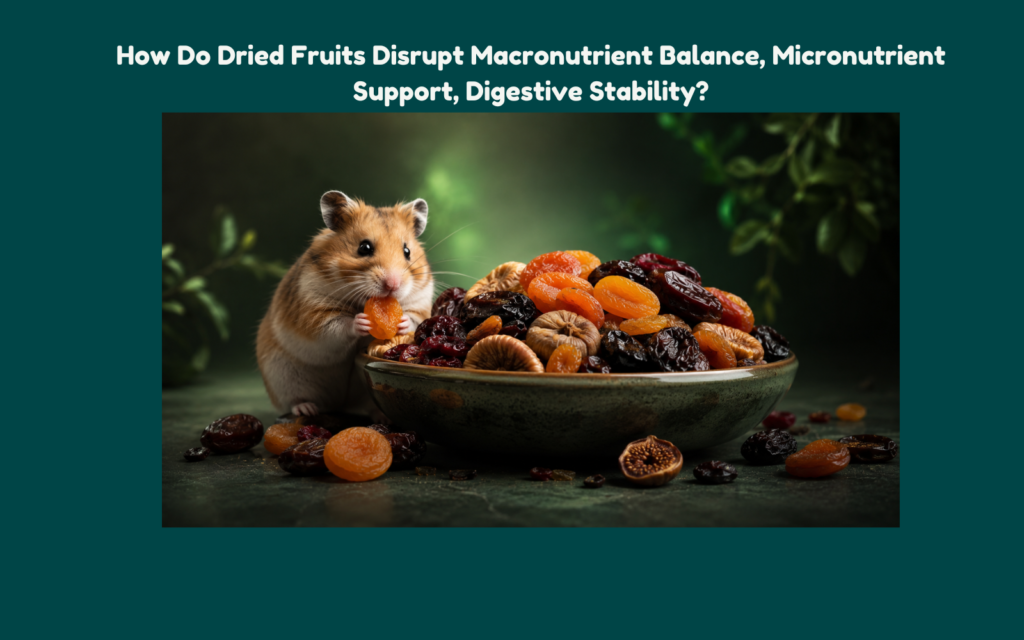
How Do Dried Fruits Disrupt Macronutrient Balance, Micronutrient Support, Digestive Stability?
The moisture-removal process turns seemingly healthy fruit into a dense, sticky carbohydrate load that rapidly destabilizes your pet’s entire digestive and metabolic system.
You walk down the pet store aisle and see commercial trail mixes packed with dried cranberries, raisins, and dehydrated papaya. To our human eyes, they look incredibly healthy and completely natural. But here is the catch. Dehydrating a piece of fruit removes all the water but leaves 100% of the natural sugar behind. This creates a highly concentrated fructose bomb masquerading as a healthy snack.
We are going to break down why these sticky treats cause immediate nutrient starvation, the physical danger they pose to your pet’s cheek pouches, and exactly how to clean up their diet today.
Think of it this way. Imagine boiling down a giant glass of fresh fruit juice into a thick, sticky syrup. The physical volume shrinks down to almost nothing, but the sugar load remains exactly the same. When a tiny animal eats that syrup, the massive sugar payload hits their system all at once, completely throwing off their natural energy balance. These concentrated sugars rapidly destabilize balanced nutrition.
Why does the dried fruit format severely disrupt daily macronutrient balance?
Because the moisture-removal process heavily concentrates natural fructose, this dietary format acts as a dense carbohydrate load that physically displaces the essential daily proteins your pet needs to survive.
You must treat dehydrated fruits as a serious metabolic hazard rather than a harmless daily snack. A hamster has a remarkably tiny stomach capacity. When they consume highly concentrated carbohydrates, it causes a rapid blood sugar spike and leaves zero physical room in their gut for the essential proteins and fats they actually need to function.
Picture a watery sliver of a fresh apple. It is mostly hydration. Now look at a dehydrated apple chunk. That single piece of the dried fruit format contains exponentially more sugar by volume. Feeding just a few pieces leads directly to rapid weight gain, severe macronutrient skewing, and a completely unbalanced daily intake. These dried sugars intensify metabolic stress inside tiny bodies.
How do dehydrated fruit formats displace vital micronutrient support?
The extreme sweetness of this sugary category creates a behavioral trap: your pet fills up on empty fructose and completely ignores the fortified base diet that contains their actual trace minerals.
Owners often watch their hamsters dig through the bowl to eat the colorful, sweet pieces first. It looks like they are just enjoying their food. The reality is much darker. These sticky dehydrated treats reinforce selective eating behaviors and train your pet to become a picky eater. This results in invisible malnutrition. The animal is full, but their body is starving for actual nutrients.
The trace vitamins left in dehydrated fruit formats are minimal and often degraded during processing. Compare that to the broad-spectrum micronutrients, like stabilized calcium and B-vitamins, waiting inside the ignored commercial pellet. Your pet is actively sacrificing their long-term, broad-spectrum health just to consume the sweet pieces. They trade vital bone and organ support for a quick sugar rush.
What impact does the sticky dried fruit category have on dental and digestive stability?
Beyond the sugar spikes, the tacky texture of dehydrated fruit creates a severe dual threat: it physically glues itself inside their cheek pouches and fuels dangerous bacterial overgrowth in their gut.
First, we have to look at the physical mechanics of eating. Hamsters hoard meals in their cheeks. The tacky texture of dehydrated fruits adheres directly to the dry lining of the cheek pouches and their teeth. This physical glue creates a massive risk for severe pouch impaction, painful abscesses, and rapid dental decay. The animal physically cannot push the sticky food out.
Second, we must look at internal digestion. When these highly concentrated sugars finally hit the hindgut, they act as pure fuel for dangerous bacterial fermentation. It disrupts the delicate balance of their microbiome. This causes severe, painful bloating and rapid-onset gastrointestinal distress. It is a biological cascade triggered by a single dietary format.
How do you fix metabolic and digestive imbalances caused by the dried fruit format?
If your pet is suffering from sugar-induced loose stools, pouch irritation, or severe picky eating, you must immediately eliminate this concentrated carbohydrate source from their habitat.
The hardest part for any owner is looking at the food bowl and seeing the healthy pellets left behind. You naturally worry the animal will starve if you stop offering the sweet commercial mix exactly as it comes out of the bag. You must push past that fear to reset their health. These dehydrated sugars overwhelm metabolic stability surprisingly fast.
You need to execute a strict cold turkey elimination protocol. It is highly practical. Before you fill their bowl, manually pick out and discard all dehydrated pieces from the commercial mix. Every single one. Forcing your pet back to a stable, un-sweetened core diet alongside dry hay is the only safe way to reset their gut flora. It breaks their behavioral addiction to fructose and forces them to eat the nutrients they actually need.
How do you audit your commercial blend to identify hidden dried fruit integration today?
You can actively protect your pet from pouch impactions and bacterial fermentation by physically sifting through your current commercial bag and inspecting the ingredient label today.
Use this physical checklist to evaluate your current feeding routine.
-
Format Type & DetectionIdeal Physical Indicator: A bag comprised entirely of seeds, grains, and fortified pellets. Warning Sign: Finding raisins, dehydrated papaya chunks, sweetened cranberries, or sticky, shriveled chunks in the mix. Action: Manually pick out and throw away every single dried fruit piece before serving, or immediately switch to a safer, un-sweetened base diet.
-
Cage Hygiene (The Sticky Stash)Ideal Physical Indicator: A clean, dry food hoard in the nesting box. Warning Sign: Exclusively hoarded sweet pieces sticking to the bedding, while healthy pellets are left ignored in the bowl. Action: Clear out the compromised stash completely to prevent mold and bacterial blooms.
-
Physical Pouch CheckIdeal Physical Indicator: The hamster can easily empty its cheeks after foraging. Warning Sign: The hamster repeatedly paws at its face or has a persistently bulging cheek after eating. Action: Stop feeding sticky foods immediately; if the pouch remains impacted, seek veterinary assistance.
Treating their core diet as a strict, un-sweetened baseline is a simple fix that actively prevents dangerous impactions and ensures long-term metabolic stability.