
Does Animal Protein Enhance Macronutrient Balance, Micronutrient Support, Digestive Stability?
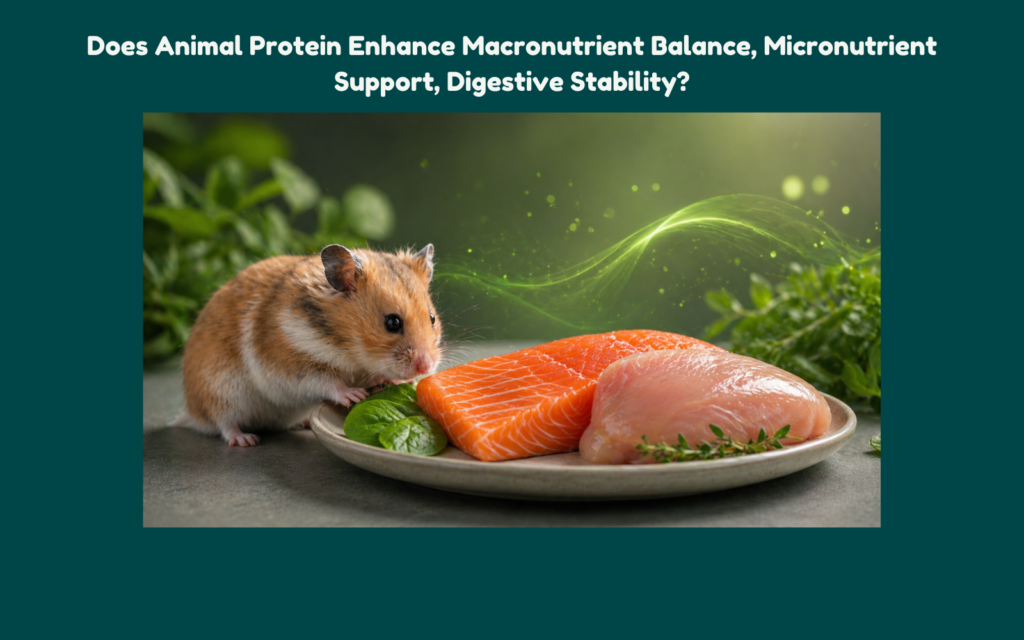
While it often surprises new owners, feeding carefully measured animal protein is a biological requirement that fundamentally shapes your hamster’s muscle health and daily energy.
We all start with the same classic misunderstanding. We picture these tiny, fluffy animals as strict herbivores who happily live on nothing but seeds and carrots. But that is simply not true.
Hamsters possess a highly opportunistic omnivorous profile. In the wild, they actively hunt down insects. We are going to break down why plant matter alone isn’t enough, how insect shells actually protect their digestion, and exactly what to do if a protein snack upsets their stomach.
Think of it this way. Trying to sustain a hamster’s health on a diet devoid of animal protein is like a human trying to build heavy muscle by only eating saltine crackers. The basic energy is there. The building blocks are completely missing.
How does the animal protein format ensure complete daily macronutrient balance?
Because plant-based seed or pellet formats alone cannot supply a complete amino acid profile, introducing this specific dietary category properly rounds out their omnivorous needs.
Chart Explanation: This visualization tracks the 19% biological minimum protein baseline required for Syrian hamsters. Falling below this mark forces the body to consume its own muscle for energy.
You have to keep this rich format to a strict, measured ratio. You want the physical benefits without triggering dangerous weight gain.
Here is why that matters. Syrian hamsters, for example, biologically require a baseline of 17-19% protein in their overall diet to thrive. Essential amino acids are critical here. If their base commercial mix falls short of this macro target, their body starts pulling from its own muscle mass to survive.
Offering one to two freeze-dried insects, like mealworms, ensures your pet maintains critical tissue health. But if you blindly free-feed an entire handful of insects, you will rapidly destabilize their macros. The result is severe, rapid obesity. The animal protein format is powerful, but freeze-dried insects must remain a carefully measured supplement.
How do natural animal protein sources deliver supplementary micronutrient support?
Beyond just muscle maintenance, this whole-food category provides highly bioavailable trace elements that perfectly complement a standard commercial mix.
There is a distinct biological advantage to direct cellular absorption. Fresh or freeze-dried insects offer complex organic trace minerals. We are talking about immediate access to natural iron and Vitamin B12.
These organic elements are absorbed by the cells quickly and efficiently. Compare this directly to the synthesized dry additives heavily processed into standard lab blocks. Those synthetic additives break down much slower. The body simply cannot process them as efficiently as the raw, natural alternatives found in natural animal protein sources.
What role does the physical composition of the animal protein category play in digestive stability?
There is a delicate dual nature to this food type: the hard shells of insects actually aid digestion, while rich, soft meats can quickly cause severe gastrointestinal strain.
Chart Explanation: A breakdown of how the physical friction of insect exoskeletons (chitin) actively supports healthy gut motility, while smooth, unseasoned meats risk stalling in the hindgut.
You need to understand this biological tipping point. There is a fine line between safe, functional protein delivery and triggering a severe risk of bacterial overgrowth.
The exoskeleton of insects is made of chitin. Chitin acts as a highly functional roughage. It provides vital physical friction inside the gut. It literally sweeps the digestive tract clean and supports safe, normal motility.
But here is the catch. You have to be incredibly careful with rich, soft meats like plain boiled egg or unseasoned chicken. These lack any physical friction. If you overfeed them, rich soft proteins can rapidly overwhelm the hindgut and stall out. This stalled digestion is exactly what triggers lethal gastrointestinal distress and explosive bacterial overgrowth. You must respect the physical form of the animal protein category.
How do you fix digestive imbalances caused by overfeeding animal protein formats?
If you notice early signs of dietary distress—such as unusually foul-smelling stools or a sudden refusal to eat their normal pellets—you must immediately halt this rich supplementary category.
Let us walk through the Dietary Repair Template.
Chart Explanation: The step-by-step elimination protocol used to safely stabilize your hamster’s gut flora when overfeeding animal proteins triggers digestive distress.
Owners usually panic when they smell the unmistakable, sharp odor of protein-rich diarrhea. The first instinct is often to try and fix it by offering fresh vegetables. That is the absolute worst thing you can do. Vegetables completely flood an already struggling gut with dangerous moisture.
You need a strict elimination protocol. Instantly remove all supplemental meats and freeze-dried insects. Keep them completely out for a full 48 to 72 hours.
You are implementing a strict dry-only reset. Rely purely on the stable pelleted base and fibrous hay. This safely rebuilds the healthy gut flora and firms up the stool. If the foul odor or soft stool persists after this reset, veterinary intervention is absolutely required. Do not wait. This is exactly how you safely manage issues caused by heavy animal protein formats.
How do you audit your feeding routine to safely control animal protein integration today?
You can actively protect your pet from bacterial overgrowth and dietary displacement by measuring your supplemental portions against safe baselines today.
Let us do a physical reality check. You need to look closely at your serving sizes, verify your base diet’s guaranteed analysis, and check the bedding for hidden, rotting caches that create sticky, foul odors in the living space. This is your Feeding Audit Checklist.
The Protein Audit Checklist
Managing animal protein integration does not have to be a guessing game. It just requires you to observe their environment and stick to the math.
Use this quick feeding audit to measure your portions properly and keep dangerous, rotting meats out of their bedding.
Treating this format strictly as a calculated supplement rather than a free-fed staple is a simple fix that protects their long-term muscle mass and digestive health.