
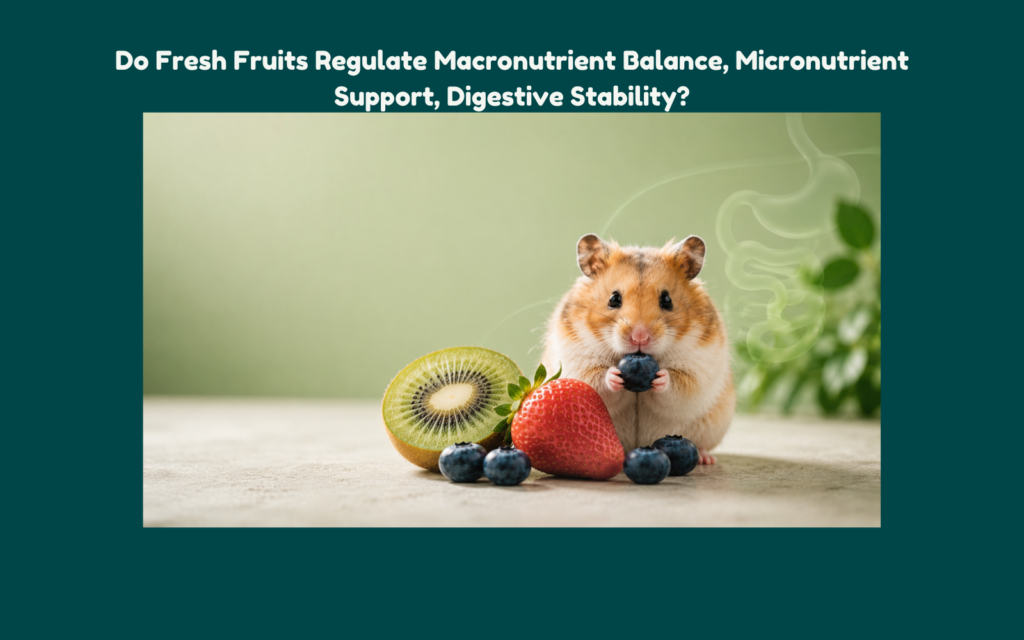
Do Fresh Fruits Regulate Macronutrient Balance, Micronutrient Support, Digestive Stability?
Offering your pet a tiny piece of apple feels like the ultimate natural reward, but getting the sugar-to-fiber ratio wrong can instantly derail their core diet and trigger severe digestive or metabolic distress. We constantly see well-meaning owners offering a “fruit salad” approach because fruit is healthy for humans. But here is the reality. To a desert-adapted rodent, the incredibly high fructose content in modern fruit acts like pure candy.
Many owners assume an empty bowl means balanced nutrition. They see the fruit disappear first and think that is what the hamster needed most. It usually just means the hamster selectively emptied the sweetest, highest-calorie items they could find. Hamsters prefer quick calories, not long-term health.
We are going to break down why sugary fresh foods must be treated as rare, strictly portioned rewards, how they physically impact your pet’s gut, and how to immediately re-stabilize their system if they have had too much. Think of it this way. Handing a hamster a large chunk of melon is exactly like letting a child eat a giant slice of cake right before dinner: they feel full and satisfied, but you have completely displaced the nutrients that actually keep them healthy.
Why must the fresh fruit format be heavily restricted to protect macronutrient balance?
Because this high-fructose food format completely lacks essential proteins and fats, overfeeding it physically displaces the calorie-dense core diet your pet requires to survive the night. Keep this specific format to a strict, rare minimum to avoid a severe risk for rapid blood sugar spikes.
A hamster’s stomach capacity is tiny, and their metabolism is highly sensitive to simple carbohydrates. If they fill up on sugar and water, they will completely ignore their vital baseline macros. This creates a vicious cycle of fruit addiction. Some hamsters will start ignoring their normal pellets completely once they realize sweeter foods might appear later. You will see extreme begging behavior at the cage door. They will exhibit “holding out” behavior, stubbornly sitting next to a full bowl of healthy pellets and doing nighttime sugar searches around their enclosure, waiting for you to drop in a strawberry.
This behavioral trap has massive metabolic consequences, especially depending on the species. A Syrian hamster can usually process a sliver of apple once a week without a total system crash. But dwarf species process sugar entirely differently. Campbell’s, Winter Whites, and Chinese hamsters have a heavy genetic tendency toward diabetes. For these specific dwarf species, fruit should generally be avoided entirely. A single piece of sugary fruit can send a dwarf hamster into a blood sugar spiral, and this excess fructose can overstimulate sensitive dwarf hamsters. Protecting their delicate metabolic balance requires strict owner discipline.
How do natural fruit formats deliver supplementary micronutrient support?
When portioned flawlessly, this fresh dietary category does provide highly bioavailable, organic trace vitamins that complement a dry commercial mix. Fresh fruits deliver rapid, efficient cellular absorption of natural micronutrients, like Vitamin C and antioxidants, straight from the cellular walls of the fruit itself.
Compare this directly to the slower breakdown of synthesized vitamin coatings found on dry commercial blocks. Whole foods simply absorb better. But here is the catch. You have to accept the heavy, unavoidable sugar trade-off when choosing to feed fruit over leafy greens. You are trading a massive calorie spike for those vitamins.
You also have to remember that tiny sugary portions must be adjusted carefully for dwarf species and the specific animal in front of you. Roborovskis process tiny portions very differently than larger hamsters. A piece of fruit the size of your pinky nail is a massive, system-altering dose of sugar for a Robo. Furthermore, older hamsters tolerate sugars much worse than young adults. As their internal organs age and their metabolic rate slows down, an influx of fructose places a severe strain on a senior hamster’s kidneys and liver. What was a safe treat at six months old can become a metabolic hazard at two years old.
What impact does the fresh fruit dietary category have on gut and digestive stability?
There is a biological tipping point between offering a tiny piece of fruit that aids digestion and feeding a watery chunk that causes rapid, lethal bacterial fermentation.
Trace amounts of fruit pectin—the natural fiber found in the skin of apples or blueberries—can actually aid gut motility and keep waste moving safely. However, excess moisture and high natural sugars act as pure fuel for bad bacteria. Since hamsters evolved in arid environments, dumping simple sugars and heavy water volume into their hindgut causes rapid gastrointestinal fermentation.
When fermentation hits, the physical signs are visceral. The excess gas pressure causes severe internal pain. You will notice a distinct bloating posture; the hamster will sit in the corner with a hunched movement, looking unnaturally puffed up. The cage will suddenly develop a sharp, sour smell as the healthy gut flora dies off. This is almost always followed by extremely wet bedding in their bathroom corner due to soft stools or diarrhea. Because a hamster’s body is so small, this digestive crash causes rapid, highly visible dehydration signs, such as sunken eyes and lethargic movement.
How do you fix digestive and metabolic imbalances caused by overfeeding fresh fruit formats?
If you notice early signs of dietary distress—like soft stools, sudden lethargy, or severe sugar-induced picky eating—you must immediately halt this sugary category to re-stabilize their system.
Owners often panic when they see soft stool and try to fix it by offering more wet food, or they cave to a hamster holding out and begging for a sweet treat because they are afraid the animal is starving. Do not fall for the begging. Fruit eaten first does not mean fruit needed most.
You must implement a strict elimination protocol. Instantly remove all fructose and excess moisture from the diet for 48 to 72 hours. This is a strict “dry-only reset.” You must rely purely on their stable pelleted base, dry seed mix, and fibrous hay. These dry, fibrous materials absorb excess fluid in the hindgut and slowly reset the healthy gut flora. You are not starving them; you are forcing their internal chemistry to stabilize. If the hunching, bloating, or soft stools remain after a day of this reset, veterinary intervention is absolutely mandatory.
How do you audit your feeding routine to control fresh fruit integration today?
You can actively protect your pet from sugar spikes and bacterial infections by measuring your fruit portions and physically inspecting their cage stashes today.
Ideal Format Indicator: Safe, peeled fruits without toxic seeds (like tiny apple slices or half a blueberry).
Warning Sign: Feeding citrus fruits, unpitted cherries, or leaving apple seeds intact.
Action: Core, peel, and strictly verify the safety and toxicity of any fruit before offering it.
Ideal Format Indicator: A piece half the size of a human thumbnail, offered strictly as a rare reward once a week or less.
Warning Sign: Handing the hamster a whole berry, a massive wedge of melon, or feeding fruit daily.
Action: Drastically reduce the portion size to prevent metabolic spikes, obesity, and dietary displacement of their core pellets.
Ideal Format Indicator: The tiny piece of fruit is consumed immediately while you are watching.
Warning Sign: Sticky hoards hidden in the bedding. Mashed fruit shoved into nesting corners, visible mold growth, or a hidden rotting food smell when you lift the hideout.
Action: Check the cage an hour after feeding. Hamsters will often pouch a wet piece of fruit and spit it out deep inside their dark, warm nest. Leaving hidden rotting fruit inside warm nesting areas creates the absolute perfect condition for a bacterial bloom. Remove all uneaten fresh fruit within a few hours to prevent dangerous mold from invading their sleeping area.
Use this quick feeding audit to strictly measure your portions and keep hidden, rotting sugars out of their bedding.
Veterinary & Clinical References
Disclaimer: The nutritional information provided in this guide is strictly for educational purposes. It is not intended to diagnose, treat, or replace professional veterinary advice. Always consult with a qualified exotic veterinarian before making significant changes to your pet’s diet, or if they are experiencing ongoing digestive distress.
Treating this sweet format strictly as a rare reward rather than a core dietary staple is a simple fix that protects their long-term metabolic health and digestive safety.