
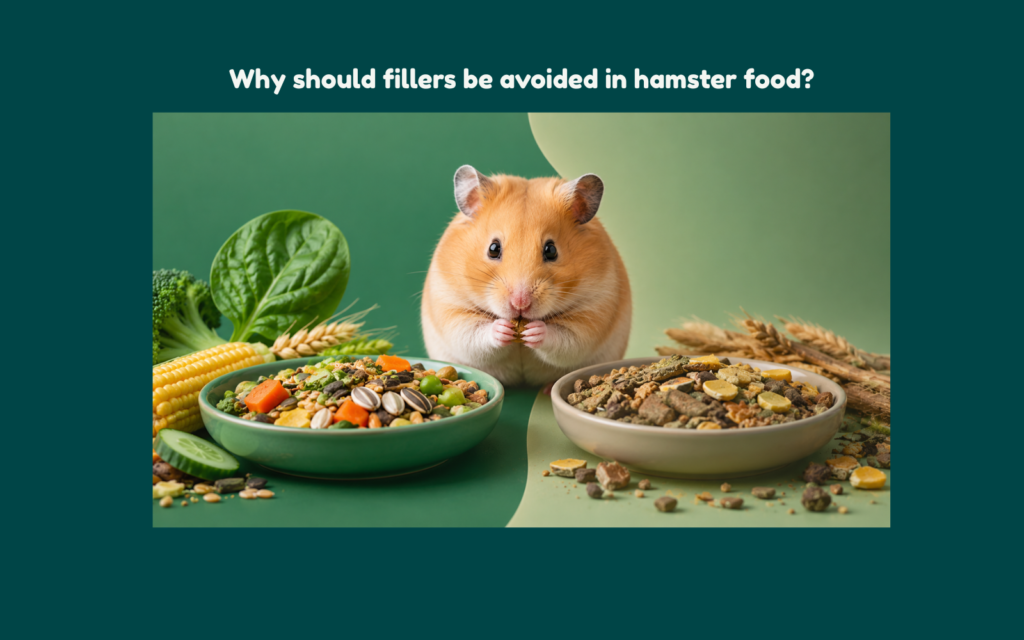
Why Should Fillers Be Avoided in Hamster Food?
A hamster's small stomach has a strict physical limit, meaning every bite they take must deliver meaningful daily nutrition rather than empty calories.
Pet store shelves are lined with massive, inexpensive bags of food that look like a great deal, but often pad their weight with cheap agricultural by-products that offer zero biological value to your pet. You might think you are providing an abundance of sustenance. In reality, feeding a hamster a diet padded with fillers is like filling up on bread before a highly nutritious meal arrives. The empty volume ruins necessary absorption.
This comprehensive guide breaks down the biological consequences of feeding empty calories, covering how cheap bulking agents disrupt natural foraging, cause weight imbalances, and how to safely correct a filler-heavy diet.
Why do fillers compromise nutrition in hamster food?
Because a hamster has a limited daily intake capacity, empty calories physically displace the essential proteins, fats, and fibers necessary for survival.
Chart Explanation: The left graphic illustrates a stomach physically full of empty calories, leaving no space for essential nutrients. The right graphic demonstrates how a nutrient-dense diet fulfills the physical volume requirement while simultaneously delivering concentrated, bio-available health benefits.
The Rule: A functional diet must prioritize nutrient density over sheer visual volume in the bowl.
The Reason: Feeding high volumes of empty ingredients prevents the pet from absorbing enough high-quality nutrition to support everyday wellness and cellular maintenance. The presence of fillers in hamster food creates a false sense of satiation.
The Example: Consider a nutrient-dense whole-food diet that fuels active nightly running. Contrast this with a filler-heavy bowl that leaves the hamster lethargic and deficient in crucial trace minerals, even when they feel full. According to the National Research Council (NRC) Nutrient Requirements of Laboratory Animals, concentrated, bio-available macronutrients are an absolute necessity for proper small mammal metabolic function.
How do common filler ingredients in hamster diets increase diet-related risks?
Relying on cheap, carbohydrate-heavy bulking agents offers quick energy but creates severe long-term stability issues for your pet.
Chart Explanation: This graph compares metabolic responses. The dotted line shows the volatile energy spike and subsequent crash caused by carbohydrate-heavy fillers, whereas the solid line represents the steady, sustained energy output fueled by whole foods.
A diet rooted in whole grains and safe proteins provides steady, sustainable energy that keeps a hamster active throughout the night. Conversely, relying on cheap, carbohydrate-heavy bulking agents like excessive wheat middlings or corn bran leads to rapid weight gain, sudden blood sugar spikes, and cascading nutritional imbalances. Heavy consumption of these filler ingredients in hamster diets creates a volatile metabolic state. This reality is supported by Royal Veterinary College (RVC) VetCompass data, which highlights the direct correlation between refined agricultural fillers, obesity, and poor overall metabolic health in pet rodents.
What role do commercial fillers in hamster mixes play in selective feeding habits?
Diets padded with unappealing or nutritionally void ingredients actively encourage the hamster to dig through the bowl, severely disrupting their nutritional intake.
Filler-heavy bowls severely disrupt natural foraging behaviors. When presented with a bowl full of commercial fillers in hamster mixes, a hamster will instinctively bypass the cheap, tasteless fillers—like generic hay pellets—to hoard the few high-value, high-fat items available. This selective feeding creates a highly imbalanced dietary intake for your pet. Even if the bag’s overall guaranteed analysis looks mathematically correct on the back of the packaging, the hamster is only consuming a fraction of that intended profile. Established ethological studies from the Journal of Applied Animal Welfare Science confirm that this type of dietary sorting and selective foraging behavior is highly prevalent in captive rodents fed non-uniform diets.
How do you fix a diet relying heavily on empty fillers in hamster food?
If your current supply is predominantly padded with empty calories, you must safely transition your pet to a nutrient-dense diet without causing gastrointestinal upset.
Safe 14-Day Transition Timeline
Chart Explanation: This timeline demonstrates the transition protocol. Grey highlights the gradual phase-out of the old diet, while green highlights the safe, steady introduction of the nutrient-dense food over 14 days.
The Dietary Repair Template
The Problem: Abruptly removing a filler-heavy diet that a hamster is accustomed to can easily shock their sensitive hindgut or trigger a highly stressful food strike.
The Solution: To eliminate empty fillers in hamster food safely, you must utilize a step-by-step ratio guide. Gradually blend out the filler-heavy food while safely introducing the richer, whole-food alternative over a strict 7-to-14-day transition period. Monitor their energy levels and stool consistency carefully throughout this entire process. This method perfectly aligns with Standard Exotic Veterinary Protocols for dietary transitions, which universally recommend a gradual, measured phase-in to prevent acute gastrointestinal dysbiosis.
How do you audit your current bag to identify hidden fillers in hamster food today?
You can immediately improve your pet’s dietary health by actively inspecting your food’s ingredient panel and physically examining the bowl for untouched pieces.
The best way to catch hidden fillers in hamster food is to perform a direct physical assessment of your current supply.
| Common Filler Name | Label Red Flag | Physical Warning Sign | Action to Take |
|---|---|---|---|
| Wheat Middlings/Bran | Listed as the first or second ingredient | Powdery residue or easily crumbled pieces | Seek foods with whole, intact grains as primary ingredients |
| Alfalfa Hay Pellets | Used extensively to add cheap weight | Dark green pellets consistently left untouched in the bowl | Phase out the mix and transition to a highly digestible diet |
| Generic “Animal Derivatives” | Unnamed protein sources | Dull, overly processed uniform shapes | Select diets clearly listing whole-food, safe proteins |
Sources & Citations
Click any citation card below to visit the official source.
- National Research Council (NRC) Nutrient Requirements of Laboratory Animals: Provides comprehensive, peer-reviewed baseline nutritional guidelines for the biological maintenance of pet and laboratory rodents.
- Royal Veterinary College (RVC) VetCompass: A clinical data collection system analyzing veterinary records to track specific health trends, obesity rates, and dietary impacts in companion animals.
- Journal of Applied Animal Welfare Science: A leading peer-reviewed academic journal publishing evidence-based research on the behavior, husbandry, and welfare of captive animals.
- Standard Exotic Veterinary Protocols: Clinical guidelines established by board-certified exotic veterinarians for the safe, non-disruptive dietary management of small mammals.
One Response