
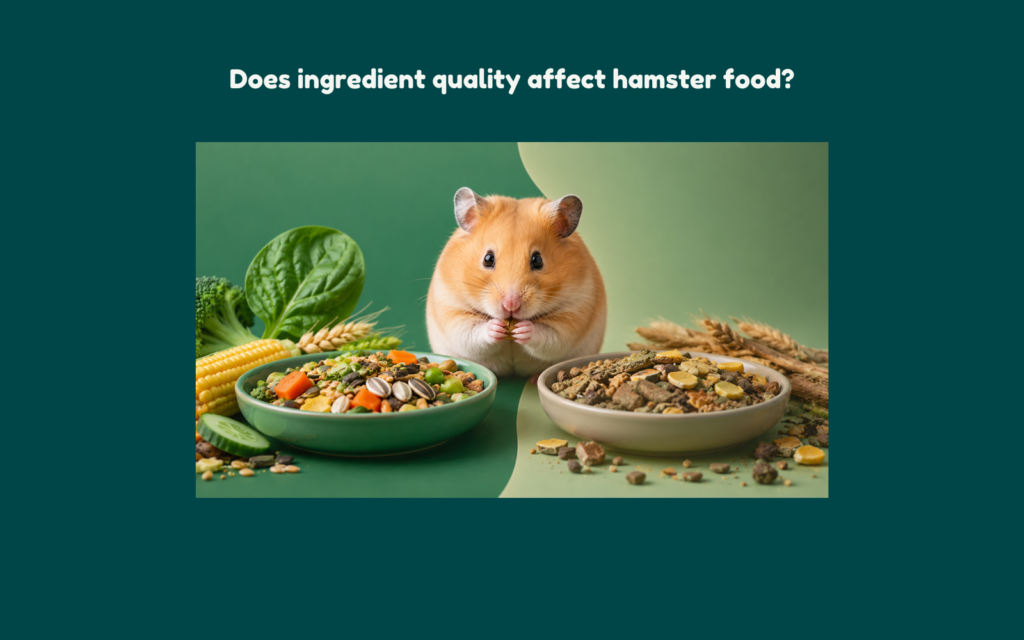
Does Ingredient Quality Affect Hamster Food?
The quality of ingredients in your hamster’s food directly shapes their daily nutrition, energy levels, and long-term well-being. Standing in the pet store aisle surrounded by colorful bags and conflicting marketing claims is incredibly overwhelming, making it difficult to know what genuinely supports your animal. You need a reliable evaluation system. Buying unverified pet food is essentially like grocery shopping blindfolded. This comprehensive guide breaks down the essential factors you must weigh when analyzing ingredients, covering how whole foods support organ health, encourage natural foraging, and safely repair a poor diet. By removing the blindfold, you can clearly read the labels and take control of your pet’s dietary health.
Why does ingredient quality in hamster food form the foundation of daily nutrition?
Providing whole, unrefined nutrients acts as the foundational baseline for your pet’s health by steadily fueling their everyday metabolism. A high-quality diet must prioritize whole-food components rather than relying on fillers or heavily processed by-products. Natural, unrefined elements contain the necessary bio-available vitamins and trace minerals required to support a small mammal’s energy levels while ensuring an appropriate macro-nutritional balance. Contrast a poor-quality mix that relies on cheap, processed scraps with a whole-food mixture; the former results in sluggish digestion, while the latter fuels sustained activity without causing lethargy. The National Research Council (NRC) Nutrient Requirements of Laboratory Animals confirms that these baseline macronutrient requirements are strictly met through high-quality, unprocessed food sources.[1]
How does ingredient quality in hamster food help reduce diet-related risks?
You can actively protect your pet’s future by understanding how natural ingredient sourcing reduces long-term diet-related risks. Feeding heavily processed items packed with artificial fillers frequently leads to unwanted, rapid weight gain and sluggish digestion. This places immense strain on a small body over time. Conversely, offering unrefined seeds and natural proteins provides physical stability and significant health benefits, keeping their systems functioning smoothly. Demographic data from the Royal Veterinary College (RVC) VetCompass and various small-animal metabolic studies highlight a direct correlation between refined commercial fillers and obesity. Prioritizing excellent ingredient quality in hamster food is a highly effective defense against these entirely preventable conditions.[2]
Why is ingredient quality in hamster food important for natural dental wear?
Beyond basic digestion, the physical structure of your pet’s diet is vital for ensuring natural, safe dental wear. The anatomical reality of continuously growing hamster incisors requires the mechanical friction of hard, structurally dense pieces. Providing natural, fibrous grains and tough-shelled seeds encourages appropriate dental attrition, directly reducing the risk of uncomfortable overgrowth. Proper physical food texture is vital to facilitate this continuous dental wear. Clinical findings from the BSAVA Manual of Exotic Pet and Wildlife Nursing reinforce the absolute necessity of physical dietary composition in maintaining rodent dental health.[3]
How does high ingredient quality in hamster food support everyday wellness and immune function?
A diet rich in natural, unadulterated nutrients acts as a supportive baseline for everyday wellness and immune function. An unrefined, balanced intake of vitamins and trace minerals supports overall resilience, building a strong internal foundation. This consistent nutritional support contributes to a significantly better quality of life, directly helping the animal naturally manage minor environmental stressors without their health faltering. Guidelines from Clinical Nutrition of Small Mammals (E.J. Dierenfeld et al.) explain the critical role of dietary micronutrients in maintaining baseline rodent wellness, proving that immune stability starts in the food bowl.[4]
How do whole-food hamster food ingredients encourage natural foraging behaviors?
In addition to physical resilience, whole-food components actively encourage vital, enriching foraging behaviors. Low-quality filler mixes often trigger selective feeding, where the hamster only eats the fattiest, most heavily processed pieces and ignores the rest. In contrast, whole-food hamster food ingredients promote engaging, whole-meal foraging throughout the night. This mentally stimulating activity aligns perfectly with their natural species-specific needs. The Journal of Applied Animal Welfare Science demonstrates how varied, naturalistic dietary presentations stimulate psychological engagement and natural foraging behaviors in captive rodents, making feeding time a core enrichment activity.[5]
How do you fix low-quality ingredient patterns in your hamster food mix?
If your current feed relies on heavy processing, you must safely fix low-quality ingredient patterns in your hamster food mix without causing your pet digestive upset. Changing a hamster’s diet too rapidly, especially away from highly palatable sugary fillers, can cause severe gastrointestinal distress and food strikes. The solution requires implementing a step-by-step ratio guide to gently introduce better nutrition.
The Dietary Repair Template
- Phase 1 (Days 1-4): Sift out obvious empty commercial fillers from the old food. Mix 75% old, sifted food with 25% new whole-food diet.
- Phase 2 (Days 5-8): Transition to a 50/50 blend, closely monitoring the hamster’s energy.
- Phase 3 (Days 9-14): Move to 75% new whole-food diet and 25% old food, culminating in a 100% successful transition.
Standard exotic veterinary protocols for dietary transitions universally recommend this 7-to-14-day gradual phase-in to prevent acute gastrointestinal dysbiosis.
How do you audit your mix to verify ingredient quality in hamster food today?
You can take immediate action to protect your pet’s health by conducting a quick audit of their current food mix today. Learning to accurately read the guaranteed analysis and visibly inspect the physical components is mandatory for excellent care.
The Ingredient Audit Checklist
- Grains and Seeds: Look for whole, intact, unrefined pieces. Identify any artificial colors or dyes. Choose natural, un-dyed mixes.
- Protein Sources: Look for visible, identifiable whole proteins. Identify generic “meat/poultry meal”. Select mixes with named whole proteins.
- Added Sugars: Ensure there is zero added molasses or honey. Identify yogurt drops or processed fruit chunks. Remove processed additives.
References
- National Research Council (NRC). Nutrient Requirements of Laboratory Animals.
- Royal Veterinary College (RVC). VetCompass Demographic Data and Small-Animal Metabolic Studies.
- British Small Animal Veterinary Association (BSAVA). Manual of Exotic Pet and Wildlife Nursing.
- Dierenfeld, E.J., et al. Clinical Nutrition of Small Mammals.
- Journal of Applied Animal Welfare Science. Studies on varied, naturalistic dietary presentations and foraging behaviors.
The information provided in this guide is for educational purposes only and does not constitute professional veterinary advice. Always consult with a certified exotic animal veterinarian before making significant adjustments to your hamster’s diet or if you have specific medical concerns.
Evaluating your pet’s food carefully is a practical, proactive way to support their lifelong health and daily well-being.